Uncategorized
LichtBilder
In der Fotografie geht es für mich in erster Linie um das Fangen von Licht und Lichtfall. Ich beginne den Tag regelmäßig damit. Die Variationen des Lichts an demselben Ort, auf der gleichen Strecke zu verschiedenen Zeitpunkten sind erstaunlich unermesslich und damit eine ständige Herausforderung, etwas von dem Faszinierenden davon einzufangen. Was ja höchstens andeutungsweise gelingt. Licht ist eben viel fliessender (und schneller) als z.B. Töne, Klänge es sind. Getrieben von einer Lichtvorstellung, einem tieferen 'Lichtwunsch' versuche ich dem immer wieder näher zu kommen. Festhalten oder festlegen ist dafür nicht der passende Ausdruck. Licht ist ja immer in Transition. Große Fotografien stellen ja auf verschiedenste gestalterische Weisen einen verstärkten oder subtilen Eindruck dieses Transitionellen her. Beim Fotografieren stehen für mich nicht unbedingt Objekte im Vordergrund, sondern das Spiel des Lichts und das Einfangen desselben, das Spiel des Lichts, das Objekte in spezieller Art'hervortreten' lässt oder verschwinden lässt. Manchmal  kann man Objekte in der Fotografie ja auch gar nicht (wieder)erkennen, oder sie können übertrieben zum Vorschein kommen. Es gibt da einen großen Spiel-Raum und Arten von Stimmigkeit. Wobei der Ausdruck 'Stimmigkeit' ja interessanterweise eine vokale Herkunft hat.

Ich werde regelmäßig Resultate meiner täglichen Lichtjagd im changierenden Lichtfluss hier einbringen, einmal aus der Serie "Musical Gazes" und etwa der Serie "Otheristan".
A record to spend a night with

….and THIS is from an album to spend day and night with…
….das sind oft gehörte Umschreibungen, für bestimmte Alben die Nacht zu empfehlen, den Somntagmorgen, oder sonstige lauschige Nischen der Zeit – „modern mood music“ und ihre idealen Zeitzonen. Ich war ganz froh, den Film „Music For Black Pigeons“ abends gesehen zu haben, und einen Tag später fiel mir auf, dass mir eine Platte des Jahres 2023 vollkommen entgangen ist. Ihre Aufgabe, lieber Leser, besteht nun darin, sich das Album „Once Around The Room“ von Jakob Bro und Joe Lovano zu besorgen, das mit den Hitchcock-Vögeln auf dem Cover, und die ideale Zeit zum Hören herauszufinden….
Neue Herumtreiber und ein dicker Hund – eine kleine Geschichte voller Seitensprünge zu den frühen Jahren des American Analog Set
„What a fucked-up city. Imagine how many people out there are fuckin‘ right now man, just goin‘ at it? (Slater, looking at the panoroma of Austin at night, in Dazed and Confused)
No, they certainly do not rock. One listen to The American Analog Set’s debut, The Fun of Watching Fireworks, released last year on Trance Syndicate/Emperor Jones confirms that loud and… well, not so loud — but clear. Like a whisper in a hushed room. And if you’ve ever seen the local quartet live, whether crammed into the corner at the Blue Flamingo, or under the neon lava glow of the Electric Lounge sign, hushed is the atmosphere you’ll find — where every beer bottle dropped into a garbage breaks the mood like a telephone call during sex. (Austin Chronicle, 1997)
Selbst damals in den Neunzigern waren die Republikaner, die Rednecks, ziemlich präsent in Austin, Texas. Lucinda Williams kannte dennoch ein paar nette Menschen dort. Wie dem auch sei, zu all den Orten, zu denen ich gerne via Zeitmaschine reisen würde, zählt, in milder Rückschau, neben London 1965, Santa Monica 1967, seit kurzem auch, Austin, Texas, 1996. So etwas passiert Musikjournalisten eigentlich nur, im puren Spiel der Fantasie, wenn sie in den Sog einer Kulturszene geraten wollen, die mal grosse Wellen geschlagen hat. Und glauben Sie mir: grosse Wellen hat vor der Jahrtausendwende in Austin gar nichts geschlagen. 1993 wurde dort Linklaters Coming-of-age-Streifen „Dazed and Confused“ gedreht, eine Zeitreise ins Jahr 1973, so beknackt, dass sie fast schon liebenswert rüberkommt. Aber ein Auslandsjahr dort in Austin, bei einem lokalen Radiosender, und ich hätte mich wahrscheinlich in Lisa Roschmann verliebt.

Und was hörte man so in der Independant-Szene, damals, in Austin? Stereolab waren gesagt, dann extraordinaire Band mit Baritonsaxofon, auch ein paar lokale Helden, und, die unangestrengtesten von allen, The American Analog Seit. Als zu Beginn dieses Jahres die Archivmeister der Numero Group auf fünf fabelhaft editierten und anzuschauenden Langspielplatten den Output der Analogen unter dem Titel „New Drifters“ veröffentlichte, war das Echo, wie zu erwarten, nicht riesig, aber voll des Lobes, in einschlägigen Magazinen und Blogs. Das beiliegende grossformatige Heft füttert uns mit Schwarzweissfotos aus den „salad days“ dieser jungen Band, in deren Musik ich ohne Anlauf versank, seltsam aufgehoben, aufgelöst.
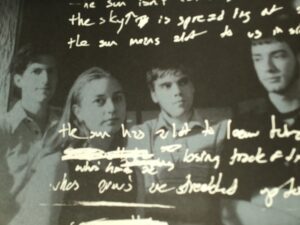
Sie waren mir komplett entgangen, sonst hätten die playlists meiner Radiosendungen damals ein wenig anders ausgesehen. Immerhin hatte ich die samtweiche Nachtmusik von Morphine im Programm. Über die Seiten des tollen Beihefts verstreut, neben den Bildern, viele „lyrics“, durchweg handgeschrieben, manchmal unscharf, voller durchgestrichener Linien – perfekt in die Fotosammlung jener verschwundenen Jahre eingearbeitet. Zwei aus der Band waren ein Liebespaar, und es gab Gründe, dass Lisa ausstieg, die mit E-Piano, Flöte, Orgel, Stimme, zum Zauber einer Band nicht unwesentlich beigetragen hatte, der man Unrecht tut, wenn man sagt, sie würden alle, und das höre man auch, Galaxie 500 kennen und die Velvet Underground. Da war mehr im Spiel als irgendjemandes Urklang, und fremdes Fahrwasser.
Ab einem bestimmten Alter kommt es eher selten vor, dass man einen Narren frisst an einer Band, aber mir ist das hier passiert. Wie damals, 1980, als ich eine andere Gruppe mit einer verhuschten Mädchenstimme erstmals hörte, Young Marble Giants. Ich bin ziemlich sicher, Lisa liebt „Colossal Youth“. Ich möchte mich dem Ende dieser kleinen Abhandlung – und ein „dicker Hund“ kommt noch – nähern mit ein paar Zeilen aus „New Drifters“, ich versuche es mal mit reinem Zufall: „…the girls will get reports on the hour / from boys on the catwalk by the tower / don‘t fret (?) the kids down at the record shop …“ Das ist jetzt nichts, was den Atem stocken lässt, eine flimmernde Tagebuchnotiz. Das Unheimlich-Flüchtige ist auf diesen fünf Schallplatten stets präsent eingesponnen in Ohrwürmer, stillstehende Zeit, Klangexperimente der sanften Art, melancholisches Verschwinden (exquisit hypnotisch) – und ein paar ernsthafte Gedanken über das Mysterium der Freude an Feuerwerken.
TIME MACHINE….MARGINAL MEMORIES…. SPOKEN OUT BY ANDREW KENNY FROM AMERICAN ANALOG SET…. SPRING 2002…. „The word on the street is that Lisa was married recently. Funny that. I guess my invitation was lost in the mail… I’m not lamenting her marriage so much. It’s more a feeling that I missed a golden opportunity to be so drunk at her wedding. Slurring and stumbling through an uncomfortable toast. Being vaguely disrespectful, calling her father by his first name. Spilling cheap Merlot on the carpet at some country club I’ll never be invited back to. Having her brother and a host of faceless groomsmen toss me out of the reception. Sitting at home after, letting the sharp yet harmless click of an empty revolver being dry-fired into my midsection over and over lull me into a deep, troubled sleep. These opportunities only come calling a scant few times in life. Carpe diem and all that.“
(der Text wird weiter bearbeitet und ergänzt, und dann im November gepostet in unserer Rubrik „Poetry“ mit dem Ober- oder Untertitel „Poetry In Sound“.)
Always returning
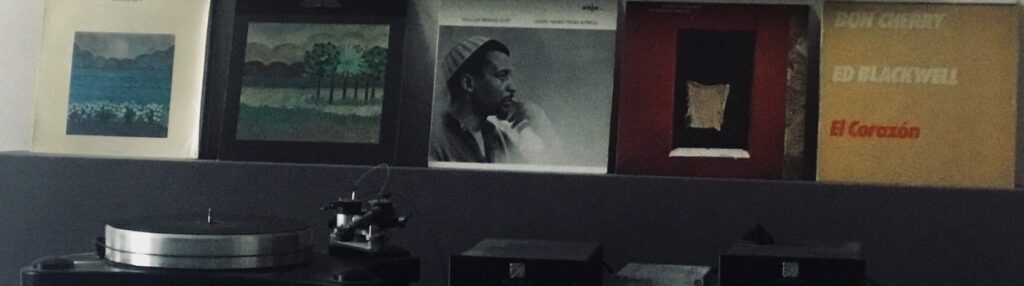
Four Ecm classics, and my most beloved Enja album. Those who recognize at first sight, are probably in love anyway. Lifers. Power spots. Within the next days, „Music For Black Pigeons“ will find me, and as a preparation, I put on these records. In the center, the uninhibited floating brilliance of Dollar Brand and Johnny Dyani. Only the two guys, and a world opens up („Good News From Africa“). The quartet of albums left, a perfect match for every night time in case you ask me. I own them so long, that life has filled them with scars, dances, flowers, small surface noises: „Yellow Fields“ a love story, „Danca des Cabecas“ a portal opening, „Ecstasy“ a sequence of dreams, „El Corazon“ part of my suvival kit in 1982.Ten years ago: Praia de la Costelejo
Die Praia de la Costelejo (so ähnlich heisst sie, im Moment steht mir nicht der Sinn nach Reiseführern) erklärte ich rasch zu meinem Lieblingsstrand. Mit der ausgebauten Strasse von Bispo leicht zu erreichen. Gestern schon zum zweiten Mal dagewesen, im Discman lief, zwischen zwei Gängen zu den Wellen (eine sehr kräftige Brandung!), „Cease To Matter“ von Burnt Friedman und Daniel Dodd-Ellis. Diese Musik unterläuft mit ihrer schrägen Beats die 4/4-Motorik von Techno, und es passieren bei Burnt Friedman sowieso überraschende Dinge: nichts zirkuliert so lange, dass man sich von einem Loop gefangen fühlt. „I’m wearing my coffin over my head, wrapped in linnen when I’m dead“: solche Zeilen geistern durch dieses spoken-word-Electronica-Album. Der Blick auf die Wellen, und diese Musik – Stoff zum Einssein mit dem Strand (nein, auf keinen Fall was fürs CT, Wolfram!).
Ich schaute mir die Bucht lange an. Vorgestern, gestern, heute. Es gibt drei „Wellenzonen“. Auf die erste triffst du schon früh, wenn du ins Wasser geht. Eine ungeschickte Bewegung, und du landest auf dem Sandboden. Nicht weit rechts und links von dir hockt unangehmes Felsgestein im Wasser, da hältst du dich besser fern. Dir gefällt die Zone zwischen der ersten und zweiten Wellendünung besonders gut. Da musst du mächtig hochspringen, wenn sich die Gischt bricht, sonst wirst du mit Wucht überspült, und rappelst dich wieder hoch. Du achtest darauf, nie tiefer als bis zur Hüft- oder Schulterhöhe im Meer zu sein. Die dritte Zone: faszinierend hoch, da siehst du nur Surfer. Als reiner Schwimmer ohne Flossen, ohne Brett: gute Nacht.
Ich wundere mich, wie wenig Menschen hier baden. Morgens um 11 ist es noch recht leer, Surfer, ein paar Sonnenanbeter, und ich bin rasch wieder hinter der ersten „Zone“: in meinem Element, denke ich. Ich bemerke nicht, wie ich von einer Seitwärtsströmung in einen anderen Raum getrieben werde, mit jedem Sprung über die Gischt etwas mehr, ich vergesse zurückzuschauen, und will nun, die Brandung wird kurztaktiger, was ist hier los, zurück ans Ufer.
Beim Rückwärtsgehen gerate ich in eine Untiefe (es muss doch eigentlich Tiefe heissen), verliere den Boden unter den Füssen. Als ich auftauche, trifft mich eine weisse Gischt, ich bin nicht mehr in meinem Element, und ich werde weiter seitwärts gerissen, schlage auf einem Felsen auf, ich finde keinen Halt, es ist glitschig, die nächste „Tiefe“, ich reisse eine Hand hoch und rufe in den folgenden Sekunden, die bald eine ewige Minute währen, um Hilfe, wie noch nie in meinem Leben!
Ich schlage mich wiederholt an spitzem Fels, rutsche unter die Brandung, schlucke das Meerwasser. Aus den Augenwinkeln sehe ich niemanden kommen. Todesangst. Die nächste Welle erwischt mich und wirbelt mich Richtung Ufernähe. Der Atem rast. Aber ich spüre den Sand unter meinen Füssen. Bleibe eine Weile so stehen, krümme mich, um etwas Atem zu holen, und blute wie Sau. Der „Life Guard“ ist mittlerweile da, mit radebrechendem Englisch begleitet er mich zu seinem Kabuff, und sprüht Desinfektionsmittel über die Wunden. Ich sei schon gestern, sagt er mir, zu weit gegangen.
Gong!

Gestern vor 40 Jahren: Start einer der besten Produktionen, die die ARD je zustande gebracht hat. Danach dann „Hundert Meisterwerke“ — heute kann man sich kaum noch vorstellen, dass sowas im deutschen Buntfernsehen mal Programmbestandteil war.
Und das Ganze dann noch im „Gong“. Das war eine Frage mit viel versteckten Background: „Gong oder HörZu?“ Und dann gab’s noch den traurigen Rest, der die „Funkuhr“ oder „TV hören und sehen“ hatte.
Thoughts on Listening

I am not a quick study when it comes to music. I often describe myself as an eternal student of the craft and spend time every day learning new concepts and getting them under my fingers. It usually takes a year or longer before a concept percolates into my playing.
How that applies to listening to music is that I am by and large not a rabid consumer of new music. When someone recommends an album to me by an artist I don’t know, it takes me a long time to discover what makes that album and the artist tick. If I decide I like it enough to really “take on” an album, that usually translates to hours of deep listening, sometimes study and even possibly a transcription of a tune or part of the solo. In short, I am anything but a passive listener.
This has its advantages and disadvantages. The obvious advantages are, by going deeper into a smaller number of new albums, I gain a deeper understanding of what’s really going on in the music, which greatly enhances my listening enjoyment. For me, listening is a very active thing, and it requires the attention of both my intellect and my emotions. Because after all, on a certain level, what is music, if not mathematics invested with human emotions? In my view, the best music is a balanced amalgam of the two.
The disadvantages are obvious: I don’t seem to have nearly the ability to absorb a large volume of new music as I once did; I honestly envy those who do. I have a friend who used to be the editor of and a contributing reviewer for a prominent audiophile magazine. We recently had a discussion on this very subject and here are his thoughts: “Yes, I’m one of those friends of yours who does NOT listen to a new and much-loved album over and over. I am very chary of overexposing myself to stuff I love and wearing out my appreciation of it. This has the odd result of my greatly loving many recordings without actually knowing them very well. I was sort of naturally bent this way anyway, in a sort of default asceticism, but then my work at (name of magazine) pretty much demanded it. I couldn’t linger. Had to keep listening to, or at least sampling, new disc after new disc after new disc.”
I have another friend who owns around 8000 CDs and thousands of downloads. He recently sent me a large volume memory stick filled with hundreds of his favorite things. He is one of the most eclectic music lovers I have ever met. In this “trove” as he likes to call it, is a hefty collection of classical (he was once a classical radio DJ,) jazz spanning many decades and sub genres, folk, world, esoteric pop and experimental recordings which don’t really neatly fit a category, all of which would take hundreds of hours to sample, much less listen through. There are a lot of wonderful things in there. Of these, I recognize a good portion of the artists and composers, but many are unknown to me. It’s frankly overwhelming. Sometimes I’ll make a coffee in the morning and randomly play something by an artist I’ve never heard of, having no idea what to expect. Yet several months after the memory stick arrived, I have barely scratched the surface.
I’m not sure there’s a point to any of this. I have a couple thousand CDs and a few hundred vinyl albums. I also have a growing collection of multichannel SACDs, DVD Audio and Blu-ray audio discs, and literally hundreds of quad releases which have been generously shared with me over the years. Not to mention a burgeoning collection of HD audio files. In all honesty, It’s all probably more than enough to keep me going for the rest of my life.
Do I Need more new music? Probably not, yet I subscribe to Qobuz and still listen to new things every so often, but not nearly with the frequency I used to. Is it age? I don’t know. An old Far Side cartoon comes to mind. The scene is a classroom and in the front of the room is a kid with a noticeably small head, his hand raised. The caption reads, “Mr Osborne, may I be excused? My brain is full.”
That’s me in a nutshell.das eine im anderen vice versa
Arto: Erzählen wir etwas über Musik oder über uns?

Tsek: Wohl beides!

Arto: Wie spiegelt sich das eine im anderen?

Tsek: Gute Frage! Um was drüber rauszufinden, sollten wir vielleicht zusammen
      summen, singen, klingen. Oder zusammen Vögel beobachten. Oder uns im
      reissenden Fluss der Aare unter Wasser treiben lassen.

Arto: Ach, was Du nicht sagst. Aare?

Tsek: Ja, der Fluss in Bern. Der Sound unter Wasser ist unglaublich und den
      zusammen zu erleben, ist schon was.

Arto: Wann?

