Michael’s final radio hour
Deutschlandfunk, September 24
Listen to „Klanghorizonte“
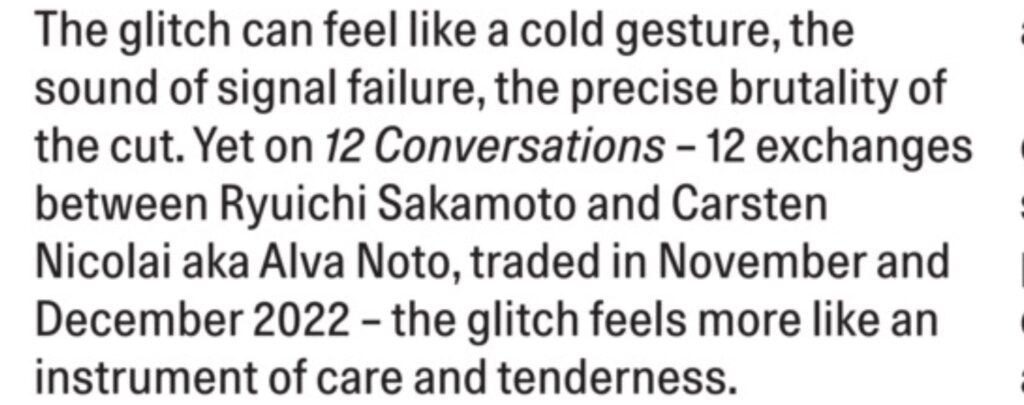
Playlist of „Klanghorizonte“ with a nearly seamless sequence, in regards to storytelling, dream logic, old and new interviews of mine, – and different horizons track by track… (words on „12 Conversations“ by Leah Kardos (The Wire)
FIRST HALF („Nocturnal Green“): Brian Eno: Music For Films (1978) / Robert Wyatt talking / Robert Wyatt: Cuckooland (2003) / Ryuichi Sakamoto & Alva Noto: 12 Conversations (2026) / Annette Peacock (from an old interview) / Annette Peacock: An Acrobat‘s Heart* (2000) / Daniel Lanois: Belladonna Nocturne (2026, 2 tracks) / Daniel Lanois talking in between / Lambchop: Punching The Clown (2026)
SECOND HALF (Red Sports Car in L.A.): Seefeel: Sol.Hz (2026) / Laurie Anderson talking / Laurie Anderson: Bright Red (1994)** / Jana Winderen: Spring Bloom at the Marginal Ice Zone (2017) / Jana Winderen (from an old interview, inside the music)*** / Brian Eno talking (the story of „Fractal Zoom“) / Brian Eno: Nerve Net (1992)
*“Unsung Heroine“ (short documentary)
**“We’d look out at the river, and if the music seemed to be naturally going with it, this was our editing device. Brian’s motto was: if it goes with the river, it goes on the record. So, for example, if the river was really choppy and active, and the music was going pah-bah-dah-dah – whoa, that looks so great! – or if it was smooth and there was some kind of ambient thing going on. We always tried to match – tried to feel – the naturalness of the river, and in this case the Hudson, and if it seemed to fit. It was a very infallible rule while recording „Bright Red“ in Manhattan, because it showed you when you were making it too difficult, not natural.“ (laurie anderson)
***Nearly everybody has a story to tell with „field recordings“, that will always trigger the knowledge about some of the most adventurous sounds being „out there“. Some of those albums became famous, some very much stayed under the radar (very much like the spaces they had been exploring). Even the so-called well-known can easily turn into stranger things. By chance, I once discovered an old album named „Trains in the Night“ beautifully capturing the sounds of old locomotives in England‘s vast hinterland, and the nature around. Listening to the compositions of artists like Jana Winderen or BJ Nilsen, is always a special experience. Is the howling of the wind real, or enhanced by electronics? How can someone „document“ sounds that cannot be be heard within our „normal“ range of perception? In a way the act of „cartographing“ distant areas includes sharpened senses, adequate tools – and inventiveness. When I was sinking, literally, into the „music“ of Jana‘s „arctic“ record, I couldn‘t help but remember, in moments passing by, old sci-fi movies and books, but from minute to minute I was more and more drawn into the sounds themselves and forgetting my sepia-tinged nostalgia. Where-am-I-music of a rare kind. Like all of the albums of this hour! (michael engelbrecht)
20 Kommentare
Jan Reetze
Tja … Alles geht einmal zu Ende. Der DLF ist schön blöd, die Sendung aufzugeben.
Anyway, falls jemand eine Aufzeichnung braucht, bitte melden. j.reetze@gmail.com
Lajla
Was für eine Reise… end of the line.. zu den höchsten Peaks der Musik. Lustig, dass Laurie sich in den Peaks verirrte. . Ian hätte eine Sound Kartographie entworfen. Ihm widme ich im Sinne von Michael und Martina diese glorious last hour.
Thomas Pannhorst
I’ve been listening to your show right from the very beginning, Michael. Looking back, I realize just how much it shaped my love of music and all the discoveries I’ve made along the way.
Thanks to you, Michael.
Olaf Westfeld
Ja – tolle Sendung! Was für ein Fluss, gegen Ende verdichtete es sich immer mehr. Wann hörten Seefeel auf, wann begann das Laurie Anderson Stück? Intensive O-Töne. Wird die Tage noch einmal gehört. Und nochmal ja: sehr schade und ärgerlich, dass es diese Sendung nicht mehr gibt. Und, na klar: „thank you for the music!“
Lorenz
das war eine wunderbare, leider letzte, Sendung. Musik, Geräusche und O-Töne, die es sonst wohl nirgends mehr SO zu hören geben wird. Sehr schöne, persönliche und aktuelle Stimmen von Daniel Lanois und Brian Eno an dich. Danach fiel mir dann auf, dass ich 6 CDs mit Sücken aus der Sendung habe und sehr mag. Und wahrscheinlich kam ich durch die Klanghorizonte auf die ein oder andere. Schade, dass es die letzte Sendung war – gut, dass es flowworker gibt.
Martina Weber
Wegen meiner Lesung im Nebbienschen Gartenhaus konnte ich ausgerechnet diese Sendung nicht live hören. Vor meinem Aufbruch noch kurz die Instruktion zur Aufnahme auf meinem Doppelkassettentape: Erst auf Pause drücken, dann Play. Bei der Probeaufnahme gab es Bandsalat, das Band verhakte sich, klebte fest. Schließlich ließ sich das Kassettendeck nicht mehr öffnen. Zwar habe ich nach meiner Rückkehr eine Tapeaufnahme über ein anderes Gerät erhalten, aber sie ist nicht zu gebrauchen.
Inzwischen habe ich die Sendung zwei Mal über den Link gehört. Ich habe mehrere Pausen gemacht, habe digital zurückgespult. Wow. Was für ein Finale! Wie wir wissen, legt Michael besonderen Wert auf seine Strukturprinzipien, von denen man mehrere wie ausgelegte Netze (Nervennetze, Nerve Nets) über diese 55 Minuten legen kann. Michael verabschiedet sich fast exakt in der 30. Minute mit einem „safe journey“. Und dann lässt er den Rest der Sendung ihren Lauf nehmen, er zieht sich völlig zurück, als ob das, was er präsentiert, ein Eigenleben hätte und einfach weitergehen könnte. Am Ende die nüchterne Abmoderation durch eine Sprecherin.
Den musikalischen Rahmen setzt Brian Eno. Wahrscheinlich der Name, den Michael am meisten in seiner Sendung genannt hat. Netze, oder Fäden, werde auch durch Verbindungen der Musiker, ihre Freundschaften und Kollaborationen untereinander gespannt.
In dieser Sendung hat Michael den O-Tönen einen sehr großen zeitlichen Raum gegeben. Sich Zeit zu nehmen, auch das ist ein Anliegen der Klanghorizonte. Zeit zum Zuhören, zum Lauschen. Ein großes Kompliment an die Sprecher und Sprecherinnen, besonders der Texte von Laurie Anderson und von Daniel Lanois!
Einzelne Zitate aus den O-Tönen und den Moderationen kann man als Netz einer Charakterisierung über die Gesamtheit der Klanghorizonte legen: Musikstücke als „natürliche Formen der Bewusstseinserweiterung“, „Magie“, „sich ins Unbekannte begeben“, „etwas seltsam Trostspendendes“, „die Stimme als Verbindung“ im O-Ton von Laurie Anderson, das Reden, das Storytelling als Überlebensstrategie, „takes me to new places“. Oft sprach Michael davon, dass durch Musik Räume spürbar werden, sich öffnen. „There’s another world spinning inside this one.“
Das Netz des Abschieds: Das alte Europa (Old Europe). Michales letzte Worte: Safe Journey. „Over“ lautet der ausgewählte Titel aus Annette Peacocks „An Acrobat’s Heart“. Ich möchte dieses Wort kombinieren mit dem Satz aus der Moderation, dass sich selbst dort Räume öffnen, wo sie sich unwiderruflich schließen. Das Netz des Trostes.
Für mich waren die Klanghorizonte in ihrer Gesamtheit das Wichtigste, was ich jemals im Radio gehört habe. Ein einzigartiges Autorenradio.
Michael Engelbrecht
@ all: vielen Dank für all die Gedanken und Empfindungen.
Anonym
Moin Michael,
jetzt ist es soweit, die Klanghorizonte sind Radiogeschichte. Viele Jahre haben sie mir die Ohren für neue
Musik— und Klangerlebnisse geöffnet.
Habe dafür vielen Dank.
Toni
PS wenn du auf den Weg zur Nordsee bist, gibt’s
hier immer noch einen Tee
Michael Engelbrecht
Jeder, der etwas ein letztes Mal macht in seinem Leben, möchte es in der Regel gut machen, und macht sich Gedanken. Ob er Lkws durch die Nachr fährt, eine letzte Unterrichtsstunde gibt, whatever, Ein kleines Beispiel hier: the last song, the last music. Was da alles ernsthaft ins Spiel kam, von Cattle and Cane über Windmills of Your Mind und Nothing Ever Was, Anyway, bis zu Spinning Away, This, Under, und eben Fractal Zoom. Das Wort, das Brian Eno als letztes benutzt, „exstatic“ habe ich immer wieder mit dem Song verbunden. Neben all den anderen Gefühlswelten, die da mitschwingen. Schaut euch mal die lyrics an:
Slow
There
Reply
Toil
No need to go on
Do I need to go on?
Slow
Lie
Endure
Recline
In a separate time
On a different plane
Wie verstreute Fragmente von Anweisungen für eine Weltraummission, was weiss ich 😉…. keine klare message…. aber zwei Dinge werden deutlich in den längeren Zeilen: No need to go on, do i need to go on? (Weitermachen, kein klar definiertes Wissen) sowie In Separate Time , On a different plane… (wieder die Erwähnung des Anderswo in Zeit und Raum). Der Song treibt von Anfang an in und um ein Anderswo herum… eher landet man in solch exstatischen Sphären in Zuständen (states of mind), in denen Sprache ins Stammeln gerät, sprachlos wird. Aber man achtet ja kaum aif die Worte in diesen Grooves, die gesungenen Linien verwandeln die Worte nahezu in Sound, „sculpted sound“…. die Räume des Sprachlosen sozusagen.
Die drei langen Stories von Laurie, Jana und Brian haben dem zweiten Teil die perfekte Form gegeben. Da brauchte es keinen Moderator, keinen Reiseleiter, nur die Empfehkung „Safe Journey“, bei der viele Hörer, die mich und Steve Tibbetts’s Musik kennen, an sein Album „Safe Journey“ denken. Auch das ein Dank an Steves Kassette aus Minneapolis 1989, mit der alles begann…
Michael Engelbrecht
@ Toni: ich freue mich auf den Tee mit Kluntjes. Wir werden wunderbare Musik hören, und dann erzählst du mir das noch mal mit dem Tornado vor deinen Haus😉
Jan Bang
Dear Michael,
This morning I had the chance to listen to your final radio broadcast. I was reminded by the sheer beauty of the Annette Peacock album recorded by Jan Erik Kongshaug with the Cikada quartet onboard. Nice to hear Brian and his gratitude for your support over the years. He is not alone. Your support and honest reviews has meant a lot to me as it has for countless of my Norwegian colleagues. So thank you for your important work on air. x Jan
flowworker
@ Jan: as you know I met Field Recording Artist Jana Winderen in Kristiansand… afterwards we made a long interview in written words and I collaged excerpts of her stories and memories (adventure, sound and science in equal measures) – The perfect link between Laurie’s Nepal experiencies and Brian’s closer!
Yesterday Thomas Pannhorst and I saw Eivind Aarset and his fantastic quartet here in Aachen – awesome, he’s a „mysterious traveller soundwise“ indeed. Sitting in the second row with a fantastic sound in the „Musikbunker“ I felt reminded of the early days of PUNKT at the Agden Theatre😉…
Olaf (Ost)
Thanks alot for all of those great sessions of inspiration and delight.
So viele Handreichungen und daraus resultierende Eigenrecherchen haben immerhin Wege des weiteren Findens eröffnet, auf dass die Bäche der akustischen Labsal in der Zukunft nicht austrocknen.
Mir ein treuer Wegbegleiter viele Jahre gewesen zu sein, darf ich versichern – ich ein treuer Wegbegleiter gewesen zu sein, war mir ein Vergnügen.
Zu der Sendung kann ich erst später was sagen…
eivind aarset
Dear Michael, your final show on flowworker was great! Nerve Net and Bright Red are among my absolute favorite records, very interesting to hear the background stories of the tracks you played. I 100% agree with what Jan wrote; what you have done to put focus on music a bit off the beaten path, has been very important to me and many of my colleagues . Thanks a lot for very good vibes, and thanks a lot for coming to our concert at Musikbunker.
dirk
Schade das es vorbei ist, die Klanghorizonte waren mir ein wichtiger Begleiter.
Thomas Pannhorst
What a beautiful coincidence to get to be there for Michael’s final show and Eivind’s concert, all in the same week. It feels like things have come full circle. Spinning away.
Doesn’t get much better than this.
So grateful for it.
flowworker
In the end I knew that the best of all songs in my head to play at the end of my Radio years, was the opening Track from Nerve Net.
Nerve Net was released in September 1992 by Warner Bros. Prior to the release Brian was invited to a ‚think tank‘ meeting at Warner Bros. to discuss how Nerve Net might be promoted. He wrote the following piece of text for distribution at the meeting:
This record is:
LIKE PAELLA A SELF-CONTRADICTORY MESS OFF-BALANCE UNLOCKED DISSONANT EVANESCENT GARISH UNAMERICAN SQUELCHY VAGUE TECHNICALLY NAIVE MIXED-UP OVERHEATED DERIVATIVE OF EVERYTHING UNCENTRED POST-ROOTIST POST-WORLD WHERE-AM-I MUSIC
Why do people buy a particular record? It might be: 1) because they heard it on the radio and they like it, or 2) because they believe that this ought to be part of their lifestyle. Of course, these are always intertwined, but a lot of promotion only concerns itself with their first objective, the objective of making sure that people get to know the record’s out and hear the music on the radio in the hope they’ll be seduced into buying it. This is of course essential, but I think in my case it is of limited value unless it goes hand in hand with a style-defining approach.
Earlier I spoke about the ‚concepts that we hear through‘. A style-defining approach is the attempt to direct attention at the appetite people have to be at the cutting edge. It’s making the point that this music is the cutting edge. I have a good track record for that, and I’m pretty sure of myself right now. Honest and sincere people, however, are often reluctant to enter into style-selling, thinking that this puts them in the fashion world, one of blind conformity and cliquishness, rather than at the cutting edge of art.
What I am trying to suggest is that we accept and embrace the idea that selling pop has never been just about selling people nice music, but about creating a vision of other lives, other attitudes, and that this is an honourable pursuit – this is the real reason that we all started doing it in the first place. The cutting edge is where we make it, where art and fashion meet (or where they become the same thing).
So what are the visions of this record? It isn’t easy to articulate. You don’t start out with a picture in your head and then try to paint it for the rest of the world to see: it is in the process of painting that you discover the picture, and then it is only when you stand back from it that you start to see what it might be a picture of.
Right now I’m just beginning to stand back, still applying the last dabs of paint.
You, who didn’t witness every brushstroke being applied, are probably better positioned to tell me what I’ve been doing. You could hear it as a whole thing, where I’m still seeing a host of details slowly coalescing into some kind of shape. What I do think is that this is a most important record for me. It is a real ’90s record, and it ties together many threads that have been loosely waving about in the wind and my head over the past few years. Some of those threads I first spun myself many years ago. Others have emerged during the late eighties, and are tied up in here somewhere. Some are predictions: things that aren’t current right now.
This record draws on jazz, funk, rap, rock, pop, ambient and ‚world music‘ (- did I leave anything out?). What it turns out as is none of those things but a weird and self-contradictory mess, and a mess that I love – like paella, everything’s in there somewhere. A major trend in ’90s music will be towards more messy, vaguer, more mixed-up.
The split between AOR and living music will become more pronounced. This is a good example of the new form. Nineties music is also going to move away from both the naive dreaminess (slightly mea culpa) of Ambient/Velvets revivalism and from the clock-rigid robot dancing of techno/hiphop/rave. It will be more wild, more complex and more organic. lt’s not all tightly organised and SMPTE’d and nice clean and SSL produced: It’s unlocked, dissonant, contradictory, a network rather than a structure. It will be evanescent, fluid, patchwork, sometimes incoherent, violent and weird.It’s built up by overlaying unrelated codes and bis and pieces of language, letting them collide to see what new meanings and resonances emerge.
It is music that throws you off balance, where-am-I-music.
The ’80s was the Global Village myth and Terminator 2 myth. After a few years cleaning out the stables and staring at the sunset, with an occasional bout of stiff-legged dancing, it turned out to be a bit limited; nice place to visit but you wouldn’t want to live there.
Me, I want to be part of the Global City: bright, garish, frenetic, intelligent, smart, sexy, fierce, eclectic, nutty, neon, dirty, SQUELCHY.
Stefan
Oh, wie schade. Ich habe die letzte Folge verpasst, ich hörte die Klanghorizonte sehr gern. Auch, wenn ich den Sendeplatz nicht immer fand. Kann ich diese noch nachhören? Vielen Dank für die langen Nächte früher… Wird es Jazz Facts ach der Reform geben? Und auch mal wieder eine lange Nacht? Kann man Sie, Michael Kuhlmann, noch mal in einem anderen Format hören?
Viele Grüße und danke!
Stefan
Michael Engelbrecht natürlich, verzeihung !! Herr Kuhlmann war auch bei den Klanghorizonten mal zu hören?
Michael
Stefan du kannst einfach zum Haupttext gehen
Und auf HERE klicken …
Michael K war nicht in den Klanghorizonten aktiv 😉