Deep listening with Robert, John und Terje
I use my analytical faculties retrospectively. In fact, when I’m actually working, I’m just another animal. I work instinctively, and emotionally, I think, like any animal you see, when you watch an animal looking for food or a cow looking for a nice piece of grass. I’m not, at heart, an intellectual musician in the sense that I don’t start with a theory or a concept or an idea. I work simply from finding what makes sense to me. I think it’s very hard to put into words, but I think that the art that lives for me without dying, like, for example, the paintings of Chagall or the music of Charlie Parker, has an organic quality. It seems to be like some kind of living thing. Coltrane has it. I look to see if something feels like it’s alive, and if something’s alive, it has a form and a pulse and a heart somewhere. I work until I have a kind of, some kind of complete organic entity.
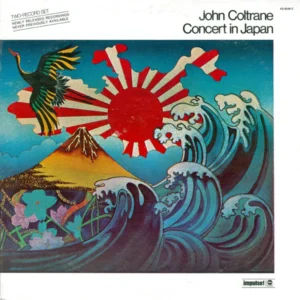
Im September wäre John Coltrane (geb. 23.9.1926) 100 Jahre geworden. Grund genug, auch im Deutschlandfunk an ihn zu erinnern. Fast wäre sein Name auch in meinen Klanghorizonten am 24. September kurz aufgetaucht, aber ich habe mich für zwei andere Passagen aus meinen alten Interviews mit Robert Wyatt entschieden. Aber was sind unsere ganz persönlichen Lieblingsalben von John Coltrane?
“Nächte mit John und Terje“ (1975)
Ich muss nicht lange überlegen. Obwohl eine reine Monoaufnahme , und nicht unbedingt eine audiophile, wird John Coltranes Doppel- bzw. Dreifach-Vinyl-Album „Concert in Japan“ für immer mein intensivstes Hörerlebnis bleiben, gefolgt in fast einem Atemzug von „Crescent“ sowie „A Love Supreme“. Und: „My Favourite Things“, „Interstellar Space“, „Live At The Village Vanguard Again“, „Kulu Se Mama“ sowie „Ballads“! Aber nun zu den zwei Sendungen aus dem Deutschlandfunk im September 2026.
Am 17.9. um 21.05 Uhr: Vater des „Spiritual Jazz“? John Coltranes Einfluss auf einen großen Jazz-Trend Von Odilo Clausnitzer
Am 18.9. ebenfalls um 21.05 Uhr: Passionen und Emotionen. Wie John Coltrane den Jazz veränderte. Am Mikrofon: Karl Lippegaus
5 Kommentare
flowworker
Und a propos Deutschlandfunk:
Morgen am 1. September moderiert Odilo um 21.05 Uhr ein Solo-Konzert von Nik Bärtsch aus dem Ruhrgebiet, um 21.05 Uhr in Jazz Live.
Entendre (ECM) ist ein hireissemdses Solopianoalbum von Nik.
Olaf Westfeld
Danke für die Hinweise. Du hattest das vor einigen Wochen (Monaten?) schon mal gepostet, da hatte ich mir aber nichts notiert.
Steve Reich rundet dann ja Anfang nächsten Monats, da gibt es bestimmt auch was auf/für die Ohren.
Thomas Pannhorst
Meine Coltrane Lieblingsplatte bleibt, musikgeschichtlich vermutlich kaum relevant, aber eine echte Herzensangelegenheit: John Coltrane and Johnny Hartmann, 1963.
Olaf Westfeld
Mein Favorit ist „Olé“.
flowworker
Alte Bobo Stenson Story:
Ich erinnere mich an eine Begegnung mit Bobo Stenson in den Neunziger Jahren. So wie Jan Garbarek seine kleine Offenbarung erlebte, als er in einem Schaufenster Coltranes „Giant Steps“ erblickte, hatte Stenson eine Geschichte mit einem anderen Album des Quartetts, „Ballads“. Meine Erinnerung an seine Erinnerung ist sicher lückenhaft: eines Tages, am Meer, veranstalteten Bobo und seine Freunde eine Party. Es gab einen Anleger, Boote, Hochsommer, und ein kleines rotes Lagerhaus, in dem Bierkästen standen, es gab auch einen Plattenspieler. Jemand hatte die Platte „Ballads“ mitgebracht. Die Nadel senkte sich aufs Vinyl, die erste Ballade begann, und Bobo traute seinen Ohren nicht, und dann traute er seinen Ohren doch. Die Platte lief wieder und wieder. Und danach war das Leben etwas anders für Herrn Stenson.