“Little Wide Open“ (in regards to Kevin and Kurt)
Kevin Morby und Kurt Vile verfolge ich seit Jahren, sie gehören zu den Songwritern, die ein langes Erbe fortführen, ohne ihre Originalität zu verlieren. Ihr beiden neuen Alben erfreuen mich „songwise, lyricwise – deep, rich stuff, sometimes deceptively simple, with one or other abyss always close“. (Michael E.)
For Kevin Morby, the “little wide open” is the big sky, the small lives, it’s his origins in the Midwest, and every duty and modesty and familiarity and isolation: the land, the people, and the parts of that inside him. “There’s something unintentionally musical about the Midwest; cicadas chirping in the trees, a train passing, a tornado siren going off,” explains Morby.
“If you listen, there are these almost ominous sounds taking place beneath the wide-open sky—its ugliness and its beauty and how the two are often working together simultaneously. And while the Midwest isn’t technically the badlands, it’s my badlands.”
(fresh from Mojo July (!) 2026 edition that also contains a deeply moving Rickie Lee Jones story from the times after her first big success, a story about the forthcoming „Beat“ tour of a real King Crimson outfit (without Robert Fripp, but with his approval), an in-depth interview with Can-man Irmin Schmidt following post war dreams of another world of music in old Germany, his solo paths, and central themes and stations of the Tago Mago magic, and much more.)
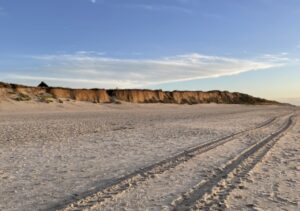
(and, in regards to the photo, who dares to say, Lajla, that the „little white open“ won‘t find its own horizons, too!? Think of drinking another glass of „kalte gans“ among some nice or posh people at Sansibar!)
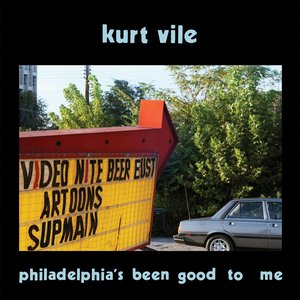
Kurt Vile’s new album (releasing May 29, 2026) features a never-before-seen photograph by the legendary American photographer William Eggleston. The image captures a ramshackle bar sign in Memphis, TN, which was gifted to Vile by the photographer’s son, Winston.
Und, Freunde, Ende August spielt Kurt Vile im Gloria in Köln. Wenn der Sommer gross wird, wie eine Freudin mir weissagte, werde ich dort sein. Ansonsten werde ich in Alaska Scheissforellen fischen. (m.e.)
Viles neuestes Werk ist eine bewegende Hommage an seine Heimatstadt, vom „verdammt verschmutzten“ Fluss bis hin zu den „altmodischen, Lo-Fi-DIY-Rock’n’Roll-Nächten“ seiner Jugend. Unweigerlich geht es auch um das Vergehen der Zeit und – wenn auch mit seinem gewohnten skurrilen Humor gewürzt – auf eindringlichere Weise um Viles Beziehung zur Musik („the best kind of high“, singt er in „99th Song“) und deren Entstehung („check out my chiming chords on the Gold Tone mandolin guitar“, aus „Zoom 97“). Aufgebaut aus einem Geflecht aus glänzenden Gitarrenklängen und/oder klingenden, scheinbar umherirrenden Einzelmelodien, entfalten diese 12 großherzigen, eigenwilligen Country-Soul-Songs vielfältigen Charme, nicht zuletzt mit „Chance To Bleed“, einem ausgelassenen, unverhohlenen Seitenhieb auf die Stones der Sticky-Fingers-Ära. Dass hier und da eine Atmosphäre aus Neil Youngs „On The Beach“ aufblitzt, in Wort und Klang, lässt das Dunkle hinein, am Ende aller Partys. (by Sharon, most of it, and Michael, a little bit)
3 Kommentare
flowworker
Despite the title, Little Wide Open is, Morby claims, “without a doubt the most personal and vulnerable album I’ve ever made”.
That’s obvious in hymns not so much to life in the fast lane as in an Econoline, with reflections on the existential challenges of touring, its physical risks, the literal and experiential distance he and partner Katie Crutchfield (aka Waxahatchee) have travelled since they first met, their sharing of an experience apart, the horizon’s eternal promise and the plain wonder of living.
Though it’s clearly a team effort, Morby credits producer Aaron Dessner for having held him back “from throwing too many tricks at the songs”, which is apparent in their strikingly clean lines and the generous space that allows them to breathe, despite instrumental richness (piano, clarinet, synth, mandolin, harp, pedal steel and more) and an overall widescreen, yearning uplift that lesser artists too often over-egg.
Melodies are deceptively carefree, skating like cumuli across vast Midwestern skies. Vocal contributions from Justin Vernon and Lucinda Williams are on point.
Morby’s lyrics are often vividly allusive and metaphorical – “Welcome to the badlands”, he sings on the galvanising opener, “where the sky expands and you and I expire/ Just like sparks flying off some firecracker/In the big disaster we call home” – but as “Die Young”, “Javelin” and “Bible Belt” attest, he’s also a master of the micronarrative. However Morby plays it, every song yanks the listener straight to its emotional source.
Perhaps nowhere is that more the case than on the title track, which runs at just over eight stately minutes and is the record’s centrepiece. Atop over-easy guitar and banjo twangling, with swoons of pedal steel and fiddle accents, Morby addresses the polarity of his titular state and privacy, then cranks the sentiment with a startling image: “Humiliate me, baby, fuck me up bad/Drag all our secrets like cats from the bag/Use all our insides to decorate the parade/ Turn me inside out, babe, hang me on display”.
“Natural Disaster”, with its Lou Reed-ish cadences, lowering mien and unexpected blooming around the two-thirds point, is another strikingly direct route to Morby’s psyche: “I’m up in the morning, then back down in the evening/It’s a mystery, baby, what happens in between them/They say don’t you medicate/Just breathe or meditate/But I need something for my befores and afters”. In between sits “100,000”, whose panoramic sweep, silvery keening at a clip and exhilarating surge of guitars suggest Adam Granduciel as a kindred spirit.
Quite different are the aforementioned “Javelin”, the only song that clearly bears Dessner’s mark (a mellower “Bloodbuzz Ohio” springs to mind) and “Cowtown”. A bittersweet two-hander with a back-porch feel, it sees a restless Morby breaking the fourth wall in true country style: “No-one ever makes a sound ’cept me on this guitar”, he remarks of the anonymous town, before knocking out a deliberately clunky chord.
Morby’s lifelong hopscotching of America’s states is bound particularly tight to his artistry: the singer ticks off the Louisiana-Texas line where he “crashed the Ranger in a ditch”, Idaho, Oklahoma, Ohio, Mississippi, Tennessee, Georgia and Colorado. The geographical roll-call may be part of country music’s lore but on Little Wide Open it’s an intensely focused reminder of how travel chews up time and that belonging is temporary.
These 13 richly expansive, tender-hearted songs also map the in-between places, questioning what living means now, in the face of an apparent apocalypse. “It’s not suicide if I die out chasing thrills”, Morby decides in closer “Field Guide For The Butterflies”, “just me trying to grow wings”.
Sharon O’Connell from Mojo June edition
flowworker
100000
Pretty girls, pretty sisters
Twirling batons, blowing penny whistles
You’re gonna swan dive
When you kiss her
You’re gonna write poetry, babe
When you miss her
Southern baptist
Father, mister
Pretty girls, pretty sisters
Ugly boys, ugly brothers
Die for your country
Or one another
Muscle cars
In the front yard
Master of puppets
And kill ‚em all
Don’t question God
Don’t question Mother
Ugly boys, ugly brothers
One hundred thousand people
One hundred thousand lives
One hundrеd thousand teardrops
Right behind their еyes
One hundred thousand corpses
All sleeping in their beds
Six feet beneath the rooftops
All sleepin‘ like the dead
One hundred thousand highways
All tend to disappear
One hundred miles an hour
Stuck in seventh gear
One hundred thousand
One hundred thousand
One hundred thousand
One hundred thousand,
oh
Matt Deacon on Kurt
Largely self-produced, with assists from Langellotti, keys wiz Matthew Jugenheimer, drummer Kyle Spence, guitarist Jesse Trbovrich, and longtime Violators boardsman Rob Schnapf, the record sees Vile returning to his home-recording roots while also coming into his own as a producer, using time-tested and world-worn tools to fill the album with more warmth than you can fit into the back of a touring band’s van. “I’ve been waiting for that kinda natural element to show up again in my recordings, like the old home recording days,” he says. “I think I finally caught that again, but in a higher fidelity; it’s never overly polished, but it’s still pretty damn shimmery.” He’s especially proud of the sparkly lead guitar melodies he pulls from an old, hollow-body Gretsch Tennessean once owned by longtime friend and “one of my true heroes,” Travis Good of the Sadies.