Uncategorized
„Im Rausch der Dejavus“
„Colin Farrell carries the weight of this neo-noir effortlessly as John Sugar. Giving off some Chinatown vibes combined with flashes of LA Confidential, Sugar is a complex thriller with slow burn intensity that is worth every moment of your attention.“ (Martin Carr) The new TV series with Colin Farrell features the track «Abandoned Cathedral» composed by Bang/Henriksen. Taken from the Arve Henriksen „Places of Worship“ album, produced by Bang/Honoré. Die Serie wagt einen gewitzten Blick hinter die Kulissen einer Hollywood-Story, die beides enthält, Verklärung und Desillusionierung. Die Macher von „John Sugar“ sind begabte Gaukler, die ihre Genre-Versatzstücke über acht Episoden hinweg als Köder für eine facettenreiche Betrachtung der conditio humana auslegen – und dabei die Magie des Kinos immer wieder spürbar machen. „John Sugar“ verströmt einen spziellen Zauber, wenn man sich auf das Spiel von Original und Fälschung einlässt. Eine der besten Serien, die ich in den letzten Jahren geseheh habe. Ich stimme den lapidaren Sätzen von Martin Carr zu. Dieses achtteilige Meisterstück (Apple plus) hat, kein Grund, das zu verschweigen, ein recht kontroverses Echo erfahren. Wer in den vollen Genuss kommen möchte, sollte keine weiteren Kritiken lesen, sie könnten zu viel verraten. Close to perfect for us lovers of film noir with a twist. Wenn ich jemals Drehbuchschreiber geworden wäre, dieses hätte ich gerne geschrieben. Die Schauspieler, die Regie, der Schnitt, die Musik, die Kamera, die Dejavus, alles class A. (m.e.)
Curated Reality
Mit Erstaunen lese ich, dass The The ein neues Album ankündigen, das erste seit 2000, und damit auch auf Tour gehen werden. Die beiden Termine in Deutschland werde ich leider verpassen. Anfang der 90er war die Formation um Matt Johnson eine der wichtigsten Bands für mich, Soul Mining, Infected, Mind Bomb und Dusk habe ich rauf und runter gehört, die Texte kannte ich auswendig. Der neue Song mit dem schönen Titel Cognitive Dissident gefällt mir – nichts weltbewegendes, ein solides Stück Musik. Das Album erscheint im September.
Civil War (written and directed by Alex Garland)
I found Civil War by Alex Garland a very, very good movie. I wouldn’t have expected, or predicted, this, given that Garland’s previous films were certainly very watchable, but his Amazon Prime series Devs didn’t quite work out and turned out to be more and more annoying and so I never finished watching it. Garland’s new movie Civil War is in a quite different league, despite the fact that his previous films were already quite good, not least when it comes to American filmmaking. And I might need to stress that Kirsten Dunst impressed with an Oscar-worthy performance.
»Contrary to what the trailer might suggest, „Civil War“ is far from being a clumsy dystopian action thriller. Nor can the scenario be read as a commentary on Donald Trump and his authoritarian right-wing politics. As in all his films, Alex Garland explores issues of a both a structural and philosophical nature. In his horror film „Men“, he exposed the mythical dimensions of abusive masculinity; now, in „Civil War“, he is concerned with the politics of images and the journalistic business of war.
(…) Yet „Civil War“ does not simply leave it at this reflection on journalism. Rather, the film increasingly develops into a biting critique of the hubris of the United States. (…) „Civil War“ is a great, self-confident and intelligent film about the current times.«
(Translated from German review by Sebastian Seidler.)
The Hollywood Reporter review, »The Compellingly Packaged Cowardice of ‘Civil War’«, suggests the movie doesn’t really go below the surface, as quite some people have been saying about Garland’s work in general. I feel it is telling that the Hollywood[!] Reporter runs a film review criticising a European filmmaker for not providing enough Hollywood storytelling in his mainstream movie. I certainly can understand a film critic writing, „I would much rather have seen a film by Alex Garland that provides me with answers than one that leaves central points of the film open and for the viewer to find answers“. But maybe it is also quite an American thing to write that like five times in a review.
Generally, it’s claimed that Germans have a penchant for telling others how things ought to be done right or wrong. But the fact that the reviewer makes a point of writing at least five times in this text that „Why is this happening?“ remains unanswered illustrates a fundamentally divergent understanding: mainstream cinema typically doesn’t leave any big questions hanging, normally offers „safe“ answers to avoid irritating (or challenging) the audience too much, whereas European filmmakers regard this as a quality and at times believe that giving answers and explaining everything is a rather inherent weak point, as viewers will then feel like, „Phew, thankfully the situation on screen is not the same as in my reality, so I don’t need to worry about this issue.“
It’s also something I see increasingly in movie reviews these days , this tendency to literally write, “I would have preferred to see a different movie than the one this director/writer/producer chose to tell” or “a pity they didn’t tell the story the way I think is the right one.” Not saying this film is perfect, I think this aspect is actually a very positive thing about this US mainstream production. And, from what I read, Civil War went to the number one spot in US movie charts. I think Civil War is a really interesting approach to mainstream American filmmaking. I didn’t expect more than his previous films gave me, so I was surprised i found it bolder, more uncompromising and relentless (than those others), but also quite tense and very well directed. Warning: not for the faint of heart!
Written by Ingo J. Biermann
Leftfield music with a touch of „Sowiesoso“
„Walks“, the new album by English duo Group Listening. You sometimes have to go to the margins to get hold of such treasures like „Clarinet and Piano – Selected Works, Vol. 2“, their penultimate work. Funny the duo calls itself like it calls itself, but British humour is part of the presentation of this awesome contemporary folky kosmische chamber improv and all. When asked for a recording anecdote Stephen Black says: „Nothing particularly exciting, just your usual next door’s dog barking, or the sound of a pigeon in the chimney breast. It was fuelled by coffee and cheap bread.“ Nothing to add to this.
31st May – Loves Cafe,Weston-Super-Mare
1st June – Shift, Cardiff
4th June – Kazimier Stockroom, Liverpool
5th June – Glad Cafe, Glasgow
6th June – Sneaky Pete’s, Edinburgh
7th June – Futtle, Fife
8th June – Brewery Arts Centre, Kendal
9th June – Hyde Park Book Club, Leeds
11th June – Colchester Arts Centre, Colchester
12th June – St Matthias Church, London
13th June – Wedgewood Rooms, Portsmouth
14th June – The Rose Hill, Brighton
16th June – National Justice Museum, Nottingham
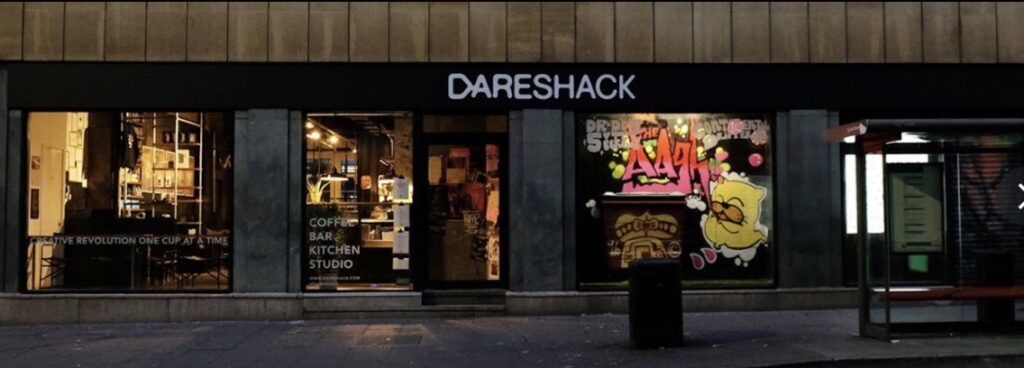
26th June – Dareshack, Bristol
27th June – The Grayston Unity, Halifax
28th June – Unitarian Church, Shrewsbury
29th June – The White Hotel, ManchesterWenn der Ostwind weht – die Malerin Cornelia Schleime

Große Künstlerinnen sind meist mehrfach begabt, siehe Patti Smith oder Joni Mitchell. Eine Malerin, die ich schon lange verfolge, ist Cornelia Schleime. Ich hatte sie in meinen Dresdner Jahren entdeckt, da war sie längst in den Westen gezogen. Ich habe sie für ihre Kraft bewundert. Ähnlich wie Penck, der es auch als Maler sehr schwer hatte in Dresden, aber es immerhin bis zur Professur an der Düsseldorfer Kunstakademie schaffte. Cornelia erhielt Ausstellungsverbot und Ausreiseverbot. Fortan malte sie auf ihrer Haut und zeigte sich in bunten schrillen Performances mit ihrer Punkband in der DDR Öffentlichkeit.
Am Sonntag konnte ich in ihre erste Einzelausstellung in der Galerie Judin in Berlin gehen.Dort zeigt sie vor allem Gesichter, mit Acryl gemalte große Tableaux. DIE MUTTER zeigt ihre Gefangenschaft als Kind und als Jugendliche. Immer malt sie sich in ihren Emotionen, Phantasien,Sehnsüchten. Ihr Leid im DDR Regime verarbeitet sie in ihren Gemälden, ihren Gedichten, ihren Filmen,ihrer Musik. OHNE LIPPEN SIND DIE ZäHNE KALT nennt sie ihre Ausstellung. Auch hier die extreme Spannung zwischen weich und hart. Mein Lieblingsbild zeigt eine leicht gebeugte Frau, deren Haare aufgelöst im Ostwind flattern. Es ist mein Lieblingsbild. Es riecht förmlich nach Dünengras und Fernweh. Cornelia hat einmal gesagt, dass sie sich nur auf Reisen beheimatet fühlt. Als Dichterin drückt sie ebenfalls den Spannungsbogen zwischen Nähe und Unterbewusstsein aus.
„Ich bin die Nähe, deren Herz
Sich zu euch legt,
Wenn ihr im nimmersatten
Blau euch fortbewegt“(Auszug aus dem Gedicht ICH BIN DIE PARTISANIN)
Cornelia Schleime wird die Grande Dame der deutschen Malerei genannt. Ihre Kataloge sind nicht mehr zu haben, auch nicht bei König in Köln. Die Ausstellung geht noch bis Mitte August.
(L.N.)
Beth, Jessica & Julia
Nun ist es endlich soweit, am Freitag erscheint mein Album des Jahres, Beth Gibbons‘ „Lives Outgrown“. Und da alle Wahrnehmung voller Filter ist und nichts mit den Dingen und Klängen an sich zu tun hat, mag jeder seinen eigenen Reim zu meiner Begeisterung finden. Oder kühne Gegenrede. Es geht mir auch nicht um Superlative, wenn ich hier mit meiner Pflegetochter im morgenkühlen Wartezimmer hocke und wir auf eine sanfte Therapie ihrer Sonnenallergie hoffen (obwohl sie aus Afghanistan kommt, 17 Lenze jung ist, liebt sie schon ein, zwei Alben von Keith Jarrett und Lee Perry, und das ohne pädagogische Tricks). Es geht um die Wucht, mit der mich Musik erreicht, und in dieser Hinsicht bilden auch die beiden Alben von Jessica Pratt und Julia Holter („Here In The Room She Moves“) kein Spalier für eine Meisterin aus England, sondern liefern seelenverwandte Kraft, eine Tiefe voller Abgründe, und Finesse jenseits des Geläufigen.
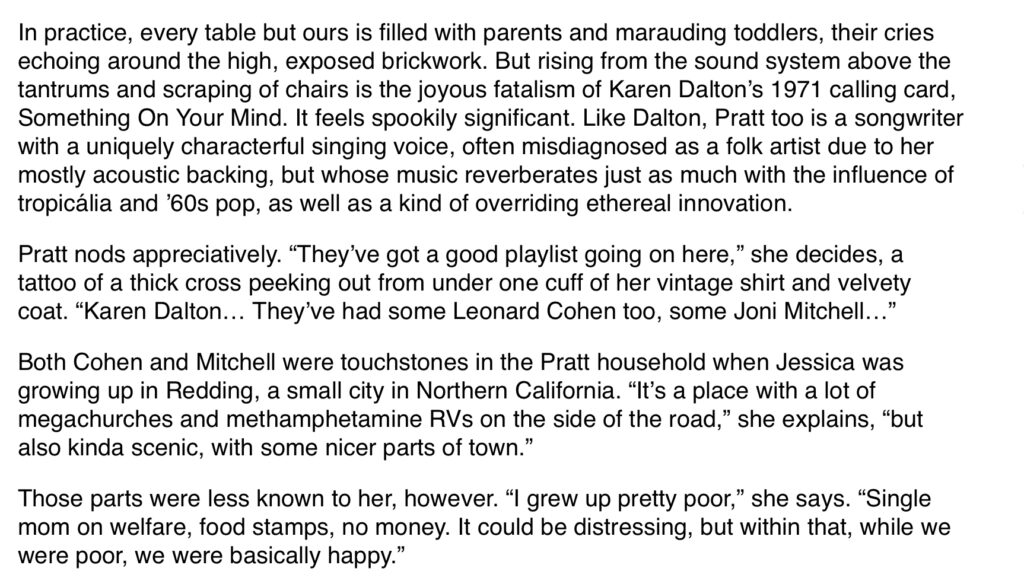
Die Juli-Ausgabe von Mojo erreichte mich heute morgen, und ich freue mich auf die Lektüre von Ted Kesslers Begegnung. Man kann ein Interview kaum trefflicher ankündigen als in den ganz oben als Screenshot angegbildeten Zeilen. „Are you ready for the singer-songwriter who finds Leonard Cohen upbeat?“ Wunderbar. So aussergewöhnlich die Klangfelder der Arbeiten von Julia und Beth sind (und Olaf und ich hatten das Vergnügen, mit beiden Alben schon eine Weile zu leben, und auf einem Blog, der absichtlich unter dem Radar existiert, die ersten Besprechungen netzweltweit zu verfassen), so sehr mag das flüchtige Hören von Jessicas „Here In The Pitch“ Stirnrunzeln provozieren und die Frage nahelegen: „was ist denn hier bitteschön das So-Besondere, in diesem Zeitlupenpastell, alten Zeiten abgelauscht?!“ Allein, manche Hörerin wird schon beim ersten Mal spüren, dass die stille Wucht, die diese erstmal seltsam verhuscht wirkenden Songs entfalten, nicht auf einen schnellen Spruch warten, oder griffige Analyse. Der magische Faktor X rauscht halt mitunter noch duch das allerfeinste Sieb unserer einordnenden, rubrizierenden Sprache. Bleibt die Poesie! Bleibt die Sprachlosigkeit! Bleibt das Gespräch, das voller Stories ist und das Unaussprechliche voller Anmutungen und Witz umkreist! (m.e.)
ECM Vinyl Wantlist
Bennie Maupin The Jewel In The Lotus
Rabih Abou-Khalil Nafas
Terje Rypdal Whenever I Seem To Be Far Away
Jon Hassell Power Spot
Jon Hassell Last Night The Moon Came Dropping Its Clothes In The Street
Egberto Gismonti Danca Dos Escravos
Jack DeJohnette Special Edition
Keith Jarrett Changeless
Leo Smith Divine Love
John Surman Private City
Charles Lloyd Quartet Fish Out Of Water
David Torn Cloud About Memory
Für den unwahrscheinlichen Fall, dass jemand eines dieser Alben loswerden will, gerne einen Kommentar hinterlassen.
The Way To The Horizon
One element that me and Klaus Dinger shared is taking to the road, to the air, to the waves, and going all the way to the horizon. We didn’t care about red lights or stopping, it was about endless movement. After Klaus and I left Kraftwerk, it was clear that we would have this one idea in our songs—this fast, forward movement. At the end, what mattered was what happened in the studio.
Aus einem Interview mit Michael Rother, zu finden auf dem sehr lesenswertem Tone Glow Newsletter.
A good reason to travel to Kristiansand in early September
Punkt is thrilled to announce its 20th edition, taking place from September 5th to 7th. This year, the Punkt Festival not only commemorates two decades of groundbreaking performances and the unique Live Remix concept, but also ushers in a new era of musical exploration and creativity. (see blogroll)
Founded in 2005 by musicians and producers Jan Bang and Erik Honoré, Punkt has consistently pushed the boundaries of music, art, and technology. The festival’s signature Live Remix concept invites artists to immediately reinterpret live performances, offering audiences an unprecedented layer of creativity and spontaneity. This innovative approach has not only defined Punkt’s identity, but has also fostered a culture of experimentation and collaboration among an organically growing network of artists. Over the past two decades, this relatively small festival has hosted a remarkable array of musical talent, including luminaries like Brian Eno, Laurie Anderson, and David Sylvian.
Highlighting this special edition, Nils Petter Molvær, a pioneer in the fusion of jazz and electronic music, is honored as the Artist in Residence. Molvær’s participation promises an unforgettable performance of his seminal album „Khmer“, alongside an anticipated duo concert with the visionary Alva Noto, marking their first collaboration in this format, and a Live Remix with Iranian born, Amsterdam based violinist and kamancheh player Soheil Shayesteh.
The festival’s commitment to the nurturing of new talent is evidenced by the premiere of works by Michaela Antalová and the duo Propan (Natali Abrahamsen Garner / Ina Sagstuen). Additionally, album releases by Bjørn Charles Dreyer and Erik Honoré will be featured, alongside the celebration of Arve Henriksen’s groundbreaking album „Chiaroscuro“ where the acclaimed trumpeter is joined by Jan Bang and Audun Kleive, and performances by the Eyolf Dale Trio and Julien Desprez’s Abacaxi, each adding their unique voice to the festival’s diverse and rich tapestry.
The Live Remixes will once again transform the Main Stage concerts immediately after they are over. This year the live remixers include Arve Henriksen, Erik Honoré, Molvær/Shayesteh, and more to be announced later.
Integral to the festival’s ethos, the Punkt Seminar, curated and hosted by David Toop, promises to foster an engaging discourse on the intersections of music, technology, and art. The Seminar is a part of Punkt’s collaboration with CreaTeME, the University of Agder’s Centre for
Excellence in Creative Use of Technologies in Music Education. Besides the Thursday and Friday daytime seminars, Thursday evening is also a result of this collaboration, featuring concerts by the remote-performance project Love Your Latency, composer/modular synthesist Egil Kalman, and the aforementioned duo premiere by Nils Petter Molvær / Alva Noto.
As we step into the 20th edition of the Punkt Festival, we celebrate a history rich with artistic innovation and look forward to a future where music continues to challenge, inspire, and connect us in unforeseen ways. Join us in Kristiansand for a festival that transcends the traditional boundaries of music and art!
Music for another blue hour
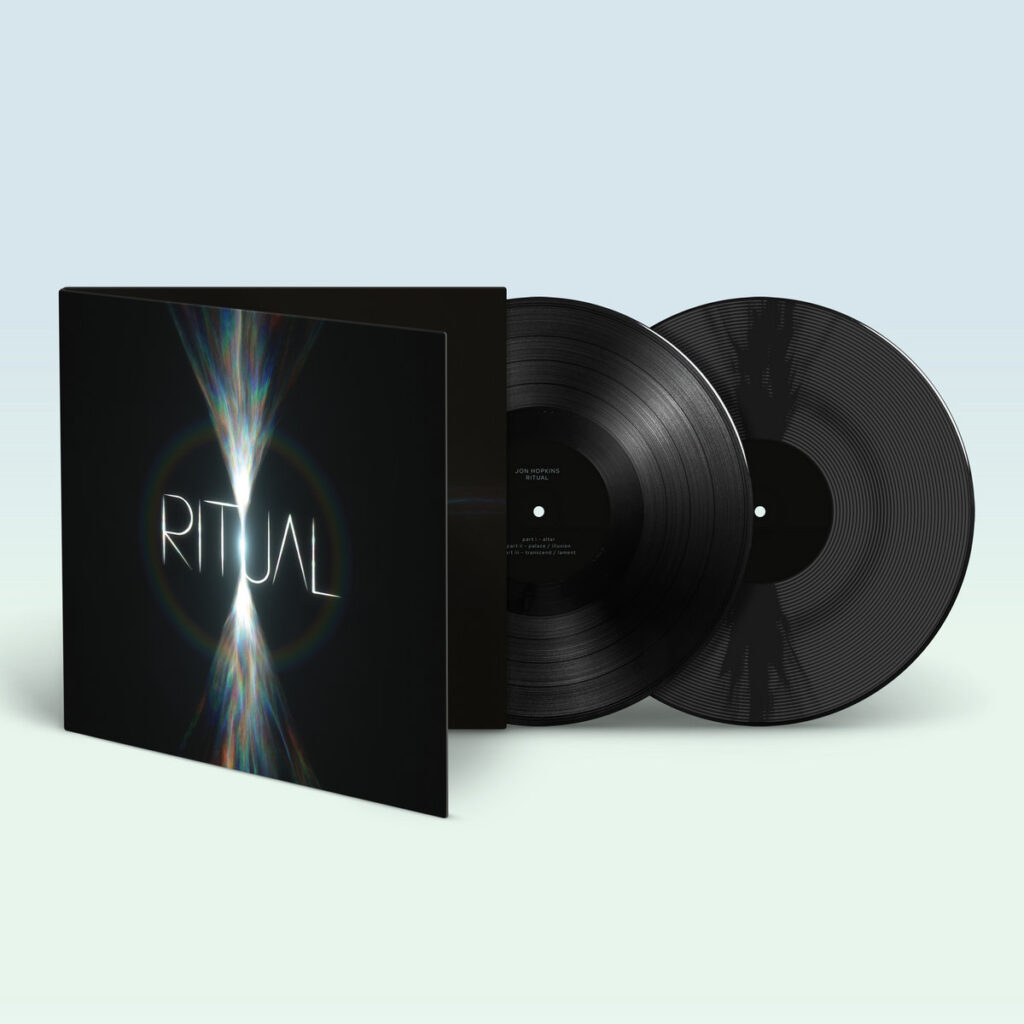
I am dreaming about an hour of music with a collection of female voices, coming from three new and excellent records. I am speaking of Jessica Pratt, Beth Gibbons (Lives Outgrown will be my album of the year, no doubts) and Julia Holter, interspersed by the right amount of instrumental music coming from artists like Pan American, Shabaka, Erik Honoré (hoping for a world premiere of his forthcomin album) Adam Wiltzie and that „psychedelic record“ from a psychotherapist living in Brooklyn (Jon Hopkins’ „Ritual“ might be a great choice, too, but will only arrive on August 30). The sequence is convincing by now, but as this hour of „my Klanghorizonte“ in July is already quite crowded (short to overflowing), the big question arises: will there be any other stuff (to be released in the weeks to come) with pure magic, and how will that affect (even undermine) the sequence in mind. I am only looking for instrumental music, and skip that wonderful new Eno song, the forthcoming Cale album, Einstürzende Neubauten and Sam Beam‘s fine song cycle. Why? It will be a blue hour of female voices only, and the instrumental pieces just have to live up to them in terms of excellence, and stylistic diversity. May you discover some for July 26 (Oded Tzur, Fire! Trio, and Wadada Leo Smith are already „booked“ for my edition of JazzFacts in early July)… another self-imposed rule (of the moment) is to leave out ancient works (no Can, no American Analog Set, no Toumani Diabate, no ECM „Luminessence“ series). Kindest regards from a flowworker!