life’s backward glances

once upon a time, in 1986 or 87, brian got the key for a big church in cologne, and i could hear him play the big organ. precious, not pompous. in those days, too, he produced michael brook‘s masterpiece hybrid. the woman on the photo is the woman eno later married, anthea norman-taylor. like so many old photos, there‘s a backward glance in it. i stumbled on this picture by chance, and then looked for my old vinyl of hybrid. no one would be surprised to hear some jon hassell ghost trumpet on it. there‘s a lake, too, like on henning‘s video, – on the album, it‘s called „pond life“. (m.e.)on land – that would be my favorite eno album. a timeless piece of music, highly inventive and enough room for the listener to create our train of thoughts. wonder if some of the reasons of its success simply has to do with it having almost no high end in the instrumentation, apart from the trumpet lifted from (was it „dream theory“?). same thing with brook´s „hybrid“ – only low, low / high mid areas involved. if you listen to „dream logic“ or „cartography“ – or for „poppies“ for that matter – it´s hardly anything going on in the treble (as if such word belongs in the analog world). when something do enter that frequency (voice, trumpet, the odd sine wave) area, it can be performed so softly and will still be extremely present in the recording. (j.b.)
“Latchi drom“ – an introduction to a parallel reading experience
„Late in the first half of Ravi Shankar‘s first New York recital on a 2 February 1957 at Town Hall, Dick Bock fell asleep. Shankar‘s brilliance that evening inspired critics to compare him to Western critical masters and jazz greats, but Indian‘s music immense impact on the West can be traced directly back to Bock‘s doze.
Richard Bock was an early iteration of the West Coast hipster, a hash-smoking bebop buff who had started the Pacific Jazz label a few years earlier to record Gerry Mulligan‘s new quartet with Chet Baker. He was in New York that week, to meet George Avakian, the head of jazz at Columbia Records, hoping to talk him into becoming a partner; together, Bock felt, they could dominate the expanding jazz market. When Avakian went to check out the sitar master Yehudi Menuhin was raving about, Bock tagged along.

With about a third of the seats filled, the concert was a commercial flop, but the audience was enthusiastic and Avakian so intrigued by the parallels to jazz that he offered Shankar a deal to make an album for Columbia. [that was 15 years ahead of me, buying a Ravi Shankar album appeared on the Beatles’ Apple Record label; Anm. v. Michael Engelbrecht, see cover photo] It was Bock, though, who would be the key to Ravi‘s international future. Had he dropped out of boredom? Not at all; Indian music, he explained, „put the listener ina relaxed mood and calm state of mind, which carries him into an area of serenity“. Bock may have then lacked the sixties vocabulary, but he responded as millions would a decade later; he had „tripped out“ on Indian classical music.“
[Any doubts about tripping out? Then listen, and be one of the millions, HERE!] This is the beginning of chapter 4 (pages 282 – 382) and what you‘ve read by now is close to 1/900 of Joe Boyd‘s „And The Rhythm Will Remain – a journey through global music. And as all chapter work independantly from one another, we choose chapter 4 as the content of our fabulous next parallel reading adventure.
Who apart from Brian W. , Michael E. and Olaf W. (just agreed!) will join the reading crew…. those who join the circle will, amongst else, see what the music of Ricardo Baliardo and a Romafest in Paris have to do with Bob Dylan‘s „One more cup of coffee“… but, then again, who needs an appetizer for a book written by the man who gave „White Bicycles“ to the world?
The parallel reading takes place between November 2 and November 23. Four weeks. Every participant has to answer four questions every week (as short or as long as he or she wants them to be). The questions are always the same, and the hundred pages will be read in, well, 4 parts.
- What did really take you by surprise! (Name one, two, or three „wow“-factors!)
- How do you experience to listen to an album you can choose freely from the pages you‘ve been reading?
- What is an interesting connection you haven‘t been conscious about before?
- How do you respond to Joe Boyd‘s writing (content / style, whatever)?
Monthly Revelations (October)
Curating a month of revelations, is playful, easy, and pure flowwork. You don‘t take it too serious, do it en passant, and with the fun of watching fireworks!
Slight changes, so here is take 2. October’s „flowworker“ albums nearly all by women, Laurie Anderson, Patricia Brennan, Nala Sinephro, Esperanza Spaulding (with Milton Nascimento) – as well as Joni Mitchell‘s adventures in the second half of the 70‘s, in the realm of archival discoveries. Zigzaging through decades amd centuries. Yesterday someone sent me the latest work by Laura Cannell, and listening deeper and deeper – I was bewitched and entranced: „The Rituals of Hildegard Reimagined“ are brought to life by a bass recorder, a knee-harp and the fantastic acoustics of an English church. We will return to Laura later!
The movie section includes Martina‘s long text on Wim Wenders‚ “Perfect Days”, and in the „Binge Department“, you’ll find my kind advice to let yourself fall into a ten-part “cop series” set in Mexico in the early 70‘s . The main characters are all women who deal with a serial killer, misogynistic and fascist power structures. What may appear slightly over-staged, with women on the verge of a nervous breakdown and a kind of theatrical decoration overkill, gains depth from minute to minute. Surely more soap opera with an edge than mexican neo-realism, but it works with all its beating hearts! „Women in Blue“ (Apple+) is deeply touching, highly suspenseful and brilliantly acted!
For the “Poetry” section I planned to finally place a long poem on the early years of The American Analog Set. But instead of putting down my words in stream-of-consciousness-style, i was trapped again by the beauty of their music from the 90’s, beautifully packaged in the all-vinyl „New Drifters“- boxset. So, a poem by Peter Rühmkorf did the job. Not out of nowhere. In this year I more than once ai returned to the two ECM albums Peter Rühmkorf made for ECM, with Eberhard Weber, Michael Naura and other fellow travellers. So good. Do yourself a favour and go hunting for a vinyl copy of „Kein Apolloprogramm für Lyrik“.
The conversation with Paul Newland, “The Forests Of Our Mind”, about his album “Muntjac” will remain with us in October. Some more listeners should discover this. From Epping Forest to some other „roots work“ Joe Boyd may have written, after “White Bicycles”, another essential book called „And The Rhythm Will Remain”. With its 900+ pages it may be a challenge – an „e-reader“ is highly recommended.
“Woodland“
„Ein Güterwagen täuscht das Auge. Auf seinen sich drehenden Rädern ist keine Ladung zu sehen, nur die Knochen einer Fracht, die den Himmel einrahmen, durchschossen von Blau. So beginnt das neue Album von Gillian Welch und David Rawlings: mit einem illusorischen Fenster zum Jenseits. „Empty Trainload of Sky“ ist eine akustische Rock’n’Roll-Miniatur, wie sie Welch und Rawlings auf ihrem Meisterwerk Time (the Revelator) aus dem Jahr 2001 perfektioniert und seither bewusst mit zwei Gitarren, zwei Stimmen, Spannung, Anmut und Entschlossenheit erweitert haben. Der Schwung dieses skelettartigen Mystery-Trains trägt Tradition und Unendlichkeit in sich. Ob er nun hohl oder voll ist, nichts oder alles enthält, er rast immer weiter vorwärts.“ (Jen Pelly, NPR)
In Sachen Hassell
Lieber Michael Engelbrecht, ich wollte ihnen schon länger schreiben, aber es kam immer was dazwischen, zuletzt ein Umzug innerhalb von Stuttgart. Ich bin vor gut zehn Jahren zu ihren Sendungen gekommen, und eine meiner ersten Einkäufe war damals das Doppelalbum „Last Night The Moon Came Dropping Its Clothes In The Street“ von Jon Hassell. Ich hatte mir gerade einen neuen Plattenspieler besorgt (Rega), und ich weiss noch genau, dass die ersten drei Platten auf dem Rega neben Jon Hassell das erste Dire Straits-Album und „Little Criminals“ von Randy Newman waren. Und dann bekam ich kurz darauf das Hassell-Album zum Geburtstag ein zweites Mal (kein Wunder, dass es mittlerweile ein Sammlerstück ist)! Obwohl ich ein paar Leute kenne, die bestimmte Platten zweimal kaufen, um immer ein perfektes Exemplar zu besitzen, erscheint mir das übertrieben, und gerne schenke ich ihnen die andere, noch ungespielte Hassell. Lassen sie mir nur die Anschrift zukommen, und sehen sie es als Dankeschön für spannende Radioabende. Mit freundlichen Grüssen, Wolfgang Bender!
Last Desert Island Collection (6) – Showtime mit Matthias Cordes
Moin Michael, mein alter Freund (und „Kumpel“) Michael S. leitete kürzlich eine Mail von Dir weiter. Glauben kann ich das alles noch gar nicht so richtig, denn ich verfolge Deine Radiosendungen seit ca. 1996. Kürzlich fand ich (in meinem Kassetten-Archiv) wohl eines der ersten Tapes der Klanghorizonte, aufgenommen am 30.03.1997 (u.a. mit The Köner Experiment, Terje Rypdal). Ich hab jahrelang so manche Freitag-Nacht am Radio verbracht und besitze heute noch jede Menge Tapes mit den Klanghorizonten. —- Gar nicht so einfach, anhand eines Fotos 10 Platten auszuwählen. Zugegeben, „Hierro“ und die kleine Finca am Meer scheinen wirklich ein Sehnsuchtsort zu sein. Die Auswahl fiel mir sehr schwer, aber Eno, Budd, Schütze, Bang oder Henriksen sind dann doch eher für andere Inseln… Liebe Grüsse aus Bremen!
Meine 10 Platten für El Hierro:
Hector Zazou- Chansons des Mers
Les Baxter – Jewels of the Sea
David Sylvian- Alchemy: An Index Of Possibilities
Brendan Perry – The Ark
Allan Taylor – Win Or Lose
Joni Mitchell – Hejira
The Paper Kites – Roses
Eberhard Weber – The Following Morning
Jon Hassell – Last Night The Moon Came Dropping…
The Blue Nile – Hats
(Matthias Cordes‘ Kiste)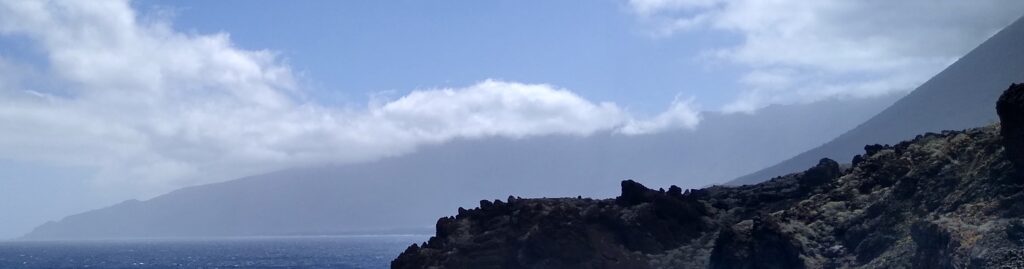
Today is the last day for sending your island 10 list to Flowworker‘s HQ. What we have seen and HEARD over the days, is a fantastic collection of very personal favourites, recurring classics and albums that came to mind while watching the little finca on El Hierro, like an last oupost of civilization. Thank you so much, Lajla, for making that snapshot that set it all in motion! We all will be mysterious travellers next year, on our trip to a Canarian island: meeting friends and other strangers with the common bond that music can be. (A personal note here: i replaced, on my list, the beloved „Interstellar Space“ by Coltrane / Ali with, what I would call my absolute ECM „burner album“ (from my 150 ECM burner albums), Keith Jarrett‘s The Survivors Suite.)Even Ildefonso Aguilar, founder of Lanzarote’s Festival Musica Visual, witnessed our lists (circulating there in Spanish translations with the „mini-essays“ in company) and invited me to come back soon to Jameos Del Agua and the other cave near Haria. He wants me to make two hours of „Klanghorizonte radio“ on the same little stage (Jameos de los verdes) on which years and years ago, David Darling played solo cello, and Eberhard Weber played solo bass. The tiny place is not that exclusive, no holy ground – thousands of tourists walk there week by week, all those chairs piled and covered with dust.
I will only play music from these island collections, recurring classics like „The Plateaux Of Mirror“ „On Land“, and „Veedon Fleece“, and some of those very personal favourites. It will not be a solo radio performance though, like the ones I did at the Punktfestival two times. I will probably share the stage with film director Wes Anderson and speak about „the creation of strangeness“. To keep it all in sharp focus, only two of his movies will be talked about (apart from the theme of desert island records), the one with the dogs (my favourite, Isle of Dogs), and „Asteroid City“. It‘s still all in the planning. (michael e.)
Desert Island Collection (5) – a solo for Paul Newland (aka Clevlode)
10 albums! Not easy!
Here you go:
1. Hissing of Summer Lawns – Joni Mitchell
2. Bitches Brew – Miles Davis
3. Spirit of Eden – Talk Talk
4. The Black Saint and the Sinner Lady – Charles Mingus
5. Revolver – The Beatles
6. On the Beach – Neil Young
7. A Love Supreme – John Coltrane
8. Scott 3 – Scott Walker
9. Veedon Fleece – Van Morrison
10. Blood on the Tracks – Bob Dylan
„I’ve been collecting vinyl again over the last few years. Spending too much money!!! But there are so many gorgeous pressings of jazz albums being released. I can’t resist them. The albums I buy I tend to play over and over again on my inherited 1970s hi-fi. It’s like a fine dining experience. I like to really listen to music, to really savour it and digest it, I like to make it an almost ceremonial banquet-like experience!“ (from „The Forests Of Your Mind“ – an interview with Paul Newland (Celvelode) on his new album „Muntjac“ – see TALK column)
Desert Island Collection (4) – Toni N., Andreas O., Olaf (Ost), und Burnt F.
…. habe mir auf einer Radtour am Deich den Wind um die Nase wehen lassen um den Kopf frei zu bekommen. Hier jetzt meine spontane Auswahl:
Klaus Schulze (Cyborg)
Jan Gabarek (Visible World)
Pat Metheny (Bright Size Life)
Joshua Redman (Wish)
Lee Konitz (Alone Together)
L.v.Beethoven (Violinkonzert op 61)
Kronos Quartet (Uniko)
Dave Pike Set (Album)
Michel Godard (A Serpent’s Dream)
René Aubry (Play Time)Toni Nees Kiste (Ostfriesland)
Lieber Toni, seit Langeoog kenne ich wieder das Gefühl, sich auf dem Deich den Wind um die Nase wehen zu lassen. Nun wird auch deine Sammlung an Inselplatten bald verpackt. Ich darf ja, als Organisator, mitmachen, wenn wir alle uns auf El Hierro oder Lanzarote treffen. Mittlerweile habe ich eine Sammlung aller kleinen Fincas auf diesen zwei Inseln, die in wilder Nähe zur tosenden Brandung gebaut wurden. So dass jeder von uns seine entlegene Unterlunft findet. Zwischendurch werden wir uns alle in kleinerer Besetzunh begegnen und Stories erzählen. Heute morgen suchte ich, dank deiner Anregung, nach meiner Platte vom Dave Pike Set, eine MPS-Produktion. Damals, 1971, klebte ich mir mein Dortmunder Domicil-Ticket auf den Rand des Covers, und so wurde der Tag meines ersten grossen Jazzkonzerts unvergesslich. Erstmals spielte Eberhard Weber an der Seite von Volker Kriegel, der ganz verblüfft von der Spielkunst des Bassisten, der uns nicht viel später mit „The Colours of Chloe“ verzaubern sollte. Wie Pat Metheny, war ich auch aber regelrecht vernarrt in „The Following Morning“. Und in „Yellow Fields“. Und in „Chorus“. Peace, Michael!

Keine Ahnung. In solch einer Geräuschkulisse würde ich am liebsten dieser lauschen.
Alice Coltrane (The ecstatic music)
Judith Pintar (alle drei Alben)
David Sylvian (Blemish)
Anthony Phillipps (Private Parts and pieces 3+6)
Klaus Wiese: Maquam (kürzlich erst entdeckt)
Nine Horses (Snow Borne Sorrow)
Hiroshi Yoshimura (Green)
Ndagga + schönen Dubtechno
rt60fields (Transient)
Klaus Schulze (En=Trance)Immer mit dem sound of nature im Hintergrund…
herzlich grüßend
Olaf (Ost)
The moon and the melodies – Harold Budd / Cocteau Twins
The Plateaux of Mirror – Harold Budd / Brian Eno
On Land – Brian Eno
Power, Corruption and Lies – New Order
Wave – Antonio Carlos Jobim
Unknown pleasures – Joy Division
Prokofiev, The 5 Piano Concertos – Vladimir Ashkenazy + LSO
J.S. Bach, Complete lute music – John Williams
Earthling – David Bowie
A Victim Of Stars 1982-2012 – David Sylvian(Andreas Oderskys Kiste, Ostrhauderfehn)
Lieber Michael, meinst Du nicht, dass eine Atombunker–Auswahl angemessener wäre ?Seelennahrung pur neben Holocaust. Da fielen mir sogar recht viele Platten ein, die ich im Brand liegen lassen würde. Was die Insel-Variante betrifft, würde ich Platten vorziehen, die ich noch NICHT kenne, gegenüber denen, die ich schon schätze. So gesehen, muss ich passen; ich würde aber sehr gerne Deine Auswahl für mich mitnehmen. Vermutlich hast Du einen besseren Überblick über Hörenswertes als ich ihn habe. Und nichts geht über den Sound der Brandung, bis man ganz dicht im Kopf ist. Mit besten Grüssen, Bernd
(Burnt Friedman, Portugal)
No, No, everybody is a curator of his own island record collection. No „experts“ needed.. (m.e.)
Desert Island Collection (3) – Lorenz und Norbert
…. hier meine spontane Liste
für dieses Haus auf dieser Insel.
viele Grüße, Lorenz
Steve Tibbetts: Northern Song
Nigel Mazlyn Jones: Sentinel
Laura Nyro: Eli and the thirteenth confession
Lizzy Mercier Descloux: One for the soul
Steely Dan: Aja vs. Royal Scam (live)
Kip Hanrahan-Vertical‘s Currency
Eberhard Weber: Pendulum
Wilco: Sky Blue Sky
Iron and Wine: Who Can See Forever
Bob Dylan: Fragments (Time Out Of Mind Sessions)
(Lorenz Edelmanns Kiste, Leinfelden-Echterdingen)
10 für die Insel
Young Marble Giants: Colossal Youth
Congos: Heart Of The Congos
John Coltrane: Crescent
Felt: Forever Breathes The Lonely Word
Joni Mitchell: Court & Spark
A Tribe Called Quest: Low End Theory
Robert Wyatt: Rock Bottom
Curtis Mayfield: Curtis
Brian Eno: Before And After Science
Nick Drake: Brighter Layter
(Norbert Ennens Kiste. Hamburg)10 für Hause
Pere Ubu: The Modern Dance
The Fall: This Nation Saving Grace
Television: Marquee Moon
Slint: Spiderland
Suicide: Suicide
Wire: Chairs Missing
Alice Coltrane: Journey In Satchidananda
Cpt. Beefheart: Clear Spot
Can: Tago Mago
Velvet Underground: Velvet Underground
(Norberts Zugabe)So ist das mit „Inselalben“, sie brechen einem das Herz, sie überdauern Jahrzehnte, sie folgen uns ans Ende der Welt. Nur ein kleiner Blick auf die beiden Kisten für El Hierro genügt, zu erkennen, was für „deep stuff“ da aus dem „living room mit Meerblick“ erklingt, sind die Sachen einmal ausgepackt. Mit dem Leihwagen noch eine kurze Fahrt ins Restau des Vertrauens – gegrillte Scholle mit mojo rojo – bevor zu einem Rosé aus der Kühlung zwei Stunden Meerblick eingeatmet wird. Im Licht der Dämmerung senkt sich dann die Nadel: Lorenz legt „Sky Blue Sky“ auf, und bei allem vita contenplativa, wird in den Liedern von Wilco reihenweise altes Land, alte Heimat beschworen, verloren, betrauert. Wenn Norbert „Rock Bottom“ auflegt, könnnte er das kristallklare Wasser nach manchem „Felsboden“ absuchen, und folgt Robert Wyatt doch auch durch eine Zeit der Abgründe und letzten Lichts. Aber das ist der Zauber solcher Alben, und solcher „surroundings“, dass uns die Lieder dort in der Finca im Nirgendwo (und natürlich auch „at home“) Flügel verleihen. Manchmal ist es trotzdem angesagt, etwas Wein nachzuschenken. „Here he comes / The boy who tried to vanish / To the future or the past / Is no longer here / With his sad blue eyes…“ Manche können diese Zeilen singen, wenn sie sie lesen. (m.e.)
Desert Island Collection (2) – ein Solo für Michael Wenninger
Es spricht sich herum. Hier auf El Hierro und anderen kanarischen Inseln ziehen sich alsbald keine Musiksüchtigen in einsam gelegene Häuser am Meer zurück, um rund um die Uhr Musik zu hören, vor und nach den Mahlzeiten, vor und nach zwei Tauchgängen. Nein, das Spiel iat raffinierter: jeder Angeschriebene wurde darum gebeten, ein Spiel zu spielen, sich zehn Alben zu vergegenwärtigen, die an einem solch entlegenen Power Spot an der Küste idealer Hörstoff wären. Dass dann mitunter nur zwei, drei davon ins „wahre“ Inselleben drängen, also auf der wunderbaren Hifi-Anlage des Hauses gehört werden, während zum Beispiel die Sonne das tut, was sie besonders gut kann, nämlich ins Meer zu sinken (oder was und wann auch immer) – geschenkt! Denn die klangliche Auswahl für bestimmte Momente und blaue Stunden zu haben (zwischen „Natur pur“ und „On Land“ etwa), ist einfach so fabelhaft wie die Aussicht dort! Viele kleine Dinge können letztlich entscheiden, ob Michael W., vielleicht zur Siesta, „Colossal Youth“ hört oder eine der drei Platten der ersten famosen Neil Young-Compilation „Decade“. Oder einfach nur bei geöffnetem Fenster stundenlang dem Rauschen der Wellen folgt. Und schliesslich hat er uns noch eine zweite „pankanarische“ Liste zukommen lassen , eine Zugabe – una cosa hermosa!
Steely Dan – Aja
Young Marble Giants – Colossal Youth
Neil Young – Decade
Lou Reed – The blue mask
Van Dyke Parks – Song Cycle
David Sylvian – Secrets of the beehive
Brian Eno – On Land
Miles Davis – Sorcerer
Bill Frisell – Orchestras
Black Uhuru – Sinsemilla
(Michael W.s Schatzkiste, Saarbrücken)Und hier noch meine Special Canaria Island Collection – auch gern für zu Hause:
Budd/Eno – The Pearl
Ildefonso Aguilar – Erosion
Velvet Underground & Nico
Neil Young – On The Beach
Jakob Bro – Gefion
Nick Cave – Push the sky away
Prefab Sprout – Andromeda heights
Offshore – Cote de Cologne
Paul Bley – In the evenings out there
Kancheli/Kashkashian – Vom Winde verwehtUnd apropos Mietwagen: Beim letzten Kanaren Besuch auf Lanzarote und Fuerteventura vor ca. 10 Jahren hatten wie einen Leihwagen inkl. einer Audio Guide CD über Fuerteventura. Zwischen den Beschreibungen der Sehenswürdigkeiten auf spanisch waren als Überleitungen Titel von ECM Aufnahmen (Karaindru, Brahem, Micus, Andersen) ausgewählt. Ich war mehr als erstaunt. Wobei das natürlich hervorragend gepasst hat.