my five plus 1 contenders for the ECM vinyl luminessence series of reissues 2028
The two late masterpieces by Steve Tibbetts each require three vinyl sides per album, so for this reason—and for several even better ones—a release like this, which would be a vinyl debut anyway, featuring liner notes and interviews by me, would be a pretty good idea. I have a very personal connection to all of these albums, though in very different ways. For Ruta & Daiya, I’d advocate using Maja Weber’s cover art from the first edition. “Nan Madol” is an undisputed masterpiece by the Finnish composer and drummer. And in that case, I also think the sunset image from the first edition is the better choice.
- Keith Jarrett & Jack DeJohnette: Ruta and Daitya
- Edvard Vesala: Nan Madol
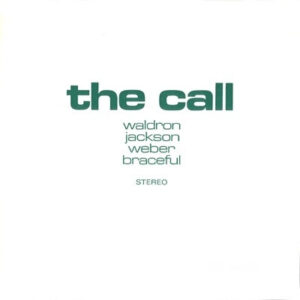
- Waldron / Jackson / Braceful / Weber: The Call
- Hamasyan / Henriken / Aarset / Bang: Atmosphères
- Steve Tibbetts (3 LP Set): Life Of & Closer*
- Heiner Goebbels: SHADOW / Landscape With Argonauts

*Diese beiden späten Meisterwerke von Steve Tibbetts fordern pro Album drei Vinylseiten ein, daher wäre aus diesem und einigen noch viel besseren Gründen eine solche Edition, sowieso eine Premiere auf Vinyl, mit liner notes / Interviews meinerseits, eine ziemlich gute Idee. Zu allen Alben habe ich eine sehr persönliche Beziehung ganz unterschiedlicher Art. Bei Ruta & Daiya würde ich das Cover der Erstausgabe von Maja Weber plädieren. „Nan Madol“ ist ein unbestrittemes Meisterwerk des finnischen Komponisten Und Schlagzeugers. Und da halte ich auch den Sonnenuntergang der ersten Ausgabe für die bessere Wahl.
7 Kommentare
Jan Bang
Dear Michael,
Atmospheres would deserve a vinyl release remasted by the great Helge Sten who did the excellent job onthe vinyl release of Cartography. Currently touring with Eivind in South East Asia and performed the opening piece („Traces I“ of the Atmospheres album) in Bangkok and tomorrow night on national TV here in Hanoi. The city is caotic. Busy streets crowded with poeple on scooters on their way to and fro work. The people being friendly and welcomng. Inspiring.
Best,
JB
flowworker
Far away places, Jan.
It’s interesting. By the way, that the first three proposals all got a second cover after a short while or even quite a long time.
The Call is more reminding of Embryo’s Steig Aus than being an archetypal ECM release. Whatever the story of that early 1971 ECM / Japo album is, it is regarded by not so few music lovers as a buried treasure of European Fusion Music of the early 1970’s. And, with all due respect, superior to Mal Waldron’s Free At Last. I would like to know what the real reason was for replacing the original white cover of The Call with another quite disturbung one.
The sound of The Call is pure excellence! it is simpl not the Weber sound we know. Who cares when the magic is overwhelming. Not is single wasted second, no doodling, no killing time with vieruosity. It’s heartfelt trip from start to end.
Maybe the three letters ECM were missing up front😉
The Jarrett / DeJohnette one is the only Jarrett recording with traces of electric keyboards. I think Mr. jarrettbwould kindly reject the idea of a vinyl reissue. Though it’s a dream of an album, as Maja Weber’s cover was.
My proposals are zigzagung through the early and late years of ECM. And I find there can be no higher praise than simply stating the fact that an album like Vesala’s Nan Madol blew me away onupon a time than Tibbett’s Close, for example, did not so many moons ago.
m.e.
Interaktionist
The Call: Was für eine wunderbare Empfehlung. Danke!
flowworker
Dear Interaktionist!
I do not know any person who discovered THE CALL , nowadaysor in the old days, who hasn’t been deeply impressed from the the vers first moment on.
I do love these six albums so much….
back in the day I sent Brian Eno that Goebbels album, and, a friend of spoken word anyway, he was very enthusiastic about it.
(Ich schreibe hier manchmal auf englisch, weil es Blogetexte gibt, die ich einem kleinen Zirkel in England und Norwegen zukommen lasse.)
Natürlich könnte ich etliche andere Alben heir listen, aber ich nehme gerne die, die eng mit meiner „aural history“ zusammenhängen.
Was für tolle Alben hat Olaf W. vorgeschlagen hat: Cello von David Darling, Mike Nocks Ondas u.v.a. Nur bei Sidsel Endresen bin icn anderer Meinung. Für mich ist nicht So I WRITE ihre grosses ECM Album, sondern EXILE. Selbst Karl Bruckmaier war hun und weg in der SZ, der nicht gerade ein ECM afficionado ist und Anour Brahems Musik als ROTWEINWELTMUSIK abkanzelte, ich denke, er lag da mal voll daneben, aber den Ausdruck habe ich für ein anderes süssliches Weltmusikalbum gerne „geklaut“, nachts im Radio 😉
Olaf Westfeld
Ich hatte Alben vorgeschlagen, die mir noch fehlen. Da könnte ich auch noch weitermachen: Schattseiten, Three Day Moon,… und 4 Deiner 6 Titel (habe 1 & 2).
Michael E.
Das Resevoir von Alben, die eine reissue Wert wären, ist immens.
THE CALL etwa wird sicher nicht eine Reissue als Vinyl erhalten, weil das keine Scheibe ist, die ECM oder Eberhard Weber ideal repräsentiert. Das wären Yellow Fields oder The Followigng Morning oder das Debut The Colours Of Chloe weitaus mehr.
Ich glaube nicht mal, dass The Call eine Eicher-Produktion ist. Aber was kam neun heraus: FREE AT LAST, das erste ECM Album, also wirklich historisch wertvoll – die Musik dort aber lang nicht so gut wie andere platten Platten von Mal Waldron. Oder eben THE CALL.
Auch würde Jarrett nie einer reissue von Ruta and Daitya zustimmen – damals führte er ja nach eigenem Bekunden, sowas wie eine „anti-electric crusade“ 😉 … aber was für ein unfassbar gutes Album das ist, aus dieser in between Zone zwischen seiner Zeit bei elektrischen Miles und den frühen ECM Alben…. ein absoluter Geniestreich!
Und Steve Tibbetts, ein „analog guy“ sowieso – und wie grandios wäre es, diese beiden Spätwerke, die beiden bei mir auf Nummer Eins meiner jeweiligen Jahresliste standen, als Dreier LP Set zu haben…. es wäre schon sowas wie Steves Vermächtnis…
Übrigens, wenn THE CALL ein buroed treasure ser europäischen fusion music der frühen 1970er war, kam alsbald auch so ein vie zu wenig in den Olymp gehoebemes Werk der amerikanischen Fusion Music heraus: LOVE LOVE, von Julian Priester.
flowworker
B Sirota, the aquarium drunkard
The Japanese jazz critic and producer Masahiko Yuh recalled pianist Mal Waldron playing him Bitches Brew for the first time in May 1970. Sitting in the expatriate Waldron’s apartment in Munich, the pianist spun the album with no commentary, save for the occasional wide-eyed glance in his guest’s direction, as if to silently ask whether he could believe what they were hearing. Yuh noted that the title of the album Waldron began recording that September, what would become the Japan-only release Spanish Bitch, seemingly alluded to not one, but two Miles Davis classics. The acoustic Spanish Bitch does not really resemble Miles’s electric masterpiece from earlier that year at all. But you can hear some tentative rock shadings in the deconstructed cover of “Eleanor Rigby” and in the blocky (and disconcertingly unfunky) “All that Funk.” Mostly these come from rhythmic instincts of Waldron’s drummer, another expatriate American long ensconced in the German jazz and early fusion scene, Fred Braceful.
Spanish Bitch doesn’t entirely work. Perhaps this is why Manfred Eicher, for whom it was recorded, didn’t release it on his newly founded ECM label. (Bitch was intended as the follow-up to Waldron’s Free At Last, recorded in late 1969, the very first album released on Eicher’s fledgling label.) But the collaboration with Braceful opened a path to an album that would indeed make good on those first gleanings of electric jazz back in Waldron’s Munich flat.
In February 1971, Waldron and Braceful, joined by bassist Eberhard Weber and an American ex-GI organist named Jimmy Jackson, recorded The Call. This was to be the first release for Eicher’s new experimental jazz subsidiary JAPO records. Braceful and Weber were members of the Wolfgang Dauner Group just as it was evolving into the formidable Et Cetera, one of the leading lights of the nascent German fusion scene. Jackson, meanwhile, was a gigging soul jazz musician in Munich who had somehow fallen in with the Amon Düül crowd, playing the mysterious Mellotron-like “choir organ” on Tanz der Lemminge and Wolf City. Jackson had also played uncredited organ on Tangerine Dream’s debut Electronic Meditation. More than a decade earlier, Waldron had been the accompanist for Billie Holiday in her final years. A few years after that, he was part of Eric Dolphy and Booker Little’s legendary residency at the Five Spot. And now, aged forty-five and permanently living abroad, he found himself planted amidst the first stirrings of krautrock.
The Call is tripped-out space jazz of the very highest order. And if it hadn’t been virtually impossible to physically lay one’s hands on for the last fifty years (the only reissue has been the Japanese CD edition from 2006, and even these now sell for hundreds of dollars), The Call would be mentioned in the same breath as Lawrence of Newark and Love, Love in the empyrean of dank, psychedelic jazz. Comprised of two sidelong slabs, The Call centers on the interplay between Waldron’s demonic electric piano and Jackson’s kaleidoscopic organ. Waldron’s stuttering solo on the title track is a minimalist marvel of repetition and subtle variation. Jackson’s acid blues organ sounds more like Al Kooper than Jimmy Smith. Weber is funky as hell here, especially during his long, knotty solo on the title track, while Waldron vamps away. Braceful mostly stays out of the way and keeps everything humming, but even he gets a nice turn in the spotlight before the burbling riff returns. On the more exploratory B-side track, “Thoughts,” Waldron’s hypnotic, slightly droning solo is solid evidence why Matthew Shipp classes him in the “black mystery school” of pianists. Even after Jackson’s organ takes the lead, Waldron’s weird accompanying coloration continues to seep in. Weber gets a barbed wire arco solo in here, and a quiet, trenchant dialogue with Braceful.
The Call is poised right at the threshold of the kraut fusion explosion. Weber and Braceful would appear on the first Et Cetera album later that year. And then Braceful would go off to form Exmagma. Waldron and Jackson, meanwhile, would appear on Embryo’s indispensable Rocksession and Steig Aus over the next two years. The latter album even featured a lengthy, prog rendering of Waldron’s tune “The Call.” Eberhard Weber would, of course, soon become a dominant force on Eicher’s ECM in the later 1970s, with a decidedly different sound than his funky jazz-rock beginnings here. Waldron, meanwhile, never cut another record for ECM (or JAPO) again.
Still, his final word on the label is now recognized as a triumph, emerging from the improbable intersection of post-bop and krautrock, fusion and prog in early 1970s Munich. That The Call hasn’t received a proper reissue is almost criminal.