Von Landschaft zu Landschaft, mit einer Autobahn
Wenn man so viel Zeit hat, eine Sendung zu planen, in diesem Fall die Januarausgabe der „Klanghorizonte“, verändern sich die Sequenzen einzelner Stücke fortlaufend. Letztlich bin ich erst zufrieden, wenn sich die letzte Lücke eines ausgefuchsten „sequencing“ schliesst. Und so kam es, dass das eine „Fragezeichen“ lange im Raum stand – denn was für eine Musik könnte die CD, die vor allem dem Weltenwanderer Gurdjieff gewidmet ist, mit dem Kraftwerk-Klassiker „Autobahn“ verbinden: am Ende war es sonnenklar: die kleine Schatzkiste von Pauline Anna Strom war das fehlende Glied einer Assoziationskette, die mit Yoshimiras japanischer Hausmusik begann und mit Klängen endete, die Lou Reed kleine Ewigkeiten lang hörte, in seinem Wohnzimmer, mit Blick zum Hudson River, in den letzten Jahren seines Lebens. 11 verschiedene Klangwelten, 11 Horizonte. Und Storytelling.
„Alte und neue Träume“
The Playlist:
Jan Bang & Eivind Aarset
P J Harvey
Old And New Dreams
Rickie Lee JonesNils Økland & Sigbjørn Apeland
Josephine Foster
Matthew Herbert
Belbury Poly
Craven Faults: StandersRickie Lee Jones – „Ich spüre, dass eine natürliche Sprache geflüstert wird, die uns allen gemeinsam ist. Im Traum verstehe ich manchmal die Symbole, aber wenn ich aufwache, sind sie verschwunden. Ein Hauch von Tinte bleibt nicht an dieser Realität haften. Was habe ich gehört? Was haben sie gesagt? War es Musik? Ich habe sicherlich etwas gehört. Nach all diesen Jahrzehnten bleibt das Leben hartnäckig rätselhaft. Musik formt uns und verändert uns grundlegend. Wenn wir einmal zugehört haben, hören wir nicht mehr auf. Wir erholen uns nie von der Musik. Wir kehren immer wieder zurück zum Radio, zum Plattenladen, zum Schlafzimmer, wo die Mädchen den ganzen Tag Platten hören.“
Nachtwanderung nahe Klein-Afrika
Beim legendären Mana-Treffen auf Sylt anno 2014 hätte ich fast ein Strandkonzert von den Sheriffs of Nothingness eingekauft, aber dann kam es anders. Vom Morsumer Kliff hatte mir Lajla erzählt, bevor ich das erste Mal dorthin fuhr. Als ich in den letzten Jahren immer wieder zu der Insel reiste, liess mich der Gedanke nie los, einmal nach „Klein Afrika“ aufzubrechen, wie ein Teil dieser uralten Landschaft genannt wird, und gswiss nicht wegen der Hitze, die mir auf einem klassischen Sonntagspaziergang dort engegenschlug.
The more frequently you return to it, the greater the rewards. The bass line suspending Hassell’s eastern melody for “Chemistry” will start to glow. The synthesized horn of “Delta Rain Dream” will transform into a meadow. The cycled trumpet sample of “Rising Thermal 14° 16′ N; 32° 28′ E” will hypnotize you.

Nein, nachts, mutterseelenallein, und so kam es dann – in dem Rucksack waren, unter anderem, eine Taschenlampe, ein nicht gerade leichter Lautsprecher von Sonos, der von meinem Ipad angesteuert werden konnte, und Sprudelwasser. Als erstes kramte ich die an diesem Spätsommerabend 2020 meine Taschenlampe heraus, und machte mich auf den Weg, den ich tagsüber im Schlaf fand, im Sternenlicht aber nur zaghaft betrat.
Nachts bekommen Rundwege eine andere Dimension – da ist ja niemand, und selbst ein harmloser zweiter Wandersmann würde einem erstmal, als Schatten, einen gehörigen Schrecken einjagen. Bei diesem Rundweg, der auf dem verlassenen Parkplatz begann, den viele von euch kennen, kramte ich als erstes die Lampe heraus, denn das Licht der Sterne war viel zu fahl und meist von Wolkenschleiern verdeckt.
Harmonic motion is limited and all attention is centered around the embellishment of a single melodic line. Hassell is playing lead on these songs, but his performances often blur seamlessly into the backing tracks.
Es gibt eine nicht ganz ungefährliche Stelle auf diesem Weg (wenn man sich blöd anstellt), ein schmaler Steg, mit recht steilem Abhang zur Linken, den ich Schritt für Schritt in Angriff nahm, das künstliche Licht mein Beschützer, und schliesslich, nach einer halben Stunde etwa, setzte ich mich an eine höhlenartige Einbuchtung, stellte die Box nahe am Wattenmeer auf, und froh, einen windfesten dicken Mantel zu tragen, liess ich „Possible Musics“ laufen, von Jon Hassell und Brian Eno, von Anfang bis Ende, und wie die Zeit sich in der Folge verhielt, ob sie dahinflog oder stillstand, blieb ihr selbst überlassen, ich mischte mich in nichts ein, und liess mich von den Klängen einfangen (wie seit Jahrzehnten schon), von den Schlangenlinien der Trompete, den Trommeln von Nana Vasconcelos, und einmal, als ich es donnern hörte, schaute ich kurz zum Himmel, eine Täuschung der Sinne, so fein verwoben war der verhaltene Donner mit Brians elektronischen Schatten.
Es ist einer der wenigen Tricks, die ich gut beherrsche, und die – auch wenn sich das wenig logisch klingt – auf die Zeit zurückging, als ich in meiner Kindheit ein Buch voller Zauberkunststücke studierte: in touristisch hochfrequentierte Orte am besten nur in der Nachsaison reisen, und dann hinein ins Abgelegene, in die Unzeiten: wind on wind, wind on water. Je leerer eine Bühne ist, desto mehr bewegen sich die Dinge, die gar nicht da sind, Areale von Traum und Wirklichkeit rücken zusammen. Nachdem „Possible Musics“ in meinem abgelegenen Erdwinkel verklungen war, liess ich, nach einer langen Stille, aus purer Sentimentalität, diesen Song von Bob Dylan laufen, in dem er um noch eine Tasse Kaffee bittet, bevor er aufbricht, zum nächsten Tal. Dann fing es tatsächlich noch an prasselnd zu regnen, und ich zauberte aus meinem kleinen Rucksack einen faltbaren blauen Regenschirm (dessen Farbe von der Nacht verschluckt wurde), und eine noch halbvolle Thermoskanne Kaffee. Eine Bö riss mir auf dem Rückweg den Regenschirm aus der Hand, und ich war gut beraten, ihn nicht im Dunkeln von Klein-Afrika zu suchen.
“Exposures“ – Die Öffnung einer Schatzkiste
„War alles nur ein Spuk, wie Ari-Ups Erlebnisse im Wald, oder in einer Kirche, wo sie mit einer alten Frau über den Teufel gesprochen hat? Sind sie buchstäblich im Untergrund verschwunden? Ist die Provinz die Provinz oder ist sie das Aufmarschgebiet für einen Aufstand gegen die Metropolen? Ein Tag Später war in Hamburg die Strassenschlacht im Karolinenviertel, Mai ’80.“
(Diedrich Diederichsen, Sounds, Juni 1980)
„Wir sind so oft wie möglich nach Weißenohe gefahren: Robert Fripp + League of Gentlemen, Gong, Soft Machine, Nucleus, Hardin + York, Osibisa, Wolfgang Dauner, Livin‘ Blues, Chicken Shack, Hawkwind, Johnny Winter, Volker Kriegel, Alexis Korner. Bin selbst Musiker geworden, ohne das to Act hätten mir einige wichtige Inputs gefehlt.“(Rainer Berneth, To Act-Insider)
The gardener plants an evergreen / Whilst trampling on a flower / I chase the wind of a prism ship / To taste the sweet and sour“. Irgendwann, ganz sicher, ist mir auf einer Party, als es noch keine sozial-liberale Koalition gab und „Der Kommissar“ mit dem Stoiker Erik Ode zu den Innovationen des Zweiten Deutschen Fernsehens zählte, die erste King Crimson-Platte mit dem berühmten Cover der verhutzelten Famtasiegestalt in die Hände gefallen, und wir staunten nicht schlecht, als wir den wilden rhythmischen Verwirbelungen des „21st Century Schizoid Man“ folgten. Unerhörter Stoff.
Neben den karmesinroten Unheimlichkeiten, die sich auf dem Album bemerkbar machten, zogen auch diverse, mellotrongetränkte, Sehnsüchte ihre einsamen Bahnen. Und so wurden diverse King Crimson-Alben Begleiter durch meine Jahre als Teenager und Twen. Seit einiger Zeit ist die Musik von Herrn Fripp und seinen Kollaborateuren Gast in meiner „elektrischen Höhle“, vorzugsweise in den Surround-Mischungen von Steven Wilson, die mich eher nicht in sog. gute alte Zeiten transportieren, vielmehr immer neu aufleuchtende Winkel freilegen.
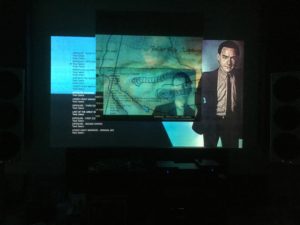
Und so begab ich mich in den letzten Wochen auf eine Zeitreise in die Jahre von Fripp, dem Solisten: zwischen 1977 und 1983, spielte er solo seine Frippertronics, erholte sich von der ersten langen Regentschaft von King Crimson, übte den „lateralen Drift“ frei nach Robert Pirsigs „Zen oder die Kunst, ein Motorrad zu warten“, brachte diverse Musikproduktionen auf den Weg, widmete sich (etwas früher noch, zwischen 1974 und 1977), und sehr „diszipliniert“ (ein Schlüsselwort seines Credos), einer von Gurdjieff-Nachfahren befeuerten Schule der Spiritualität, und pflegte seine Freundschaft zu dem bekennenden Atheisten Brian Eno, den er stets „Captain“ nannte.
“Approaching Pavonis Mons By Balloon“ (a healthy quantum of escapism for your survival kit)
(geschrieben auf meiner Schlafcouch in 45 Minuten, und weil es manche alten Hüte enthält, die nicht mal entstaubt wurden, habe ich es ins Französische übertragen lassen. Das zauberhafte Album der Flaming Lips bewies mir einmal mehr, dass Musik wohl kaum „the healing force of the universe“ ist, aber, richtig dosiert, Fingerzeig, Alphawellentraining, und akustisches Yoga für die Seele. Lossau warf noch einen gündlichen Blick auf das Röntgenbild meiner LWS in versch. Positionen. Eine minimale Vorwölbung bei Wirbel 5 oder 6, für das Basiscamp in Nepal sah er schwarz, gab aber grünes Licht für Bauchmuskeltraining, für einen stadtbekannten Osteopathen – und Pavonis Mons („aber nur mit dem Ballon, Herr Engelbrecht!“)
C’est ce qui s’est passé hier. Lossau m’a dit que j’avais probablement mis quelque chose sur mon infection et qu’un petit antibiotique puissant était indiqué. Je lui ai raconté le vieux dicton d’une amie selon lequel « même les larges bandes ont des bords », mais il a dit « essayons ». Tout cela s’était accumulé pendant des jours et semblait sans gravité, mais ensuite : la spasticité, la fièvre, la toux… et le résultat des élections américaines. Je suis allé chercher le résultat après la visite à la pharmacie : encore un fasciste de plus, et son équipe de fascistes. Comme si cela ne suffisait pas, il suffit de penser aux criminels de guerre comme Netanyahu et sa bande d’ordures avec leur politique de vengeance qui encourage le génocide. Dans cette situation, et au vu des électeurs idiots de l’AfD à l’Est et ailleurs….

Pour changer, Olaf a prononcé l’un des discours les plus forts de son mandat, en pensant au dernier document stupide du carriériste Lindner. Comme Trump est un être animé par le désir de régler ses comptes et de se faire reconnaître, que ses discours des derniers mois et des dernières années sont un exemple gériatrique de la désorganisation progressive des processus mentaux, et qu’il a pourtant réussi une fois de plus à imposer son mantra de la grandeur de l’Amérique grâce à son charisme bizarre à la limite de la débilité et au capital de plusieurs milliards de dollars de ces « scumbags » à la Musk, Thiel et compadres, le pays déchiré se montre une fois de plus : seuls les rapports de pluralité sont plus clairs qu’avant, et il est possible de gouverner à travers. Des moulins pour l’eau de tous les fascistes de la terre !
Pourquoi l’Allemagne, malgré toutes les paroles d’avertissement adressées à Netanyahu et à sa bande, multiplie-t-elle par cinq les dépenses en millions d’euros pour Israël, pour doubler dans la même correspondance l’aide humanitaire aux Palestiniens ? C’est de l’hypocrisie pure, Madame Baerbock, et cela ne sera pas compensé par des paroles d’avertissement. La dette historique de l’Allemagne à l’égard d’Israël ne devrait pas conduire à un chantage moral et à l’encouragement d’un génocide. Ce n’est pas possible. J’ai pris la grosse pilule, deux paracétamols, la décoction de gingembre qui a mijoté pendant vingt minutes, et j’ai fait quelques exercices de respiration.
Un « remède » inattendu est arrivé par la poste de good old England : le nouveau mixage Atmos et 5:1 de mon disque préféré des Flaming Lips. Yoshimi Battles The Pink Robots. Pour ceux qui connaissent l’histoire, une situation classique de David contre Goliath. Ici, malgré toutes les mauvaises langues, c’est Kamala, ahem, Yoshimi qui gagne contre les robots-machines, dans l’un des mixages surround les plus excitants et les plus émouvants de ma collection, qui n’est pas des moindres.
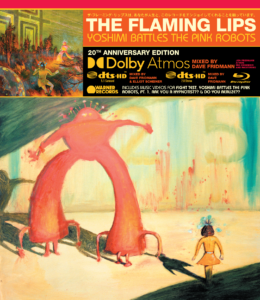
Et pour ceux qui ne connaissent pas bien Yoshimi, je rappelle que malgré quelques robots péteurs, cet album est plein d’âme, de soul, de rêverie, de funk dur, de vers d’oreille, de lamentations – et de guitare de feu de camp dansant dans l’espace, une ode à notre mortalité et au message, s’il vous plaît, de vivre chaque instant. Mais ce n’est pas avec le discours positif de l’école de Dale Carnegie, mais avec de la « deep, deep music » et 360% de cinémascope.It will also work with your old vinyl or cd, no doubts!
(Oh, my god, we‘re approaching, more and more, Pavonis Mons!)
Always another road to be taken (see „Timefold“ cover).
Do you fucking realize?More Songs About Buildings And Blue

They were a short-lived group with a history. They were nearly lost in oblivion, aside from the happy few New Yorkers with some of their vinyl from the early days of CBGB’s. Arthur Russell was part of the game, and part of their ending, but The Necessairies were not his band. First steps included a single produced by John Cale. Brian Eno lived around the corner. I never even heard the name of the band, till the label sent me the reissue vinyl copy. Nice cover, I thought. And Arthur Russell? Remember this fucking genius who died so early – the endless line of HIV victims brought bitter endings to a blossoming cultural climate of the ’80s. Arthur Russell was no icon, no hero, he was a versatile composer and creator who preferred the background, loved going to extremes and sabotaging every trace of mainstream. He was re-discovered by a long article from David Toop (!) in the „Wire“, more than ten years ago. From that time on, his old works surfaced one after the other. The Necessairies belonged to his most accessible collaborations, maybe one of the reasons he quit service on a taxi ride when street traffic brought evrything to a long halt. For him it might have looked metaphorically. Life is full of errors. Listening to the re-mastering of „Event Horizon“ left me stunned. You know the difference between finding an artefact from times long gone and nod your head in respect – and jumping from your seat by the sheer joy of a „love at first sound“-album . „Event Horizon“ is such a beautiful thing, that of course exists in a power spot of New York’s New Wave offsprings from The Modern Lovers to The Talking Heads. That said The Necessairies delivered their unique version of sharply cut „sunshine avant-pop“ with a fantastic rhythm section, great guitar work and the undergrowth of Mr. Russell. Its originality and playfulness is ending every discussion of just playing the memory game.
2025
Ist eine Sendung zu „20 Jahre Punkt“ geplant.
In einer Rundmail über nahe und ferne Radioproduktionen
wies ich auch auf das aktuelle Programm hin,
mit diesem Link: punkt.noUnbekannte Klassiker (no. 1) – Showtunes
Das erste Mal hörte ich den Namen Lambchop, als David Byrne in einem nun auch schon uralten Interview davon sprach, wie ihm das Album „How I Quit Smoking“ gefalle. Als jene Songs dann bei mir landeten, ahnte ich, das würde eine neue Lieblingsband. Der ehemalige Fliesenleger – und eine Band wie einen Malkasten einsetzen. Seitdem besorgte ich mir jedes Album. Vor Jahren wurde „What Another Man Spills“ für eine Vinyl-Ausgabe neu remastert, und dieses Remaster war so unheimlich gut, dass ich das Werk, obwohl ich es von früher kannte, gleichdam neu entdeckte. „Is A Woman“ galt früh als Klassiker, „Nixon“ als ihr vielleicht berühmtestes Album, und „Damaged“ war lange Zeit mein heimlicher Favorit. Diese Formation, um den Sänger und Komponisten Kurt Wagner herum, hörte nie auf, neue Wege zu beschreiten, und als er dann begann, die eigene Stimme zu verfremden, mit „FLOTUS“, musste ich nicht überredet werden – Effekte sind bei Lambchop keiner Mode geschuldet, immer dem musikalischen Ausdruck. Und nun also „Showtunes“. Ein Wunderwerk, und wenn ich die gute halbe Stunde höre, etwa auf weissem Vinyl mit 45 Umdrehungen pro Minute, gibt es keinen überflüssigen Moment – all diese Samples, akustischen Vignetten, dunklen Winkel, Midi-Verwandlungen, Murmelmelodien, Interludien etc. fesseln ohne Ende, und entfesseln etwas in mir. Von den lyrics und dem Hund auf dem Cover ganz zu schweigen. Wie Kurt Wagner Motive des Erhabenen (Oper, Broadway, Sinatra) in eine erfüllte Leere laufen lässt, ist atemraubend, und gipfelt im letzten Song, der en passant, in einer eingigen Phrasierung, dem späten Scott Walker zunickt. Flüchtig gehört, könnte „Showtunes“ seltsam fragmentiert wirken, dabei ist es formvollendet. Man stelle es ins Plattentegal neben „Mark Hollis“, „Trio Tapestry“, „The Marble Index“, „Open, to Love“, „Another Day On Earth“, „I Trawl The Megahertz“, „Music For A New Society“ und Jacques Brels letztes Studioalbum, das mit den Wolken und dem blauen Himmel. In genau diesen Regionen bewegt es sich, und bleibt doch ganz bei sich.
Die Sache mit der Bibliotheksmusik (1)
Der eingeschliffenere Name: „library music“. Das zentrale Problem der „Bibliotheksmusik“ ist, dass sie nicht dafür gedacht war, auf normale Weise gehört zu werden. Doch mit der Zeit geschah genau das. Was von einschlägig bekannten Firmen auf Platten gepresst wurde, das bekamen nur Abonennten zu hören – die Platten landeten nicht in den Geschäften oder auf den Plattenspielern. Die Empfänger dieser Musik kamen aus der Werbe-, Film- und Fernsehbranche. Sie waren auf der Suche nach Material, das sie in ihren Produktionen verwenden konnten, ohne ein Aufnahmestudio buchen und einen Arrangeur, Komponisten, Musiker oder Produzenten beschäftigen zu müssen. Es war eine effiziente und kostengünstige Möglichkeit, Themen und Begleitmusik zu beschaffen. Man bezahlte sein Abonnement, erhielt die Alben, hörte ein passendes Stück und vereinbarte, es für die Untermalung des Bildmaterials zu verwenden. Bis zum Auftauchen dieser Alben in Second-Hand-Läden wussten nur wenige Plattenkäufer, dass es diese Welt gab. Und damit kommen wir zu dem Album, das in den „monthly relevations“ unter „Archive“ zu finden ist. „Library Music“ ist eine faszinierende Unterabteilung des „Undergrounds“. Und zuweilen verdammt gut. (Fortsetzung folgt.)Faraway Places, Coming Close

Rantum Beach, Autumn 2020. Well, it‘s cold here, winter is comin‘, my big black coat does a good job, the lonesome beach chair, too.
If someone would approach me to write a book for 33 1/3 on a Brian Eno album, three would spring to mind at first. „On Land“ would be an obvious option, but, on the same level of interest, „Taking Tiger Mountain (By Stategy)“ and „Music for Films“ would be a labour of love. And this is not from the point of you of „iconic“ or „canonization“, but from the sheer pleasure of living with certain albums. I have lived with „Music for Films“ since it was released, and that album has never lost my interest. Why so?
My three questions for Brian (about the new compilation, and the old „classic“, for my Christmas radio show titled „horizons of sound“), turned out to be a kind of collection of thoughts, sidesteps, short film reviews, memories – so, in the end, I deliberately tried to stop writing to keep the stuff, well, a bit shorter at least … as an artist who loves to keep things minimal, my „epic approach“ might appear to him as an overdose in regards to a standard question catalogue. So again, why do I change into a storyteller mode when „Music for Films“ is on my mind?
Quite often in conversations, Brian speaks about wanting to make a music about places / worlds where he would like to live / be. This is a recurring thought, but one that leaves a lot of space to think about the nature of those places of yearning, or fantasy. I think, since its release I have listened to that record about 1.000 times. In the background, fully immersed. And I rarely have visual, or „cinematic“, fantasies. Okay, during the track „Events in dense fog“ I can imagine, well, events in dense fog (when thinking of the title). No mystery jungles do appear otherwise, no distant hills, no underwater worlds. I do much more connect with a certain (uncertain) range of emotions (not classified, never of clear meaning).
When the wonderful Richard Williams once upon a time wrote a review on the album in the „Melody Maker“, calling it „Modern Mood Music“, he made comparisons to miniatures (program music / piano pieces) by Claude Debussy – if I don‘t remember it wrong, one track like „Aragon“ made him think of the Frenchman‘s „The Sunken Cathedral“.
For sure, Eno didn‘t listen to any Debussy albums during the making of „Music for Films“. So, such sidesteps occur when artists from different times may dream about faraway places. It‘s common ground, part of the human DNA. As someone who never believed in a priority position of classical music, I was, at some time, looking for that Debussy stuff. Surely great music, but it didn‘t stay with me.
With their flair of „gifts of the moment“, with their melange of acoustic and electronic instruments, with their „anti-perfection spirit“, with their vague suggestions of „cinematic value“, I can just say: though it would be a one on/off experience of curiosity, I would never want to live with a virtuoso version of „Music for Films“ by The Arditti String Quartet or even Bang On A Can (though they did a touching version of Music for Airports, Laurie Anderson even called it „heartwrenching“ in regards to opem up a melancholic sphere in a piece of so-called „functional music“).
I love the fleeting, fugitive experiences of losing myself in the original, the old album with the monochromatic cover. (The new compilation is similarly addictive.) The tracks of his first album for imaginary films – every one of them – seem to vanish, nearly, in the moment of their first taking shape (blossoming). Like apparitions. That‘s why I often don‘t wanna miss a moment. Holding time. They are simply – said simply – too beautiful. And they make me, too, dream of places I wanna be, with the slight difference, those places are, most of the time, the rooms (spaces) exactly, where I am when the music plays. Here. Now.
In my mind at least, for now. Rantum Beach, Sylt. The lonesome beach chair. My long black coat. And, secret revealed, a psychedelic scarf around my neck, blue, red, orange, violet. Faraway places, coming close.