monthly revelations (april)
album: anouar brahem
film: neil young coastal (april, 17, one evening, worldwide)
prose: „und man hört sie doch.“ (hg: martina w.)
talk: erik and jan on „manafon variations“
radio: „playlist in motion“
binge: „families like ours“
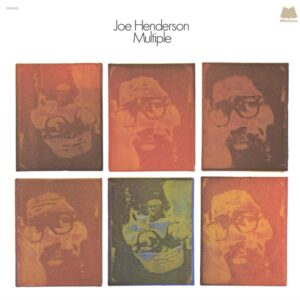
archive: joe henderson
„Bei der Auswahl von Titeln für seine Kompositionen, die die palästinensische Erfahrung thematisieren, war Anouar Brahem nicht von einem didaktischen oder propagandistischen Ziel getrieben: Dies wären Ziele, die seiner feinfühligen (…) Sensibilität völlig fremd wären. Aber er konnte auch nicht den Eindruck erwecken, dass seine Musik von der Wut, der Trauer und dem Kummer, die Gaza in ihm auslöste, unberührt blieb. Es ist zu früh, um zu sagen, ob man sich an dieses „Quartett für das Ende der Zeit“ als Vorbote des Endes von Gaza erinnern wird, oder vielmehr als Vorbote des lang ersehnten Endes des Leidens in Gaza. Man kann jedoch sicher sein, dass dieses Album für immer die Spuren seiner Herkunft tragen wird. „Musik erinnert sich an uns“, schreibt Jeremy Eichler in Time’s Echo, seiner ergreifenden Studie über Musik, die nach der Shoah komponiert wurde. „Musik spiegelt die Menschen und Gesellschaften wider, die sie geschaffen haben, sie fängt etwas Wesentliches ein, das sie in die Zeit ihrer Entstehung zurückversetzt. Die Erinnerung wird von den Kadenzen, den Offenbarungen, den Trübungen und dem tragischen Pathos der Musik heimgesucht“.(aus den liner notes von Adam Shatz zu Anouar Brahems „After The Last Sky“, übersetzt aus einer französischen Vorlage mit deepl ins Deutsche, die Cd enthält die englische Fassung)
“Folk music, surrealism, the blues, the avant-garde, deep intelligence, primitive emotion.”
In den letzten Tagen waren meine Erinnerungen ab und an unterwegs in einem Damals, das die erste Hälfte der Siebziger Jahre darstellt, mit einem Arsenal von Zeitreisetechniken: Alltagstrancen, Rumstöbern im Netz, „Köln 75“, der Film, das Wiederhören der langen ersten Seite von „The Köln Concert“, und, nicht zuletzt, das Versinken in der „Relativty Suite“ von Don Cherry nach Ewigkeiten… die Platte gehörte im Wintersemester 74/75 im Doppelzimmer 510 des „I-Hauses“ zur Grundausstattung der Musikversorgung von David Webster und mir.Ein zufällig zusammengewürfeltes Schicksalsduo für zwei Semester, David lernte den Free Jazz kennen, und ich drang tiefer denn je ins „Weisse Album“ der Beatles vor. Dank der Erinnerungen von Richard Williams öffnete sich jene Tür im fünften Stock wieder, als er zu seinen Don Cherry-Inselalben kam. Das Stichwort lieferte ein Satz von Ethan Iverson: “Folk music, surrealism, the blues, the avant-garde, deep intelligence, primitive emotion.” – es wae an Ornette Colemans Album „Science Fiction“ von 1972 gerichtet.
„That’s good“, reagierte Richard darauf, und führte aus: „And, as much as I love Cherry’ work with Coleman, Albert Ayler and Gato Barbieri, my favourite Cherry albums are probably those that best encapsulate the full range of those qualities, and of his imagination. They would be Eternal Rhythm, Relativity Suite from 1973 (with the JCOA, never reissued in any form since its its first appearance on vinyl), and the wonderful Modern Art: Stockholm 1977, a concert at the city’s Museum of Modern Art, which appeared on the Mellotronen label in 2014.“
Das „Modern Art“ Album von 1977 kenne ich gar nicht, aber die fast vergessene „Relativity Suite“ wurde flugs auf dem raren Markt vergrabener Schätze aufgetan, und voller Begeisterung neu gehört. Fast wie beim ersten Mal. Es ist der 13. Januar 1975, nasskaltes Januarwetter. Fünfundzwanzig sorgsam für die grosse Reise in die zweite Heimat ausgewählte Langspielplatten stehen, sorgsam im Schatten platziert, an der Wand, mit dabei „Diary“, „Lord of the Rings“, „Facing You“, und „Third“. Davids Kassettenrecorder gibt „Happiness is a warm gun“ von sich, John Lennon auf der Höhe seiner Kunst, und es ist schon später Abend, fast Nacht.
Während das Album noch läuft, ist David schon eingeschlafen, ich lese bei spärlichem Licht noch ein Kapitel in Ralf Oerters „Entwicklungspsychologie“, auch ein gutes Einschlafmittel, und draussen, nur wenige Kilometer Luftlinie entfernt, sitzt ein übermüdeter Musikproduzent am Steuer seines zitronengelben Renault und fährt einen unruhig schlafenen Keith Jarrett Richtung Köln. Sie fahren gerade an Würzburg vorbei, und der Produzent verwirft den Gedanken, hier auf einem Rastplatz ein wenig Schlaf nachzuholen. Ich bekomme von alldem natürlich nichts mit, hole am nöchsten Morgen die Post bei Herrn Kopka in der Pforte ab. Ein Päckchen von „Jazz by Post“ ist angekommen, mit Bennie Maupins „The Jewel In The Lotus“. Drei Wochen später verliebe ich mich im rumpeligen Fahrstuhl unseres Wohnheims. Das Leben nimmt einmal mehr volle Fahrt auf.
Ruperto
Auf der linken Seite sitzen nur Männer und spielen Domino, vorne am grossen geöffneten Fenster spielen zwei Alte Gitarre. Jeden Abend kommen sie in die Bar und spielen ihre Lieder. Sie singen vom Heimweh nach Venezuela. Es sind Einheimische, Herreños, die wieder zurück auf ihre Geburtsinsel El Hierro gefunden haben, nachdem sie viele Jahre in Übersee waren. In der Bar herrscht eine düstere Stimmung, die Männer schweigen beim Hin und Herschieben der Steine, immer wieder fasziniert mich diese Stille beim Spiel.Es ist das Fremde, das mich beeindruckt, das Kommunizieren ohne Worte. Domingo Pio heisst der Mann an der kleinen Gitarre, der Timple. Ihm hat der beste Gitarrist der Insel, Ruperto, eine musikalische Hommage gewidmet. Mir gelang es, Ruperto zu einem kleinen Interview zu gewinnen:
Ruperto, kommst du aus einer musikalischen Familie, sang deine Mutter, spielte dein Vater ein Instrument?
Ja, mein Vater war Musiker, er spielte Geige, Temple, Gitarre und Banduria. Und meine Mutter sang sehr gerne.
Wann hast du angefangen, Gitarre zu spielen?
Mit 8 Jahren.
Hast du dir das mehr oder weniger selber beigebracht?
Ja habe ich- Wer hat dir deine erste Gitarre geschenkt?
Mein Vater hatte eine zuhause.
Hast du dann in einer Jugendband gespielt oder immer alleine?
Mit einer Schülerband.
Deine Frau und deine Söhne treten auch zusammen mit dir auf. Hast du deine Frau auf einem Konzert kennengelernt?
Ja auch das ist richtig.
Dir macht es auch viel Freude zu singen. Die Texte sind alle von dir, woher nimmst du die Inspiration für sie?
Aus dem täglichen Geschehen, was ich so beobachte im Dorf und den Menschen hier.
Spielst du am liebsten alleine oder in Gruppen?
Ja vorzugsweise alleine.
Vielen Dank Ruperto für das Interview.
Mich interessieren in jedem Land die Interaktion zwischen Naturräumen oder auch Grossstädten und Tönen, Klängen. Wie kommt es, dass die Musik der Insel relativ gleich klingt, egal , ob es Kirchenlieder oder Folkloreanlässe oder gar Tangotakte sind. Ihre Pito, so heisst die einheimische Flöte hat, nur 8 Töne, genau wie die irische Pipe. Sie bringt aber erstaunlich vielfältigere Melodien hervor , man höre mal The Road to Kilkenny zum Vergleich. Die Einheimischen sind stille genossen. Sie führen ein hartes Leben in der kargen Wirtschaftswelt. Sie sind Fischer und Schäfer und romantisieren nicht das Meer, so wie es Rio Reiser in dem Lied „Übers Meer“ singt.Ruperto besingt in seinen Songs das stille Meer, Mar de las Calmas,die Erde, das Licht, die Frauen und die Freunde. Mehrere Texte gehen über die Bäume, die Pino Verde, den Wasserspenderbaum, über den Sabina, das Wahrzeichen von El Hierro. In seinen sehr langen Balladen ähnlichen Liedern singt er über die Verzweifelten, die Migrationsbewegungen über Familienbanden, und hebt immer wieder die Mutter hervor,“Madre del Herreño“ heisst mein Lieblingslied. Als ich ihn bat mir drei Texte von den Songs zu geben, die mir am besten gefallen, lacht er und sagt, das ist alles nur in meinem Kopf. Er kann auch keine Noten, er spielt alles aus dem Kopf. Diese einfachen Melodien haben einen gewinnenden Ausdruck von musikalischer Schönheit- Oder wie Joachim Ernst Berendt es besser sagt: Wenn Formen uns vertraut werde, brechen kulturelle Barrieren ein.
“fabric collection“ for a playlist in motion
William Tyler: Time Indefinite
Eiko Ishibashi: Antigone
Arve Henriksen et al: Arcanum
Kuunatic: Wheels of Ömon
Bennie Maupin: the Jewel In The Lotus (1973)
Amelia Barrett & Bryan Ferry: Loose Talk
Rebecca Karijord: The Bell Tower
Natural Information Society and Bitchin Bajas: Totality
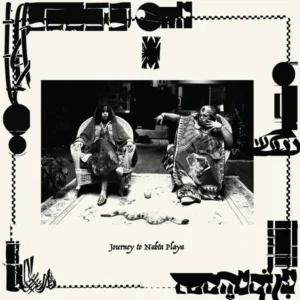
Angel Bat Dawid & Naima Nefertari: Journey to Nabta Playa
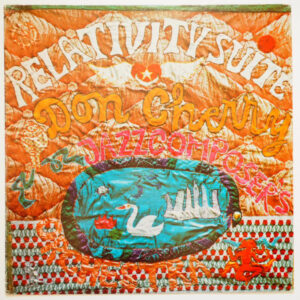
Don Cherry: Relativity Suite (1971)
Jan Bang / Ensemble Modern: With These Hands
Hirsoshi Yashimura: Flora (1987)
Bon Iver: Sabel fAbel
Vic Mars: The Beacons
Cate Brooks: Easel Studies
Labyrinthe des Esprits: The Cosmic Hunt(this list of promising new or forthcoming albums, of reissues and buried treasures, will be continued every once in a while….any ideas?! There may be changes though, and, well, not so much of this „ocean of sound“ will gloom in that radio hour at the end of May („Klanghorizonte“ / Deutschlandfunk). Blame it on a perfect sequence! Peace, Michael Engelbrecht!)
A little story about „sequencing“: in the early years of the „Punktfestival“, composer and percussionist Adam Rudolph sat at my side, in the aeroplane from Amsterdam to Kristiansand. Asked what he will play, he spoke about doing „a little trance thing there“ refering to the music he made under the moniker of „Hu! Vibrational“. The album „Beautiful“ had been released in 2004.
Soon we were talking about one of his heroes, Don Cherry, Don’s years in Scandinavia, his impact on young Jan Garbarek, and (now you will get my point, dear reader, with a look at my brainstorming on possible records to play!) that during the days of that New York production of Bennie Maupin‘s „The Jewel In The Lotus“, little Adam was a curious and „entranced“ witness sitting in the control room while it all happened – experiencing Bennie live while „painting his masterpiece“!
And playing a piece of that album (that will be re-released within the „Luminessence“ vinyl series of ECM soon), it would only natural to give Don Cherry‘s „Relativity Suite“ from 1971 some airplay (an album that is utterly beautiful, and, strange enough, never got a more than well-deserved reissue). And having played a track of that one, maybe „The Dance of the Hobbits“, it would only be natural to contnue with Angel Bat Dawid‘s „Journey To Nabta Playa“ (an album, on which Angel and Naima enthsiastically enter the world of Don Cherry‘s and Moki’s old paradise in Sweden)!
Now look: start with Mr. Maupin, (1)
ask Adam Rudolph about teenage memories,
play Relativity Suite, (2)
tell the story about the journey to Nabta Playa, (3)
followed by „Desireless“ – (4)
and the hour would be over!(Jan Garbarek had his first encounter with „Desireless“ when listening to Cherry‘s „Suite“: there that little gem with an irresistible melody is fucking brilliant 1 minute and 30 seconds short. Jan thought, well, let‘s do it as long that it fills a whole side of vinyl – and it happened on side 2 of „Witchi-Tai-To“.)
A documentary on a key figure of IAR: Makaya McCraven

McCraven’s second album proper of ‘organic beats music’ almost incidentally internationalises the new London scene, bringing its figureheads into a bigger world. The Chicago-based drummer/ producer also offers a belated sequel to Teo Macero’s ground-breaking electric Miles cut-ups, by subjecting live improv to extensive post-production. His quest for raw material ranged from Chicago to a Queens basement bar, an LA garage and London’s cruelly closed scene-catalyst Total Refreshment Centre. Searching for the specific in these scattered local musicians, McCraven’s production then blurs borders to reaffirm their underlying community. When applause washes over the chopped up, yet flowing, soul-funk of ‘Young Genius’, and McCraven’s cymbal-splashes softly, seismically ripple, there is a constructed sense of organic place. Time, too, is reconfigured but real, retaining improv’s in-the-moment spark. (Nick Hasted, Jazzwise)Die besten Alben der Siebziger Jahre in den Ohren von Norbert Ennen
„Der Clou solcher Listen ist, das dass sie Landkarten gelebten Lebens ausbreiten, und jedes einzelne Album eine Geschichte erzählt, und manchmal zwei. In solchen Listen tauchen diese privaten Stories nicht auf, dabei sind diese so existenziell wie die Schallplatten selbst. Üblicherweise nennt man das auch den „Soundtrack unseres Lebens.“ (M.E.)
Norberts erste Liste
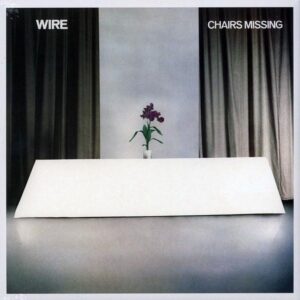
Television – Marquee Moon / Wire – Pink Flag / Wire – Chairs Missing / Wire – 154 / Talking Heads – Fear Of Music / John Cale – Paris 1919 / Devo – Are We Not Men / Specials – Specials /Sex Pistols – Never Mind The Bolocks / Slits – Cut / Pere Ubu – The Modern Dance / Kraftwerk – Die Mensch Maschine / Kraftwerk – Autobahn / Suicide – Suicide / Joy Division – Unknon Pleasures / David Bowie – Station To Station / David Bowie – Low / David Bowie – Heroes / Brian Eno – Another Green World / Brian Eno – Before And After Science / Steve Wonder – Innervisions
Norbert (Jahrgang 1960) hat mir (Jahrgang 1955) eine Doppelliste gesendet mit seinen Lieblingsalben jenes wilden Jahrzehnts. Die erste Liste umfasst die 20 Alben, die er damals, in der Zeit, von der hier die Rede ist, über alles liebte, die zweite Liste enthält jene 20 Alben, die er erst im nachhinein entdeckte, und die ihren Status für die einsame Insel erst mit Verzögerung erlangten. „Ich war ja noch kein Oberchecker wie du“, bemerkt er in Anspielung an unsren Altersunterschied von fünf Jahren, und tatsächlich fallen fünf Jahre „musiksozialisationstechnisch“ ins Gewicht (Leute, die auf Elvis standen, waren für ich schon „Die Alten“, genauso wie Frank Sinatra-Fans): ich würde nur eine einzige Liste präsentieren, denn ich war damals schon so verrückt nach Musik, dass mir wenig entging, und im perfekten Alter für Prägungen des musikalischen Geschmacks. Natürlich studierte ich seine Liste mit grossem Interesse, und konnte rasch Gemeinsamkeiten und Unterschiede ausfindig machen.
Norberts zweite Liste
Can – Ege Bamyasi / Curtis Mayfleld – Curtis / Neu – Neu / Judee Sill – Judee Sill / Annette Peacock – I’m The One / Gil Scott Heron – Pieces Of A Man / Joni Mitchell – Blue / Funkadelic – Maggot Brain / Dadawah – Peace And Love / Linda Perhacs – Parrallelograms / Cluster – Zuckerzeit / Miles Davis – On The Corner / Upsetters – 14 Backboard Jungle Dub / Nick Drake – Pink Moon / Steve Reich – Music For 18 Musicians / Stooges – Fun House / Alice Coltrane – Journey To Satchinanda / Neil Young – On The Beach / Pharoah Sanders – Deaf Dumb Blind / Herbie Hancock – Sextant
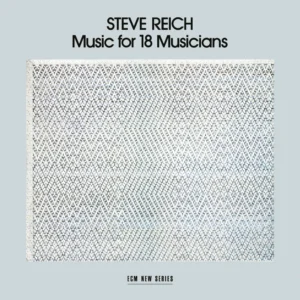
Kein Jahrzehnt hat mich so beeinflusst wie die Siebziger Jahre, und jede meiner Listen würde wohl überquellen, ichn mache hier nur den Go-Between für Norbert. Vielleicht eins noch: eine Differenz zwischen uns auf den ersten Blick: in seinen zwei Zwanziger-Listen gab es nur eine ECM-Platte, Steve Reichs „Music For 18 Musicans“ von Steve Reich. Würde ich eine Liste posten (und es wäre eine TOP 40-Liste ohne Ranking), wären etliche ECM-Alben dabei, aber nicht diese zugegeben tolle Scheibe von Steve Reich. Es war ein Jahrzehnt des Überflusses an Magie, und in der Parade absoluter persönlicher Favoriten wären diese ECM-Alben wohl dabei – ich nenne nur die Titel: Sart, Ruta and Daitya, Bremen / Lausanne, The Köln Concert, Solstice, Open To Love, Yellow Fields, The Following Morning, What Comes After (oder doch Odyssey), Diary, Whenever I Seem To Be Far Away, Danca des Cabecas, Nan Madol, The Survivors Suite, Return To Forever, und Witchi-Tai-To. Those were the years, my friend.
„Freigewehtes on air“
Nur zwei Alben veröffentlichte der Pianist und Synthesizerspieler Rainer Brüninghaus als Bandleader, „Freigeweht“ (1981) und „Continuum“ (1984), und sie haben über all die Jahrzehnte hinweg nichts an Ausstrahlung verloren: „Freigeweht“ liegt nun in der ECM-Vinylserie „Luminessence“ mit tadelloser Pressung und Gatefoldcover vor, ergänzt von einem klugen Essay, der dieses kleine Meisterstück im Rückblick einordnet und verschiedene Facetten erhellt, etwa Spuren von Minimalismus in diesem sogenannten „kammermusikalischen Jazz“.
Aber was heisst schon „Kammermusik“ bei so vielen sperrangelweit geöffneten Aussichten!? Vielen wird es so ergehen, dass sie sich diese lyrisch-aufregende Musik wieder und wieder anhören, weniger, um sich wohligen Erinnerungen zu überlassen, oder analytisch den Geistern eines anderen Zeit nachzuspüren (das wären allenfalls Begleiterscheinungen): alle Beteiligten sind schlichtweg „on fire“, von dem Komponisten selbst, der das Understatement jedem virtuosen Fingerzeig vorzieht, über den Meistertrompeter und die Schlagzeuglegende, bis hin zur „wild card“ des Oboisten und Englisch-Horn-Spielers!
Für eine jüngere Generation von Hörern mag dieses Album eine Eintrittskarte sein, andere aussergewöhnliche Alben des ECM-Katalogs kennenzulernen, in denen Brpninghaus als Sideman seine diskret-vielschichtige Magie verströmt, etwa auf Eberhard Webers „The Colours Of Chloe“, „Yellow Fields“ und „The Following Morning“, oder Jan Garbareks „I Took Up The Runes“. „Freigeweht“ reiht sich da, ohne grosses Aufheben, nahtlos ein: einsame Klasse in bester Gesellschaft! (michael engelbrecht) P.S. Das Foto aus meiner „elektrischen Höhle“ zeigt „Freigehweht“ an zweiter Stelle von links.

Niklas Wandts Klanghorizonte sind nun nicht mehr nachzuhören. Das rege Echo rund um „Freigeweht“ spuegelt sich in rund zehn Kommentaren von Ingo, Niklas, Henry, Jan, und mir … (deshalb habe icn diesen Blogeintrag auf den 8. Februar transportiert.)
„Das minimal gehaltene Cover ziert eine Reihe von drei Fotos einer Papiertüte im Wind, eingefrorene zufällige Bewegungen, ausgeleuchtet in dramatischem Kontrast – das grelle Orange der Tüte gegen das strahlende Blau des Horizonts. Die Luftigkeit, die Transparenz kennzeichnet auch den Sound auf dieser Platte, eingespielt in einer recht ungewöhnlichen Quartettbesetzung. der kanadisch-britische Kenny Wheeler an Trompete und Flügelhorn und der Norweger Brynjar Hoff an Oboe und Englischhorn.“ (Niklas, in einem anderen Beitrag zu „Freigeweht“ . Siehe auch „Archive“)Rich und seine Songwerkstatt (3/3)
Heute nun der letzte Teil meiner kleinen „Nacherzählung“ von Toms Begegnung mit Rich anlässlich seines Album „End Of The Middle“. Das ist mal ein Beispiel für einen Songzyklus, bei dem es fast unerlässlich ist, die lyrics zu verstehen. Drum liegen sie dem Album bei, und den Schlusssong „More Than Real“ kann man bei „comment 1“ lesen. Verglichen mit der überbordenen Klangfantasie seiner letzten Alben ist dieses Werk viel mehr Schwarzweiss und Neorealismus als Cinemascope und History Fiction. Dennoch schleicht sich das Element des Fantastischen bei Richard Dawson weiterhin ein, in unerwareteten Sprüngen zwischen Traum und Wirklichkeit in den lyrics, in seinem Gitarrenspiel, den ungewöhnlichen Phrasierungen seiner Stimme, in den amarchischen Beimengungen einer Soloklarinette (ich habe es immer schon geliebt, wenn ein Blasinstrument in einem Lied nicht die gepflegte Melodielinie spielt, sondern Unruhestifter ist statt schmückendes Ornament). Der Wire schreibt, in seiner Märzausgabe zu dem Album folgendes:
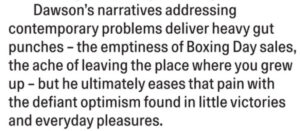
Nach ein, zwei Tagen wandert dieser Text im Blog Diary soweit in die Vergangenheit, dass man den Gesamttext in aller Ruhe und Chronologie „von oben nach unten“ lesen kann. Er wird dann im März zu unswrer TALK-Kolumne bei den MONTHLY REVELATIONS stossen. Nichts geht natürlich darüber, sich die UNCUT vom März zu kaufen. Darin, unter anderem, eine „in depth“-Story, über das Album von Wilco, das immer meine Number One war: „A GHOST IS BORN“ – ein Titel, der auch gut zu einem Album von Rich passen würde. (m.e.)
MORE THAN REAL
„More Than Real“ ein überraschend farbenfroher Abschluss des Albums. Es ist ein Duett mit Sally Pilkington, der die ersten Akkorde und die Melodie geschrieben hat. Es ist ein zutiefst emotionaler Blick auf die Entschlossenheit und das Scheitern eines frischgebackenen Vaters, und dann – vielleicht – eine Momentaufnahme der Zukunft, wenn seine Tochter einen Anruf erhält und zu seinem Krankenhausbett eilt, um sich zu verabschieden.
„Sally und ich sprachen, was dieses Finale angeht, über Angelo Badalamenti und die Dokumentarfilme, die man auf BBC sieht, wo die Hintergrundmusik anschwillt, wenn es einen emotionalen Moment gibt,“ erklärt Dawson. „Aber der Song sollte eine seltsame Version davon sein. Ich dachte auch an Tarkovskys Andrei Rublev – der Film ist in Schwarz-Weiß, und am Ende, nachdem ein Junge 25 Minuten lang eine Glocke gemacht hat, wird er plötzlich in Farbe gezeigt. Ich wollte, dass dies der farbige Moment nach einer ziemlich entsättigten Erfahrung ist. Ich habe auch an Neil Youngs ‚Philadelphia‘ gedacht – es ist sirupartig, irgendwie kitschig, aber es hat eine schöne Stimmung.“
„Es war ein Song, den ich schon eine Weile auf der Orgel gespielt hatte und der mir schwer fiel, ihn zu beenden“, fügt Pilkington hinzu. „Richard hatte es im Visier und bat mich schon seit einer Weile darum. Ich habe gezögert, aber ich habe mit ihm verhandelt – er konnte es haben, wenn ich Teil des Tracks sein konnte“. (So verhandelt ein Paar über einen Song – ich musste bei den Schilferungen ihres Alltags manchmal an Robert Wyatt und Alfie denken.)
ALLEINE IM DUNKELN
Rich Dawson hat mehr Grund als die meisten anderen, das Leben auf dem Lande als schwierig zu empfinden: Er ist sehbehindert, und seine Sehkraft wird langsam schlechter. In den letzten Jahren ist es für ihn schwierig geworden, damit umzugehen.
„Ich bin ziemlich auf Sally angewiesen, sie hat mich schon oft mitgenommen“, sagt er, während er ein frisches Pint Village Green (sein Lieblingsbier!) auf dem Tisch stehen hat. „Es ist haarig, von der Bushaltestelle nach Hause zu laufen – der schnellste Weg führt über die Felder, ein kiesiger Weg in der Dunkelheit, schnüffelnde Tiere, und ich kann nichts sehen, verdammt. Ich denke: ‚Ich habe Angst, und ich werde die nächsten 25 Minuten Angst haben. Aber die positiven Seiten des Lebens hier draußen sind so groß.“
Im März 2023 spielte er seine erste amerikanische Headline-Show in New York und reiste dann quer durch die Staaten, um seine Freunde Pigs Pigs Pigs Pigs Pigs Pigs Pigs zu unterstützen. Natürlich ist Amerika kein Ort für öffentliche Verkehrsmittel, und selbst in den Großstädten kann schlechtes Sehvermögen zu einigen Schrammen führen.
„Es war ein bisschen viel für mich, um ehrlich zu sein, da draußen allein zu sein“, seufzt er. „Ich fühlte mich ziemlich gestresst. Die Shows waren alle großartig, aber man muss sich bewusst sein, wer um einen herum ist, und ich konnte nicht genug Informationen [visuell] über die Leute bekommen, so dass ich in ein paar Begegnungen geriet. Einmal war ich in der New Yorker U-Bahn und diese furchterregenden Typen stiegen in Kampfhosen und Stiefeln ein – sie stiegen an jeder Tür ein und fingen an, auf mich loszugehen, es waren Gang-Typen. Es fühlte sich auf jeden Fall gefährlich an. In L.A. habe ich mich dann einfach verlaufen und ein Vermögen ausgegeben, um irgendwo hinzukommen. Ich habe es also nicht geschafft, sagen wir es mal so.“
ENERGY FOOLS THE MAGICIAN
Dawsons jugendliche UFO-Sichtung wird in der ersten Hälfte von „Black Triangle“ aus dem Jahr 2020 erzählt, ein seltenes Stück Autobiografie in einem Lied. „Es war wirklich sonnenklar. Mein Freund und ich sahen beide dieses massive schwarze Dreieck über uns hinweggleiten. Mir ist jetzt klar, was für ein großer Moment das war. Es gibt die Vorstellung, dass ein Song irgendwie autobiografisch sein muss – und das ist er natürlich immer, in gewisser Weise. Aber es war sehr überraschend für mich, dass die Leute nach ‚Jogging‘ dachten, ich würde gerne joggen gehen.
„Wir haben diese enge Vorstellung davon, was ein Song sein sollte, und die haben wir bei anderen Kunstformen nicht. Er muss radiotauglich sein, er muss vier Minuten lang sein, er muss fröhlich sein, er muss uns helfen, zur Arbeit zu fahren, er muss in unseren Tag passen. Und ich glaube nicht, dass das der Ursprung ist. Bevor jeder Zugang zum geschriebenen Wort hatte, war ein Lied für die Menschen eine Möglichkeit, Nachrichten zu teilen und zu verbreiten. Es ist eine Form von Magie.“
Nachspiel: The bizarre history of Dawson’s favourite guitar
“In my early twenties I had to get a loan to pay for backdated council tax, and I had a few hundred left over so I bought this Baby Taylor. Lovely guitar. Then it had a series of mishaps. There was a minor earthquake in the UK and I’d forgotten I’d put it on the floor, and I stood on it, but it was still playable. The second time, I was drunk and I totally caved it in, but it still made a sound of sorts. I thought, ‘Well, I’ll just play the songs the same, the spirit will still be there even if it sounds terrible.’ Then [singersongwriter] Nev Clay stood on it and totally broke it – it was my fault. A luthier, Nigel Forster, put a beautiful curved top on it, and it was vastly improved. Then the neck snapped on the first day of the Peasant tour. I don’t gig with it now, but every song I’ve written since my twenties has been written on that.“
Go down to your radio and trawl the megahertz
Zu den besten Webseiten, das Leben mit Musik, und all die Tangenten ringsum zum Thema haben, zählt neben Richard Williams‘ The Blue Moment, ganz sicher auch eine andere Solo-Seite, Zen Sounds, von Stephan Kunze. Wer genug Geld hat, und Sendungen wie die „Klanghorizonte“ mag, wird dort sehr viel Lesenswertes finden. Heute schreibt er (und wie ich ist er kein Prefab Sprout-Fan), über Paddy McAloons wundersames Soloalbum „I Trawl The Megahertz“, das ich in den Klanghorizonten spielte, rauf und runter, als es erschien, und, bei der Wiederveröffentlichung auch. Sein letzten Absätze lauten (er schreibt in feingearbeiteten kleinen Abschnitten, der Zengartenvergleich ist akkurat):
I Trawl the Megahertz still stands as one of his most personal works. It’s an album with little companions in popular culture, often getting compared to Jon Brion’s soundtrack for Michel Gondry’s film Eternal Sunshine of the Spotless Mind.
McAloon couldn’t have known Brion’s score, as it was written after I Trawl The Megahertz. Instead he mentions Gavin Bryars’ composition “Jesus Blood Never Failed Me Yet” (first released on Brian Eno’s Obscure Records in 1975), which he says he didn’t think of while writing the piece but it might have had a “subconscious influence”.
I Trawl the Megahertz remains totally unique and outstanding. I’ve never even been a huge Prefab Sprout fan, but I return to this brilliant album every so often. Its vague melancholy never fails to move me.

P.S. Mich haben einige Bekannte und Freunde angesprochen, warum ich nicht eine solche Seite eröffne, und damit eine schöne Einnahmequelle öffne. Die Antwort ist einfach: ich möchte über ALLES schreiben können, und da würde ich Abstriche machen müssen: wer will schon dafür bezahlen, dass ich alte Geschichten im Mosaikstil auftische, natürlich auch Fussballgeschichten, Traumdeutungen, monatelang nach meinem Blutsbruder suche, Gedichte, und andere „Abseitigkeiten“. Ausserdem schätze ich, und das zählt noch mehr, Vielstimmigkeit. Solange es sie gibt.
P.P.S. Bald wird Norbert E. eine spannende „Doppelliste“ vorlegen, zu seinen Favoriten der „wilden Siebziger Jahre“. Wieso eine Doppelliste? Ich musste kurz nachfragen, aber, klar, das hätte ich mir auch denken können. Bei mir gäbe es nur eine einfache Liste, ohne Dopplereffekt – das Gavin Bryars‘ „The Sinking of the Titanic“ wäre übrigens dabei, auf dessen Rückseite „Jesus Blood Never Failed Me Yet“ erklingt. (Lieber Norbert, schlage mal ein paar Locations vor für unser Hamburger FlowFlow-Meeting am 1. Mai!)
February Revelations
„Ich sehe ihn noch vor mir, wie er aufsteht, um mich in seinem Hinterhof zu begrüßen. Mit einem warmen Lächeln und einer herzlichen Umarmung und dieser Honk-of-a-Voice aus den Great Plains. Wir sprachen über Kaffee, die Freude am Unerwarteten, die Schönheit der Welt und lachten.“ (Kyle MacLachlan in seinem Nachruf auf David Lynch)
(album) Wasylyk / Perman: Ash Grey and the Gull Glides On
(film) Eno. Doc (von der Berliner Premiere berichtet Stephan Kunze)
(prose) Robyn Hitchcock: 1967 – How I Got There And Never Left
(talk) Learn To Fail Better – Chris Eckman
(radio) A Playlist In Motion (DLF, march 27)
(binge) David Lynch’s Twin Peaks – Three Seasons
(archive) Rainer Brüninghaus: Freigeweht (1981)
„Die bedeutendsten Bands bieten mutige Ideen, kleine Offenbarungen, verzweifelte Spiele und eine Schamlosigkeit, die ihnen erlaubt, jenseits ihrer Grenzen anzukommen und dort ein paar wundervolle Dinge zu entwickeln.“ Das sagte einmal Chris Eckman, und es lässt sich auf viele Bereiche der Kunst übertragen. Beispielsweise auf einige Filme von David Lynch wie „Mulholland Drive“, oder „Blue Velvet“. Unsere „Offenbarungen“ im Februar sind voller kleiner Entdeckungen und Zeitreisen. Selbst das Alltägliche kann durchaus fantastische Züge annehmen. Mehr ist dazu nicht zu sagen. Ausser vielleicht: Safe Journey!