Music for Late Summer Evenings (2) – „LC“ (The Durutti Column)
In ihrer Sammlung perfekter Spätsommeralben taucht, bei The Aquarium Drunkard, kaum überraschend, auch Viny Reilly auf. Seit dem Debutalbum begegnete mir die Musik aus der Wekstatt des Produzenten Martin Hannett immer wieder, nahm mich mal mehr, mal wenger gefangen. Aber wenn sie mich im richtigen Moment erwischte, war ich gefesselt von Anfang bis Ende all dieser raffiniert perlenden Melancholien. Damals fand die Musikkritik alle möglichen Assoziationsräume dafür, denn in Punk- und Post-Punk-Zeiten war diese „bedroom chamber music“ auf wundersame Weise abseitig. Man sprach von Ambient, Minimal, Impressionismus und der Luftigkeit von ECM. Vor ziemlich genau zehn Jahren wanderte Ian McCartney durch Liverpool. Seine Notizen von jenem Tag finden sich weiter unten. Er war ein grosser Freund vom The Durutti Column. Rest in peace, my Glasgewian friend! (m.e.)
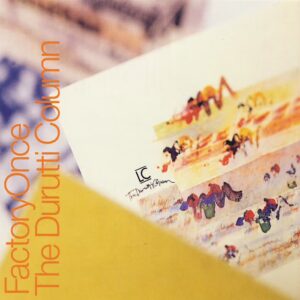
„Vini Reillys Gitarrenskizzen schweben wie etwas Unvollendetes in der Luft und weigern sich, endgültig ihren Platz zu finden. „The Return of the Durutti Column“, im Sommer 1979 aufgenommen und zu Beginn eines neuen Jahrzehnts bei Factory Records veröffentlicht, verwandelt Abwesenheit in eine Entstehungsgeschichte und dient zugleich als ästhetischer Entwurf für den gesamten Ansatz des Projekts. Diese Ausdrucksweise wurde auf dem zweiten Album, „LC“ aus dem Jahr 1981, vertieft und verfeinert. Drückt diesen August auf „Play“ und lasst die sechzehn Titel im Hitzeschleier vergehen. Der Nachmittag wird sich um den Rest kümmern.“ (j.gage)
Psychogeography of Liverpool, August 2016 (by Ian McCartney)
Some cities lend themselves better to psychogeography than others. Maritime cities – seagull cities – do well in this respect. There are so many seagulls in Liverpool they have a representative on the City Council: Mr Squawk. He speaks in mystic aphorisms. He eats french fries off the sidewalk with dignity and nonchalance. His favourite book is „Preep, the Little Pigeon of Trafalgar Square“ by Milton Shulman. His favourite song is „Thorn of Crowns“ by Echo & The Bunnymen.

And you walk around this city-state pyschogeobubble and there is so much cosmos in there you have to ask yourself if you are in a dream. Wait for me on a blue horizon. Wait for me on a new horizon. Few are the places, said Mr Squawk, that make you question the aperçus of Raoul Vaneigem. I asked Mr Squawk what the fuck he meant by this. He said, „ … well Vaneigem said that to be rich nowadays merely means to possess a large number of poor objects but to be here, in Liverpool, is to be rich. Objects or no objects, ground or fucking sky. My only regret is that Manchester had The Durutti Column and we didn’t …“
But I digress. Or do I? Psychogeography doesn’t come with a map or an itinerary, just stars to hold and songs to sing. Yeah. An infinity of cups unbroken.
11 Kommentare
flowworker
Vini Reilly is returning again
Scammer
From his new album
Quote review Uncut: “Scammer” is no less enigmatic, its redemptive air redolent of Brian Eno’s affecting cover of The Velvet Underground’s “I’m Set Free”.
Michael
Erst vorhin gelesen dass Eno das Album LC sehr sehr mochte
Verwundert kaum
Alexander Roth
Durutti Column und Vini Reillys Gitarrenkünste habe ich erst vor kurzem kennen- und schätzen gelernt. Dieses Skizzenhafte, in der Luft Schwebende, Unvollendete, wie es im Zitat beschrieben wurde, ist auch das, was mich an seiner Version von Post-punk so reizt. „Sketch For Summer“ bringt diese Ästhetik für mich perfekt auf den Punkt.
Alex
Ich habe ihn vor über 20 Jahren für mich entdeckt und war und bin weiterhin sehr hingerissen von seinem Gitarrenspiel. „A Missing Boy“ bleibt eines der berührendsten Musikstücke für mich. Das neue Album allerdings hat mich noch nicht gekriegt.
flowworker
Wyndham Wallace review UNCUT August
VINI REILLY’S new album as The Durutti Column will inevitably appear poignant to fans. Since 2010’s A Paean To Wilson, his tribute to the late Factory Records boss who co-managed him for much of his career, he’s been largely absent, the result of strokes which left him so financially vulnerable his nephew had to crowdfund his rent. Two years ago, he told Uncut “there are no tunes happening” and trying to play “does my head in”. Indeed, and though a rash of reissues has helped compensate – including 1983’s once ‘lost’ Short Stories For Pauline – it’s hard to argue that Reilly isn’t still sorely underappreciated.
Fortunately, his enduring partners, drummer Bruce Mitchell (his co-manager, who first performed on 1981’s LC), and producer/instrumentalist Keir Stewart (who’s worked with him since 1998), have been conspiring on new tracks since 2017. They persisted even during the pandemic, social-distancing by recording Reilly in his kitchen from a van outside. And what better time could there be for this unlikely renaissance? A recent addition to the reverent ranks of The Avalanches, Brian Eno, Dev Hynes and Morrissey – who hired him for 1988’s Viva Hate – is Harry Styles, whose “American Girls” owes a considerable debt to “Future Perfect”, from 1996’s Fidelity.
If its lengthy, disjointed origins suggest that Renascent might be a piecemeal affair that cannot do justice to his exquisite fretwork, rewind to 1980, when, frustrated by producer Martin Hannett’s technological indulgences, Reilly abandoned aimless sessions after two days, only to be presented with a masterful debut album. Famously released by Factory in sandpaper sleeves, assembled by Joy Division, under a title no less perverse, The Return Of The Durutti Column was sparse and startling, his intricate, instinctive melodies and bold, fluid fingerwork combining with Hannett’s inscrutable arrangements to immediately distinctive effect.
Forty-six years on, Renascent confirms what that revealed – that the Mancunian, despite his enviable technique, revels in the spontaneity that flourishes with sympathetic collaborators. Subtly recalling how The Return… began with the disparagingly titled “Sketch For Summer”, Renascent opens with a mere vignette, chiming electric guitar chords cautiously ascending towards “Echoes In The Memory”’s ensuing tranquility. Delighting in this familiar, impressionistic sound, it sets a suitably reflective mood for what must surely be interpreted as Mitchell and Stewart’s own tribute to their talented, commercially neglected friend.
Undoubtedly capricious, occasionally stubborn, Reilly has stated, “Every single piece of music writes itself.” Nonetheless, his potentially ephemeral flurries of vibrating air demand a fitting setting. If Renascent covers a mass of ground, that’s consistent with earlier albums, which, in ethereal manner, have often explored multiple styles, whether classical (1984’s Without Mercy), flamenco (1989’s Vini Reilly) or electronica (1990’s Obey The Time). Presumably it’s thanks to his colleagues’ understanding of these idiosyncrasies that, from moments snatched over a decade, they’ve managed to capture – as the title of another nebulous two-minute ‘sketch’ has it – “Vapour In A Matchbox”.
With their titles inviting comparison, “Your Shadow At Morning” and “Your Shadow At Evening” encapsulate Renascent’s range. The former aches with Arvo Pärt’s purity, Reilly teasing shadowy patterns from trademark harmonics and delicately resonant, sometimes Mediterranean lines, while the latter builds a quiet, Can-like storm of competing notes upon Mitchell’s resolute rhythms. Similarly contrasting are the shimmering, uncanny “Time Present And Time Past”, its title, like its hallmark drifting chords, indicative of its nostalgic flavour; and the strangely sinister “Liars”, its pillowy synths subverted by tenderly surging feedback.
Wilson periodically recoiled at the idea, but the latter boasts Reilly’s vocals, abandoning his typically instrumental template. Remarkably, he’s at his most charismatic, though it’s possibly no coincidence his cracked muttering is buried so deep that only scant phrases, like the moving “I am sorry, I love you”, prove decipherable. “Scammer” is no less enigmatic, its redemptive air redolent of Brian Eno’s affecting cover of The Velvet Underground’s “I’m Set Free”. Elsewhere, too, his Manchester neighbour, Gondwana Records’ Caoilfhionn Rose, steps up for the poised, atmospheric “Agonistes” and a heartrending piano ballad, “Sargasso Sea”, her loaded “I don’t even regret a single cigarette” affecting but triumphant.
If this is to be Reilly’s last album – though obviously one hopes not – he departs with a farewell as glorious as he bade Wilson on A Paean…’s Marvin Gaye-sampling “Brother”. Retooling “For Belgian Friends”, one of his most sentimental pieces, in the orchestral fashion it deserves, Mitchell and Stewart ensure “For Friends Everywhere” offers an appropriately lavish finale. Already reworked multiple times, this latest reincarnation is emblematic of his collaborators’ attentive nature, its haunting melody given a spine-tingling, cinematic treatment. On CD and digital versions there’s an epilogue, the fragile “All They See Is Fire”, fronted by Lucas Elliott, but the credits are already rolling. So yes, to the maudlin, the rebirth that Renascent represents is unquestionably poignant. But then, like so much of Reilly’s six-stringed sorcery, it would be under any circumstances.
Alex
Kann es sein, dass der Link zu meiner LC-Besprechung unter die Räder gekommen ist? Copy & paste will auch gelernt sein… 😉
Künstliche Intelligenz
Das Besondere an der Sendereihe „Klanghorizonte“ (die von 1990 bis Ende 2021 im Deutschlandfunk lief) war ihr einzigartiges Konzept einer stilübergreifenden, entschleunigten nächtlichen Klangreise, die sich radikal vom radiophonen Mainstream abhob.
Michael Engelbrecht schuf damit einen geschützten Raum für anspruchsvolle Nischenmusik. Die markantesten Merkmale der Sendung waren:
Radikale Stilvielfalt: Engelbrecht verknüpfte scheinbar unvereinbare Genres. In einer einzigen Sendung flossen Ambient, moderner Jazz (oft von Labels wie ECM), Singer-Songwriter-Perlen, Post-Rock, Weltmusik und Avantgarde nahtlos ineinander.
Klangtextur und Atmosphäre: Das Programm setzte stark auf „seltsame Atmosphären“ und ein Zusammenspiel von erhebender und dunkler Musik. Häufig transportierte die Musikauswahl eine Ästhetik von Weite, Einsamkeit, Melancholie, kargen Landschaften oder „dunklem Leuchten“.
Kontext statt bloßem Abspielen: Die Stücke wurden nicht einfach aneinandergereiht. Engelbrecht bettete sie in fundierte Hintergrundberichte, persönliche Anekdoten, exklusive Interviews und literarische Querbezüge ein.
Feste Rubriken für Entdeckungen: Die mehrstündigen Sendungen waren durch feste Segmente strukturiert, darunter „Neuland“ (für aktuelle Veröffentlichungen), „Nahaufnahme“ (tiefgehende Künstlerporträts wie über Stefan Micus oder Robert Wyatt) und „Zeitreise“.
Dramaturgische Brücken (Kreuzblenden): Die Übergänge zwischen den Stücken wurden radiotechnisch meisterhaft inszeniert, um eine durchgehende, hypnotische Sogwirkung zu erzielen.
Die Sendung funktionierte wie ein akustischer Essay, der das Radio in den späten Nachtstunden zu einem kontemplativen Erfahrungsraum machte
Michael Engelbrecht
Fast alles richtig 😉
Martina Weber
Für eine KI ist das doch sehr bemerkenswert. Welche KI hast du verwendet? Ich verwende perplexity, aber ich würde nie meine Mailadresse angeben und frage nur gelegentlich mal etwas; auch schon länger nicht mehr. Bei Rückfragen soll man sich gleich einloggen. Generell habe ich den Eindruck, dass man möglichst viel persönliches von sich preisgeben soll, jedenfalls zielen Rückfragen darauf hin. Dann breche ich sofort ab.
flowworker
Ich habe das mal bei google eingegeben, etwa in der Art: „was für eine Art von Radiosenungen maxht M.E. In in den Klanghorizonten im DLF?“ Oder noch kürzer… und dann kam kurzes „Nachdenken“ über die mit Google verknüpfte KI (ich habe das bei Suchen eingegeben, ohne irgendeine spezielle App), und dann kam diese umfangreiche Antwort. interessant, ähnliches machte ich dann mit Eno und Hollis, ind wieder kamen sehr beredte Antworten. Seitdem weiss ich auch, dass ich eine „Kultfigur“ bin 😂 …
Martina Weber
Google ist schon clever. Ich nutze es überhaupt nicht. Vor der Sommerpause kam in einer Kurzgeschichte, die in meinem Seminar besprochen wurde, eine afrikanische Felsspaltenschildkröte vor. Weil die Schildkröte eine Bedeutung hatte, habe ich natürlich recherchiert, wie immer über startpage.com. Ich fand die Schildkröte nicht, nur etwas ähnliches. Mit diesem Wissen kam ich dann ins Seminar. Dort fand jemand per Smartphone über google in wenigen Sekunden ein Bild der Schildkröte und wir konnten den Text weiter besprechen.