Mattias de Craene & Black Koyo
More unusual combinations: ancient and modern trance music.
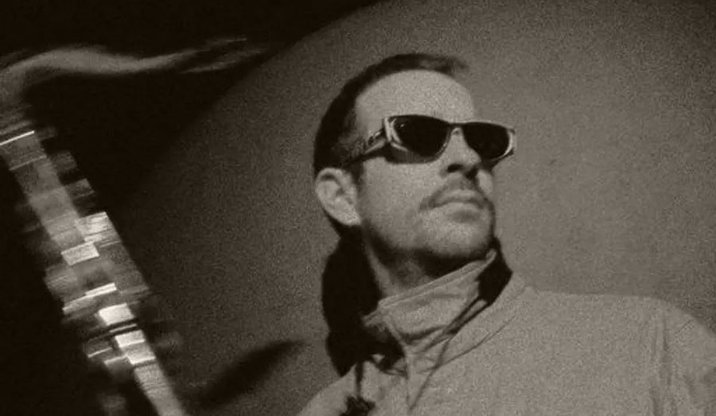
Mattias de Craene, a Belgian born saxophonist and composer got in contact in 2025 asking if I would be interested in mixing his new album. I had seen a concert of his in Ghent a year earlier and liked what I saw. There was a mystic around his stage persona: an obvious talented musician who had been part of a successful Belgian group now seeking to explore new territory. Being drawn by the Gnawa tradition he decided to travel to Marocco experiencing the country and the music and hopefully returning with field recordings on his portable player to add more colors.
Brussels has the largest Gnawa community outside of Marocco. Upon his return Mattias decided to record with the Belgian Gnawa musicians of Black Koyo. A quartet let by master Hicham Bilali on guembri and vocals, and three call/response singers who is also responsible for clapping and plays the qraqueb – heavy iron castanets shaped like a double spoon for lack of a better description.
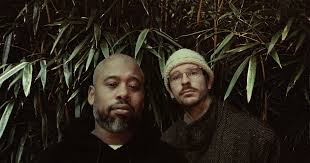
Apparently Mattias de Craene had witnessed a performance of mine at Nattjazz in Bergen a year before. Inspired by the Nattjazz concert, he started planning his new adventure, this time with me onboard for the planning process. We had a few zoom meetings before Mattias started recording with Black Koyo. Months went by before our next meeting. This time with complete recordings of all the pieces along with the field recordings from Marocco. When Mattias did ask for my possible involvement in a concert in Mechelen, Belgium I didn´t hesitate to accept his kind invitation.
Being a live samplist (yes, a new word) new collaborations are welcoming. I always say to myself I should do this more often. Fresh sounds create new possibilities. Already during the soundcheck I realized that this unusual combination could prove interesting results. Excited by the concert that was attended by a large group of international jazz promoters especially invited by the Belgian jazz association, I returned to the Punkt studio with enough material for an album.
Mathias who in addition to being a saxophonist, plays all the keyboards parts and the treated sax loops on the album, wanted Black Koyo´s voices to sound like wild horses, not tamed by studio perfection. I brought to the up-front some of the recorded sounds that possibly had been intended to be more oblique.
I had some previous experience with the Gnawa tradition. Years before Jon Hassell and I did a concert in Grenoble with Diwan de Biskra, a group of Algerian Gnawa players brought together by guitarist Camel Zekri. The group included guembri, darbouka, graqueb and rhaita – the latter a double reed instrument you will find in Tunis, Marocco, Libya and in the wonderful traditions of Mauritania. The double reed player being so blaring that Jon Hassell suggested to have him playing from behind stage to blend better with the soft sounds from Jon´s trumpet. The concept of near/far was important to Hassell. The goal was always getting into the zone that reminded him of sitting around the campfire. You can see clips from that concert here.
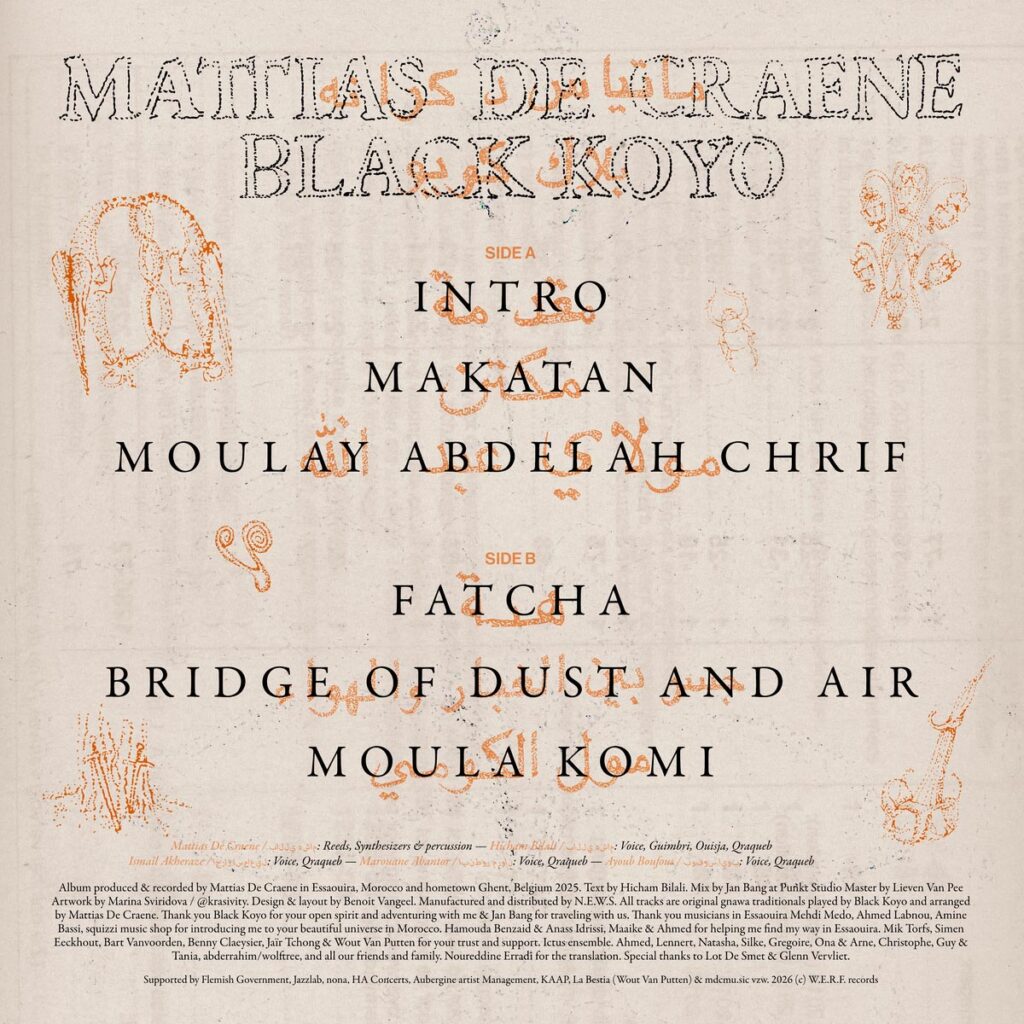
While the A-side of the Mattias de Craene & Black Koyo album is more up tempo, the B-side has a slightly different feeling: a quieter and dream like assembly of different soundscapes, of chants that gives a sense of a physical place. A Bridge of Dust and Air is a collage of textures, abrupt digital noise as If captured from a signal station: Background chants, almost whispering voices and distant singing; field recordings from Mattias´ visits in Marocco that includes the sound of waves, sounds from the minaret, bird calls and children playing.
A project like this has many layers: the traditional music inherited from generations of players that has been developing through migration and in meetings with other traditions; Mattias de Craene´s search for a spirituality in music; New technology and ancient traditions. Neither jazz nor world music, but an assembly of what resonates within himself.
Once after a concert we played with Hamid Drake, I shared transport from the venue to the hotel with the Master Musicians of Jajouka. Their leader, Bachir Attar told me he inherited the ensemble from his father who in 1968 was approached by Brian Jones of the Rolling Stones. According to Bachir, Jones was so excited by the collaboration with the Jajoukas´, that he had initiated a new souper group consisting of Jimi Hendrix, John Lennon and the Master Musicians of Jajouka. Not long after Brian Jones was found dead at the bottom of his swimming pool in Essex. The coroner´s conclusion was death caused by drug and alcohol abuse. Needless to say, the group never saw the light of day.
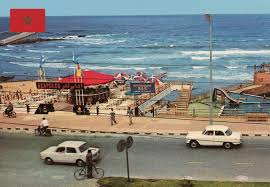
Essaouira 1950
Fatcha, another of the more intimate pieces is the Muslim call to a prayer, an “adhan”. The beautiful bells and Maroccan bird song blended with the chants as if coming from the back of the room. The distinct voice of Hicham Bilali. This time nearer the listener, but even more intimate than on A Bridge of Dust and Air. During the mixing process I vizualized the pieces as a set of rituals coming from different physical spaces in the port city of Essaouira, Marocco where in 1952, Orson Welles shot the film adaption of Othello.
Mouelay Abdelah Chrif is from the live recording we did together in Mechelen. I like the way the tempo is falling when the qraqueb joins the clapping. It clicks without an effort. The final track Moula Komi has a certain overall calm while at the same time it is rather busy. Matthias treatments of his saxophone and the call and response by the singers, this time not up-close, but inside of the mix. Unusual combinations, ancient and modern trance music.
Moula komi , the albums final piece where Master Hicham Bilali plays the Guimbri and the distant dub-vocals alongside Mattias´electronics and treated reeds. This time with the Guimbri near and everything else far, far away. I love the way this piece comes together like in a dream state. Unlike Mattias de Crane, I never went to the city of Essaouira. On the other hand, Jon Hassell never went to Malaya. Les Baxter travelled to Mexico to collect century old manuscripts and listened to the traditional musicians during carnival season. However, most of Baxter´s music was made up dreams of far away places. Dreams produce interesting results. – Jan Bang, June 16
4 Kommentare
Lajla
Cool. Yes there is more and more good music in Brussels and environment.
Michael Engelbrecht
A very refined work that goes from mood to mood to mood. It is stunning we Westerners (or Northmen) have such an emotional and musica access to that ancient Moroccan tradition. It’s a long way from Brian Jones a to this album…. in between I very well remember the works of Randy Weston and Pharoah’s „Trance Of Seven Colors“.
But now I have to listen again😉
A Martini Bianco for Les Baxter and his Exotica dreams!
Anonym
Randy Weston…brings back memories. Years ago, I was involved in a concert organzied by Dave Douglas that took place at Jazz Baltica in Schleswig-Holstein. Douglas wanted to do the music of Randy Weston. The Band featured Nasheet Waits on drums, Donny McCaslin on sax, Martin Taxt, and myself on live sampling. Playing High Fly from Zep Tepi among other things.
Watching an interview with Michael Beinhorn telling the story behind Hancock´s „Rock it“. Laswell took the theme from Pharoah Sanders´ Upper Egypt/Lower Egypt and that is what became one of the most funky and possibly way underrated basslines in modern pop music. Collecting ideas from one place and finding a new home elsewhere.
A dry martini for Martin Denny and innovative voice/percussionist: Augie Colón.
Michael Engelbrecht
A quote from your old companion … speaking of „collecting ideas and finding a new home elsewhere“
„So I gradually began to extend out of the raga, finding connections to bits and pieces of jazz or Yma Sumac or movie music or Ravel, realizing that I could finally do that without a bolt of lightening from the Hindu Gods coming down to strike me dead for deviating from the path.
A pivotal moment for me…one that helped to validate this musical adventurousness was after dinner one night with Pran Nath at LaMonte’s loft. I played „Charm“ from Fourth World Vol.1/ Possible Musics for him. This music has the elements that I’ve been talking about: African drummer and a Brazilian drummer and I’m doing the harmonizer thing with the parallel 4ths. Instead of a tamboura, there’s this little 3-chord figure that keeps repeating. He seemed impressed, probably especially with the trumpet doing so much ‚meend‘ (sliding) and told me „good“ His approval was a powerful moment for me. I had an even higher respect for him to be able to open his ears to that and to see beyond his tradition.“ (Jon Hassell, 1997)