A Sonic Fever Dream: 25 Years of Drawn from Life by Brian Eno and J.Peter Schwalm – by Markus Reuter
Sometimes the memory of when and how a certain album found its way
into your life begins to blur. In the case of Drawn from Life by Brian
Eno and J. Peter Schwalm, I no longer recall the exact circumstances
under which I acquired the record back then. Of one thing, however, I
am certain: I had long been a great admirer of Eno’s work, from albums
like Nerve Net and The Shutov Assembly all the way to the later
release Another Day on Earth. Yet Drawn from Life holds an absolute
special status for me. Not only is it my favorite work in Brian Eno’s
extensive catalog, it also ranks among my personal top ten albums of
all time. Quite simply, it is the perfect music for conjuring a truly
magical mood.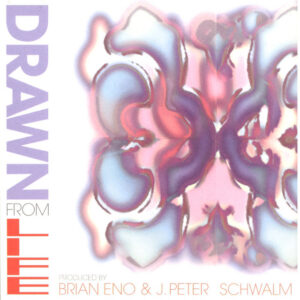
Now, in 2026, exactly a quarter of a century after its initial release
in 2001, this masterpiece is finally receiving a reissue, complete
with new artwork. Admittedly, I was very fond of the original cover,
even if a few of my graphic designer friends found it downright awful
for reasons that completely escape me. To my mind, the visual and
acoustic package fit together seamlessly right from the start.
A Seamless Fever Dream
What makes this album so extraordinary is its specific, almost
weightless character. It is most aptly described as a musical fever
dream: a state in which you lose all temporal and spatial orientation,
no longer able to tell where you are, where it begins, or where it
ends. The entire work feels deeply conceptual and cut from a single
cloth.
With music this process-oriented, it is often nearly impossible in
retrospect to assign exact compositional credit. Who actually did what
here? Because the creation of such pieces thrives on countless small
steps, happy accidents, and extensive post-production, traditional
notions of authorship dissolve. Nevertheless, it is obvious that this
album is not merely an Eno solo statement, but a genuine, equal
artistic symbiosis with J. Peter Schwalm.
From my own practice with this kind of music, and not least through my
collaboration with Peter on our joint album Aufbruch, I am intimately
familiar with his working methods and can tangibly feel how immense
his contribution is here. In every second, you can hear the extreme
meticulousness with which he shaped the arrangement and sonic
aesthetic: how he repeatedly pieced together countless fragments,
dynamically mixed them, discarded them, and layered them anew. His
perspective is aimed entirely at atmosphere and density, emancipating
itself completely from traditional musical parameters. On this purely
sound-painting level, Eno and Schwalm found true kindred spirits in
one another. Incidentally, for anyone wishing to dive deeper into
Peter’s sonic cosmos, I wholeheartedly recommend his deeply rewarding
work with trumpeter Arve Henriksen.
Sonic Architecture, Dub, and Harmonic Friction
The entire production is defined by a striking sense of space. This
applies not only to its immense depth of field, but also to the
razor-sharp stereo image, in which even the most delicate detail
occupies its precisely defined place. A distinct dub aesthetic comes
into play here: spaces themselves become instruments, sounds emerge
out of nowhere and dissipate into endless reverb tails, supported by
exquisitely tasteful filter effects that allow the frequency spectrum
to breathe organically.
Woven into this spatial tapestry are electric pianos and acoustic
piano, contrasted by the dramatic, almost cinematic use of orchestral
percussion, including timpani.
In isolated moments, augmented and diminished intervals, or sharp and
flat intervals, rub against one another in a floating mixture across
different degrees of the scale. Despite this carefully dosed harmonic
friction, the music glides along completely effortlessly.
Between the Organic and the Artificial: Details in the Soundstage
The album’s special emotional warmth comes from the delicate interplay
of the featured guest musicians and the seamless fusion of organic and
artificial sounds. On violin and viola, Nell Catchpole delivers
wonderful string passages that, while heavily processed
electronically, contribute essentially to the underlying mood and
melodic framing. Leo Abrahams contributes his characteristically
subtle, delicate guitar textures, while Laurie Anderson lends her
unmistakable spoken-word voice to “Like Pictures Part 2.”
On the track “Two Voices,” in turn, we hear Brian Eno’s own voice
processed through one of his signature vocoder effects. In this track
in particular, the organic and the artificial form a fascinating
union. In “Two Voices,” I even believe I can pick out the very
specific sounds of a digital Roland guitar synthesizer. These are the
exact same timbres that are also present on the later 2004 Fripp/Eno
album The Equatorial Stars. This soundstage is complemented by unusual
textures such as Holger Czukay’s dictaphone recordings, percussion by
Heiko Himmighoffen, and the children’s voices of Eno’s daughters,
Darla and Irial, on the track “Bloom.”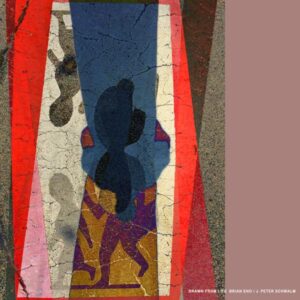
“Bloom,” in particular, pushes the album’s trance-like quality to its
peak with its hypnotic shuffle groove. Interestingly, the album is
also threaded with deeply aesthetic bass motifs that sound strikingly
like an organically played bass guitar, though no explicit credit for
them can be found anywhere in the liner notes.
Musical Kinships: From Erik Satie via Klaus Schulze to Hector Zazou
When you trace the contours of this album more deeply, lines of
connection to other great sonic architects immediately open up in the
mind. On the one hand, there are the wonderful works of Hector Zazou,
whom I also hold in high regard and who often built a similar bridge
between organic instruments, human voices, and electronic poetry. And,
of course, a direct line leads back to Erik Satie, the true forefather
of ambient music.
Upon recent, intensive re-listening, however, another unexpected
parallel dawned on me: a remarkably similar atmospheric density exists
on a much older work, namely Klaus Schulze’s 1978 masterpiece X. On X,
one finds those monumental pieces featuring a string orchestra, analog
synthesizers, and the live drumming of Harald Großkopf, particularly
his distinctive tom-toms drenched in deep reverb. Although Drawn from
Life was not released until 2001, it unmistakably breathes the spirit
of the 1970s through this exact combination of orchestral textures,
deep percussion sounds, and electronic vastness. To anyone who loves
Drawn from Life, I warmly recommend Schulze’s X.
For me, Drawn from Life remains a timeless sonic mystery. A truly
wonderful album that, even after a quarter of a century, has lost
absolutely none of its original magic.Lentas Dreaming (take 2)
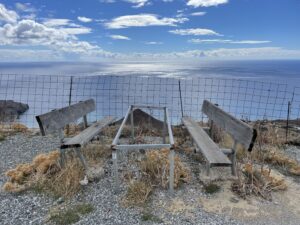
I’m driving through the south and west of Crete, up into the mountains and back down again, to deserted beaches and others where Greek pop music plays in the tavernas. But day after day, in my hire car, alongside the charm of Greek B-side songs, Brian and Peter’s *Drawn From Life* plays on a loop: ‘Crete Endless’.
Right now, I’m sitting in Lentas at Angela’s Café, reading the fascinating review by the musician and composer Markus Reuter, which he wrote for ‘flowworker’ (this short essay will also appear on his ‘Substack channel’ shortly).
With this text – and my own double interview with Brian and Peter, now 25 years old, at the back of my mind – what fresh words could I possibly add to an album that is a ‘dream’ for Markus and me, a ‘journey’, and inexhaustible… perhaps a collection of fragmented asides à la ‘50 Ways To Dance On DRAWN FROM LIFE’?! (m.e.)
An imaginary radio hour for a late autumn evening
“Precious things rarely stay underground forever.“
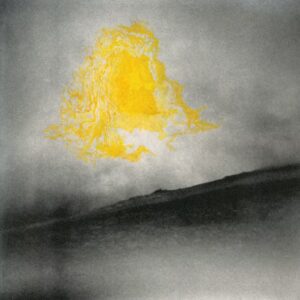
1) Don Cherry: Sunrise (reissue)
2) Enzo Favata: Ritornare (ECM, 2026)
3) Brian Eno & Peter J Schwalm: Drawn From Life (reissue)
4) Movietone: Day And Night (reissue)
5) Brian Eno: Another Day On Earth (reissue)
6) Arve Henriksen: Cartography (ECM, 2008)
7) Shovel Dance Collective: Everything in Readiness (2026)*Das eindringliche zweite Album der „Bristolianer“ nähert sich dem Status eines „vernachlässigten Meisterwerks der 90er Jahre“. Reden wir von Shoegaze, Dream Pop und Post-Rock, und den eher vernachlässigten Nischen der 1990er Jahre. Die wohl faszinierendste davon war die Szene der jungen Musiker aus Bristol, die sich von der Canterbury-Psychedelia, dem Krautrock und dem Free Jazz inspirieren ließen. Die Szene erreichte mit diesem zweiten Album der Gruppe, die von den ehemaligen Flying-Saucer-Attack- und Crescent-Mitgliedern Rachel Brook und Kate Wright gegründet wurde, einen Höhepunkt. „Day And Night“ bewegt sich in einer schattenhaften Zone zwischen Talk Talks „Laughing Stock“ und Grouper’s späteren Erkundungen liminaler Räume und ist durchdrungen von einem Geist der Spontaneität und einer seltsam trotzigen Zartheit. Die gelegentlichen Verzerrungsstürme beeinträchtigen nicht die unheimliche Schönheit von „Noche Marina“ oder „The Crystallisation Of Salt At Night“, einem zehnminütigen Ausflug in die wässrigen Tiefen, die einst von Robert Wyatt kartografiert wurden. (Jason Anderson, Uncut, December 2026)
This little radio hour has a story. After my last hour of „Klanghorizonte“ on Sep 24, i felt the cut. More than before I dreamt on doing radio nights and things related with composing playlists. It‘s a joyous thing, but now some shades of blue radiate around. So what else than to turn a loss into playful fantasy. Honestly, if I would continue with my broadcast, this exactly would be my playlist for early December, so to speak. But: whereas the farewell show had seen, well, 30 or more different versions of the „final round“, this new and imaginary list was done with the idea to accomplish it within one hour and never change it. Mission accomplished. Now I can let it go and take care of other things and ideas. 7 wonderful albums in my ears, and I am sure, some of them at least the readers of this blog – discreetly running under the radar – will like or love, too. Thank you for listening!
Die Grönland Filme auf der Insularia 2026
Das Land der Menschen
Das Land der Inuit ist der Ort, wo wir unsere Stärke finden
Weil wir hier leben und auch in Zukunft hier leben werden.
SUMÊ heisst die Band aus Grönland, die Zeilen oben stammen aus ihrem Song Inuit Nugat.
SUMÉ – der Klang einer Revolution heisst auch der hinreissende Film, der zuerst auf dem Festival gezeigt wurde.

Vier grönländische Studenten gingen zum Studium nach Kopenhagen und gründeten eine Band, die sie SUMÉ nennen. Sie wollten auf ihre Heimat aufmerksam machen, die unter der Vorherrschaft von Dänemark war. Sie erhoben ihre Stimme und sangen rebellische Lieder. Das war 1973. Sie war die erste Band, die auf grönländisch sang. Zuhause auf der Insel liefen ihre Songs im Radio. 20 % der Grönländer kauften ihr erstes Album SUMUT.. Das Cover von ihrem Debütalbum zeigt einen Inuit, der einen Wikinger besiegt hat. Insgesamt veröffentlichte die beliebte Band drei Alben. Der charismatische Frontsänger Malik Hoeg verstand mit seinem Aussehen, seinen Texten zu polarisieren. Diese Musik war prägend für eine ganze Generation, wie es für uns in den 60ern die Rollingstones mit Satisfaction waren. Die englische Band Procol Harum wollte die grönländischen Musiker gross rausbringen, einer der Vier wollte aber lieber sein Studium beenden. Die Band löste sich1977 auf.
In dem Film werden viele Interviews wiedergegeben, man sieht Menschen, die vor einer Super 8 Kamera freundlich in die Kamera lächeln, man sieht Inuit, die rebellisch die Songs mit erhobener Faust singen.
Regie führte Inuk Silis Hoeg. Grönland 2014. 73 Minuten.
Ich war von dem Film begeistert.
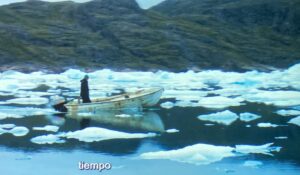
Anschliessend wurde ein Kurzfilm gezeigt. ENTROPIA
Der Film ist 10 Minuten lang, ich habe 10 Minuten abfotografiert. Es wurden Aufnahmen von Grönland gezeigt, die ich in dieser Schönheit noch nie gesehen habe. Es ging um die Inuit und ihren Bezug zum Eis- Was der Klimawandel anrichtet, wurde beeindruckend in dieser kleinen Dokumentation gezeigt. Mir kam der traurige Gedanke, was es für ein Volk bedeuten muss, wenn es zusieht, wie seine Heimat wegschmilzt.
Regie führte Inuk Jörgensen. 2024
Der dritte Film hat mich stark an einen meiner Lieblingsfilme erinnert, an FAHRRADDIEBE von Vittorio de Sica. Es geht in diesem grönländischen Film um einen Hundediebstahl. EL LADRÓN heisst der Film, Der Hundedieb. Dieser Film schildert eine wahre Begebenheit, die Jugendlichen sind alles Laiendarsteller. Ein autistischer Junge hat einen Hund, der ihn ständig begleitet. Er hat nur einen Freund, der zu ihm hält. Die anderen Jungs wollen mit dem sonderbaren Kaali nichts zu tun haben. Sie stehlen ihm den Hund.Er rennt durch s Dorf, sucht überall seinen Hund, bis er ihn gefunden hat. Er “ stiehlt“ ihn zurück. Sein einziger Freund kehrt ihm den Rücken zu, er sagt, dass er kein recht hat zu stehlen. Kaali setzt ich zu seinem Hund, grault ihn und singt ein trauriges Wiegenlied.. Dann geht er nachhause, betet vor einem Altar und teilt seinem Freund mit, dass er den Hund wieder zurückgegeben hat.
Der Film hat mich sehr bewegt. Die Liebe zu einem Tier wird ja in diesen nördlichsten eiskalten Breiten potenziert. Darüber steht aber die Moral, wenn es auch eine ziemlich verquere ist. Die Szenen wurden in Ostgrönland gedreht in Tassilaq.
Regie führte Christoffer Rizvanovic Stenbakken. 2024. 20 Min.
Der letztgezeigte Film WINTER’S YEARNING wurde in Maniitsoq an der Westküste von Grönland gefilmt. die Filmemacher lebten 7 Jahre in diesem Ort, sie kommen aus Dänemark und Norwegen. Warum 7 Jahre in dieser Eiseskälte. Ein amerikanischer Konzern möchte eine Aluminiumschmelzhütte dort errichten. Die Bevölkerung begrüsst dieses Vorhaben, weil es Vorteile verspricht. Als Protagonisten der wartenden Gesellschaft haben die Filme drei Personen erkoren: einen,der der Erste ist, der einen Master gemacht hat und die Verhandlungen mit dem US Konzern überschaut. Der andere Inuit ist ein Therapeut, der hauptsächlich die Alkoholkrankenthematik bezeugt. Er erklärt den Einheimischen, wie wichtig es ist, unabhängig zu sein, nicht zu warten, sondern sich selbst zu stärken. Die dritte Person ist eine junge Fischfabrikarbeiterin, sie will aus dem Kaff raus, sie hat andere Sehnsüchte, sie will in die Hauptstadt NUUK. Das Aluminiumwerk ALCOA wird nie gebaut. Am Ende des Films läuft die letzte Strophe der grönländischen Nationalhymne:
Demut führt zu absolut garnichts. Grönländer wacht auf und erhebt Euch. Ein wundervolles Leben ist unser Ziel, bezieht mutig Stellung.
Regie führten Sidse Torstholm Lasen und Sturla Pilskog. 2019. 90 Min.
Ich bin so froh, dass ich auf El Hierro leben kann.
(Lajla Nizinski)
Brian, Joan, Jon, Jan & Associates
BRIAN ENO has, after a 35-year hiatus, decided to relaunch his fabled record label, Opal. The whole interview with Eno on Opal and much more can be read in the December edition of UNCUT. Here‘s a little excerpt with some echoes in the comments ranging from an old Jon Hassell portrait from the early 1990‘s to the „Punkt Family“ with Jan Bang, Eivind Aarset and Arve Henriksen. (m.e.)
Was there anyone you tried to get for Opal but couldn’t?
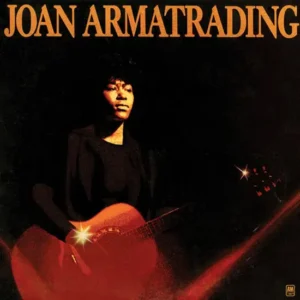
At one point I thought I would love to have Joan Armatrading on the label! I know that sounds a bit random, but I really admired her work. But I don’t think we ever made any approach to her. Mostly, it would be just people I already knew – like Jon Hassell, who was really one of a kind.
Hassell was another very uncompromising character…
Oh my gosh… I mean, we were very close friends, but bloody hell! He could have had such a happier life if he hadn’t been so paranoid. He worked with so many people who really believed in him and did everything to support him, and he always thought, ‘They’re trying to take over my life.’
Just Another Day in Matala
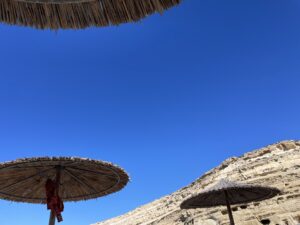
Ein Bilderbuchsonnentag. Eine gute Woche nach dem grossen Unwetter. An Comos Beach sind die Schildkröten eingezogen, und keine Sonnenschirme und -liegen werden mehr aufgestellt. Das bringt bittere Einbussen für die Taverne, wenn vor allem Kurzverweiler und Sonnenstichresitente an dem entlegenen Strand vorbeischauen – kein Paradies mehr für Kids, die den ganzen Tag sonst herumtollen. Und Bunga Bunga wird ihre Tintenfische nur noch in geringer Zahl servieren. Wo soll ich nun meine „beach books“ lesen? Kreta ist riesengross, in der Nähe, heisst hier, dreissig, vierzig Minuten mit dem Leihwagen, noch entlegener, aber nur Kieselsteinstrand. Dafür der gleiche Wind aus Afrika, und, das ist die Hoffnung, Stille bis zum Horizont. Eine Stille wie auf Amrum im Winter. (m.e.)
(Apart from local Greek Radio, i only listen to the soon-to-be reissued „Drawn From Life“ by Eno / Schwalm on car rides. Leah Kardos is right: it’s a revelation, as it has been for me 25 years ago. It unfolds its greatest impact when being taken in from start to end. Enjoy the historic interview we‘ve recently put out as a scrap book story!)
Distributeur automatique de fromage à la campagne
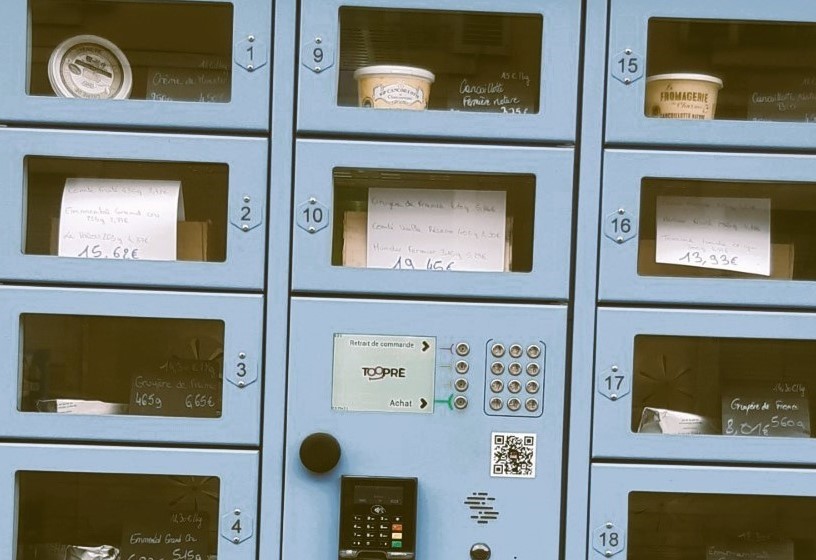
Wer südlich der Vogesen über hügelige Landstraßen fährt, in allen Richtungen am Horizont abgeerntete Felder, im Abstand von wenigen Kilometern kleine Ortschaften, Straßendörfer, die aus ein paar alten Häusern und einer Kirche bestehen, die Wolken im Westen erst rot gefärbt, dann verschwunden, wird feststellen, dass im Dunkel der Nacht nur vereinzelt ein Fenster beleuchtet ist, und auch das nur sehr schwach. Die alten Häuser, die eine verloren gegangene Würde ausstrahlen, einige sind verfallen, Mauern stürzen ein, Glas ist zerbrochen, man versucht, sie zu verkaufen. Die Leere hinter geschlossenen Läden. Andere Geschäfte öffnen nur auf Anfrage oder wenige Stunden. Baguette gibt es aus einem Automaten, ebenso Käse aus der Region. Auch Blumen, Softdrinks und zehn Pizzasorten. Vor dem Café sitzt jemand am Straßenrand, auf dem einzigen Stuhl, und schaut, die Dose mit dem Getränk schon auf dem Bordstein abgestellt.Michelle und der alte Friseur
in dear memory of Margarete Scheibelhut, my first Michelle from a distance
Papa konnte es nicht gut aushalten, wie sein Sohn sich eine Mähne wachsen liess. Wir schreiben das Jahr 1965, 1966. Die Zahl meiner Singles war überschaubar, früh hatte ich die Freude des Radiohörens entdeckt, oft unter der Bettdecke, bis ich nach Luft schnappen musste. Europawelle Saar, Radio Luxemburg, vielleicht auch Piratensender. Immer wieder hörte ich Nowhere Man (das haute mich jedesmal um!) oder Michelle von den Beatles im Radio, und bis heute singe ich manchmal von Michelle die gleichen Zeilen vor mich hin, das Kauderwelsch von englisch und französisch, wie ich es verstand. Wahrscheinlich singe ich diese zwei, drei Zeilen seit über einem halben Jahrhundert falsch, aber das macht nichts, eine Brücke aus Kindertagen.
Da ich bis 1970 nur ein Beatles-Album wie wahnsinnig gehört hatte, Sgt. Pepper (bald kamen das rote und das blaue Doppelalbum, perfekte compilations) hatte ich Rubber Soul und seine Wucht damals, im Herbst 1965, gar nicht so mitbekommen. Wie die Kinks lieferten mir die Beatles Seelen- und Körpernahrung im Wochenrhythmus ihrer genialen Songs und Singles. Meine erste Matte bekämpfte mein Vater mit Geld: 20 Mark, wenn ich zum Friseur gehe. Von dem Geld konnte ich vier Singles kaufen und ein Eis in meiner Lieblingseisdiele in Dortmund-Hombruch.

Der alte Friseur schnitt mir die Haare aber wirklich arg kurz, platzierte einen Seitenscheitel. Wie doof sah das denn aus! Und dann grinste ich, denn aus seinem Radio kam plötzlich die „Hottentottenmusik“ der Beatles, und natürlich Michelle. Kein Ort, wo meine Bands nicht den Raum eroberten. Das war das letzte Mal, dass ich so einen Handel machte. Alsbald gab es zwei Kultfriseure, die sich auf Hippiefrisuren verstanden („lang, aber gepflegt“). Die machten im Laden eine schöne Show wie Meister Wittke, oder sie verrichteten still und leise ihr Handwerk. Viel später hörte ich erst „Rubber Soul“, in meinen Studentenjahren, mono oder in Ping-Pong-Stereo.
Aber nie hörte ich das Album mit solcher Klarheit, solcher Transparenz, solchem Punch, und so gloriosem Stereo wie jetzt am Wochenende, in dieser atemraubend-neuen Mischung. Da ist es tatsächlich so, dass ich hier einige Dinge und Klänge zum ersten Mal höre, und das hat etwas, als würde man einem alten Zauber beiwohnen, der unverhofft das eine und andere Unerhörte aus dem Hut zaubert. Obwohl: kein Remaster, kein Remix, keine Deluxe-Kiste, keine nie gehörten Takes können nur annähend an die frühen Jahre, die ersten Male, heranreichen. The first mix is the deepest! Dennoch, diese neue Stereo-Darbietung ist verblüffend, und mir eine grosse Freude! Als „Standard Edition“ erhältlich, mit oder ohne zwanzigseitiges Booklet!
(Michael)