Memento
Bass Piano # Bass Gitarre # Piano Bass. Eine Empfehlung, sich irgendwann in diesem Frühjahr vielleicht, im Laufe eines langen Abends, folgende drei Duo-Alben, produced by Manfred Eicher, anzuhören, in aller Ruhe: 1) Gary Peacock & Marilyn Crispell: Azure (2013) — 2) Gary Peacock & Ralph Towner: Oracle (1994) — 3) Marilyn Crispell & Anders Jormin: Memento (2026) „The music takes you where you need to go“, Marilyn once said. A phrase, doubtlessly vague, artfully vague, too, a fitting travel suggestion nevertheless.
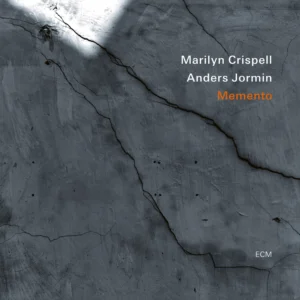
Some sort of echoes, if you don’t mind. The words simple, very simple, but put together with care, caring for resonance. Alright. Ready? Ten, nine, eight. You read the word of the title and probably you think „memory“ first, or maybe, same breath, next breath, „memento mori“, it depends. Seven, six. You look at the cover, what springs to mind after a while, in my case, well, those old Cohen verses: „there‘s a crack in everything / that‘s where the light gets in“. Five. Relax. The music of „Memento“ is, more floating than topical, about loss and memory. As I was listening to it from start to end at the first time, in a dark room with two candles (one of the rituals for music like this), I was drifting, dreaming (short flashes of this and that), all part of listening deeper… deeper still. Are there seagulls to hear, on that „beach piece“? The bass played with a bow, what do yo think. Four, three. You won‘t find clever wordings here, quotable one-liners, word play, smart analysis. What you will find, are windows, kind of. A warm rush of empty places, beautiful. It’s personal, and your unconscious a friend. Oh, the music, imagine, feel… „melancholia of that elevating kind“. Piano and bass only. Old school? No way! Two, one. Here you go. (m.e.)
4 Kommentare
ijb
Marilyn hat mir damals, als ich sie in ihrem Haus in Woodstock besuchte (einer meiner liebsten ECM-Kurzfilme: https://vimeo.com/422553765) davon erzählt, dass sie diese Aufnahme mit Anders unbedingt noch machen wollte, da stand noch im Raum, ob ein Schlagzeuger dazukäme. Wie sie (nicht nur) in meinem Interview erzählte, war Anders für sie ja ein enrom wichtiger Einfluss gewesen, was sich auf ihr gesamtes ECM-Schaffen niedergeschlagen hat. Mehrfach habe ich sie danach gefragt, ob und wann das denn stattfände, wäre liebend gerne zur Aufnahme hiingefahen.
Im Moment sitze ich Boston am Berklee Center im Café, fahre morgen (Dienstag) noch einmal Wadada in New Haven besuchen.
flowworker
Danke, Ingo, für den Link zu dem Gespräch! Was für eine Materialfülle mittlerweile, über ein halbes Jahrhundert ECM. Habe erst vor Tagen mal wieser deine Begegnung mit Meredith Monk auf mich wirken lassen, die man sich in unserem Blogroll (march recommendations) auf sich wirken lassen kann….
💥
Aus einem alten Blogeintrag, dem wunderbaren Album SERENITY des Bobo Stenson Trios gewidmet, eine Doppel-Cd, mit Andere Jormin und Jon Christensen:
„Ich erinnere mich, wie ich mit Konrad Heidkamp am Telefon über SERENITY sprach, und wie wir selbst erstaunt waren, was da, verdammt noch mal, immer noch ging, immer wieder, in diesem betagten Format. Konrad schrieb eine Rezension für „Die Zeit“ (in seiner kleinen, an Büchern und Musik überquellenden Redaktionsstube), und ich interviewte den Bassisten Ander Jormin, zu seiner Zeit mit Charles Lloyd, diversen Trioaktiviäten, ersten Soloalben etc.
Natürlich sprachen wir auch über SERENITY. Ich hatte ihm meine Fragen gemailt, und er schickte mir eine DAT-Kassette mit seinen Antworten. Daraus wurde ein 45-minütiges Porträt im Deutschlandfunk, dessen Skript leider verloren ging.
Während ich seine Antworten bearbeitete, entdeckte ich, dass da noch etwas war auf der Kassette, nämlich eine kleine Pause, gefolgt von einem kurzen skandinavischen Dialog, und einem mich vom ersten Ton an faszinierenden Stück, aus der Session im schwedischen Wald. Ich liebte es, und plante, es in meiner Nachtsendung zu spielen, es war federleicht wie ein Kinderlied, ein Traum. Dann unterlief mir ein technischer Fehler, ein fahrlässiger Knopfdruck, ein kleiner Blackout – und das Stück war Geschichte. Gelöscht. Over and out.
Die Komposition oder Improvisation lebte von steten Wiederholungen, umkreiste ein einfaches Motiv, schlicht und ergreifend. Als hätten The Necks an einem Balladenalbum für ECM gearbeitet. Vielleicht fiel es etwas aus dem Rahmen, und fand darum nicht seinen Weg ins Werk. Ich erzählte Anders am Telefon die traurige Angelegenheit, und er musste auch einmal tief durchatmen.“
flowworker
Ich möchte an diese Stelle auch an die drei Alben von Joe Lovano mit Marilyn Crispell und Carmen Castaldi erinnern. Wer sich wie ich für das Duo Album MEMENTO begeistern kann, wird gerne die Spuren der der beiden Trios aufnehmen, an denen Marylin und Anders beteiligt waren. Über GARDEN OF EXPRESSION schrieb ich:
Trio Tapestry‘s sense of melody, space and letting-go is immaculate. I will always remember their first record, one of the jazz miracles of 2019. For me, it was one of the beast albums Joe Lovano ever made, with Manfred Eicher’s perfect sequencing of the tracks. The follow-up, „Garden Of Expression“ in fact lives up to the high standard of the first meeting in New York.
Now with a deeper touch of Provence pastel and colours at dusk. You can think of every jazz writing cliche of praise, from „filigree“ to „elemental“, and be sure that Lovano, Crispell and Castaldi are breathing new life into it. After the first three pieces of pure baladry (written by soul, not by the book), the appearances of sound take more and more adventurous side steps, from moments of pianistic unrest and upheaval, to an exploration of metal and sound in Castaldi‘s drum figures.
A zen-like purity‘s bold pairing with an adventurous spirit. The record delivers everything with grace, selflessness and the most nuanced sense of tempo, time standing still and a flow of undercurrents. If this sounds slightly over the top, let the music take over, dim the lights and follow the tapestries!“
Brian Whistler
I really want to hear this new album.