Santa Barbara, 1979 (with sunset, for Brian Whistler and other time travelers)
„She said, where ya been? I said, no place special
She said, you look different, I said, well, I guess
She said, you been gone, I said, that’s only natural
She said, you gonna stay? I said, if you want me to, yes“
(Bob Dylan, Isis)
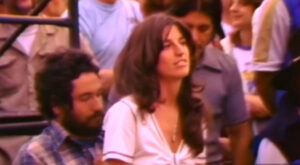
Ort und Zeit stimmen, nun fragen sie sich, wer bei diesem Konzert in der „County Bowl“ auf der Bühne stand. Ich würde ja gerne zeitreisen und diese Schönheit tollkühn ansprechen, mit einem romantisch-frechen Spruch auf den Lippen, obwohl sie offensichtlich in festen Händen war, buchstäblich. Marokko war genau dort, 1979, nach wenigen Wochen sonnengebräunt, ein Hippie wie ich, der aber mehr auf Reisen ging und mir gerne sagte: „ein Leben ohne die Westcoast, das will ich nicht!“ Es war also naheliegend, Jahre und Jahre nach unseren Hörabenteuern mit Miles Davis „At The Filmore“ (bei ihm im „Kinderzimmer“) an jenem Surferparadies der amerikanischen Westküste aufzuschlagen, als der Hippietraum zwar schon einige Dellen hatte, aber immer noch magische Musik bereithielt. Wie an jenem späten kalifornischen Nachmittag. Nun traf ich Marokko wieder, und während wir Mojitos schlürften, servierte ich ihm den vollen Mitschnitt jenes Konzerts von Bob Marley, und ich fragte ihn: „wo standest du?“ und ich fragte ihn: „hast du diese Schönheit gesehen?“ Er stand weiter hinten in der Menge, rechts, das Meer im Rücken, und er konnte sich nicht an meine sofort aus den bewegten Bildern herausgefilterte „queen of hearts“ erinnern. Zu schade, aber sowieso umwahrscheinlich. Auf jeden Fall sahen wir uns den ganzen Konzertfilm an, sprangen zwischen den Zeiten, sprachen von den etwas anderen Farbgebungen unserer Träume, wenn Traumtänzer wie wir in die Jahre kommen. Der Drummer Seb Rochford machte mich erst aufmerksam auf DIESEN Mitschnitt, und er sagte dazu, mit Blick auf Bobs sogenanntes Rhythmusgespann und seine Lieblingsplatte „Exodus“: „I think Carlton and Aston Barrett were absolutely geniuses. I love Aston’s kind of bass playing where it’s just like another melody, then Carlton’s drumming is so melodic as well, but so unique. My friend sent me a link to Bob Marley’s 1979 Santa Barbara concert, and it’s just absolutely incredible.“
(In Kürze eine weitere Zeitreise: „Weissdornweg 1965 / 2025“)
Ein Kommentar
Michael Engelbrecht
Mike Mettler on EXODUS 2025
Originally released in June 1977 on Island, Exodus stands as Bob Marley & The Wailers’ most internationally celebrated statement — an album forged in exile, having been recorded in London after an assassination attempt in Jamaica forced Marley from his home. Across its ten tracks, Exodus bridged two halves of Marley’s vision: the militant and the spiritual, the revolutionary and the devotional. The LP’s first side is marked by songs of resilience and struggle — “Natural Mystic,” “So Much Things to Say,” “Guiltiness,” “The Heathen,” and the title track, with its mantra-like chorus of movement and deliverance. Side 2 shifts into a most luminous register, in turn featuring some of Marley’s most enduring love songs and anthems — “Jamming,” “Waiting in Vain,” “Turn Your Lights Down Low,” “Three Little Birds,” and “One Love / People Get Ready.” The balance between fire and warmth gave Exodus a scope that resonated far beyond reggae’s core audience, cementing Marley as a global voice of conscience and celebration.
Earlier this year, Analogue Productions reissued a most excellent UHQR 200g 45rpm 2LP edition of Exodus (AUHQR 0016-45), which was mastered from the original tapes by Ryan K. Smith at Sterling Sound and pressed at QRP. It’s a version that, on my own ratings scale, garners a 10.5 for the Music and a full 11 for the Sound, so the impending Vinylphyle edition has quite a high benchmark to attain.
Exodus was recorded primarily at Island’s Basing Street Studios with the classic Wailers lineup in tow — Aston “Family Man” Barrett anchoring on bass, his brother Carlton Barrett on drums, Tyrone Downie on keyboards, Junior Marvin on guitar, Alvin “Seeco” Patterson on percussion, and backing vocals from the I Threes — Rita Marley, Judy Mowatt, and Marcia Griffiths. Marley himself played rhythm guitar and provided the voice at the center of it all: urgent, tender, prophetic. The sessions marked the arrival of Marvin as lead guitarist, his fluid lines adding dimension to The Wailers’ already formidable sound. Chris Blackwell once again produced, giving the record a clarity and sweep that brought Marley’s themes of exile, faith, and survival into sharp focus for international listeners.
In retrospect, Exodus can be heard as both culmination and turning point. It captured Marley at the height of his powers, weaving together spiritual yearning, political urgency, and melodic grace in a way that spoke across boundaries. At the same time, it opened the final act of the artist’s career, which sadly ended with his death in 1981 at the age of 36. The songs from Exodus have endured as the backbone of Marley’s legacy, continually reinterpreted in tributes, compilations, and concerts worldwide. More than four decades later, it remains a record of vision and resilience — the sound of an artist translating exile into testimony, and personal struggle into global song.
Analog Planet