Thoughts on the inestimable loss of two musical giants
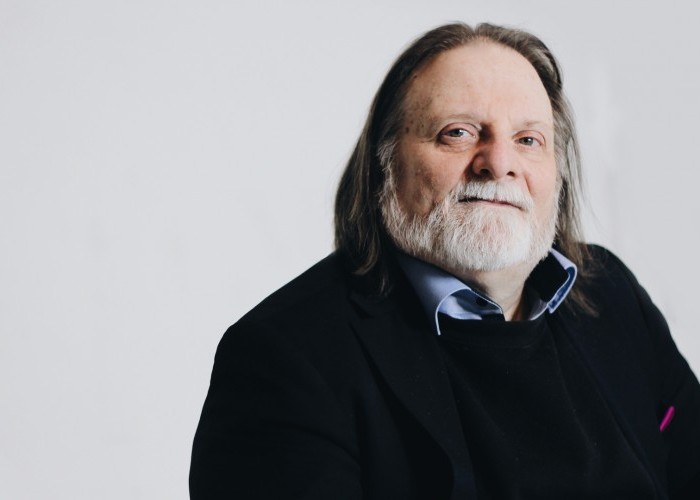
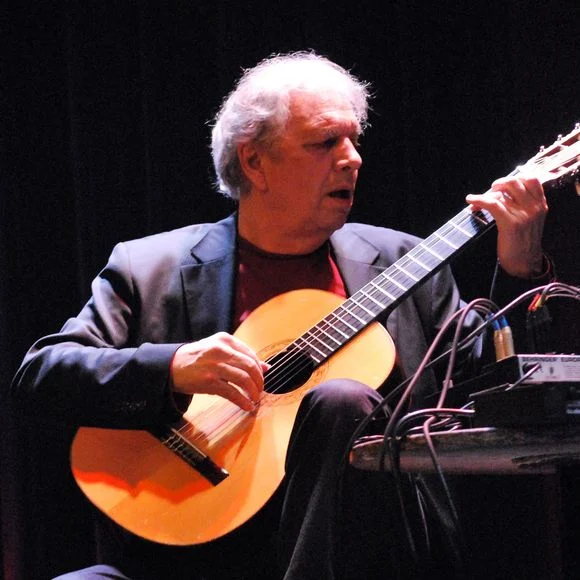
In the past month, we lost two great jazz artists and composers, first Ralph Towner and shortly after, Richie Beirach. Both of these artists were players with an original voice. One could immediately identify either of them within the space of just a few notes.
However, It’s not just a signature sound that defines a great jazz artist; their unique musical vocabulary is also reflected in their compositions. Not every great player can write a memorable tune, especially one that stands the test of time. Both of these artists wrote tunes that were as easily identifiable as the way they played; in fact, playing and composing are really two sides of the same musical coin. Richie Beirach once said that most composers only have one song they’re continually rewriting and, if they’re lucky, they might have two or three. While there is truth to this statement, I think both of these artists broke that rule, especially Towner.
During the Covid lockdown, Richie and I became email pals. After I mentioned that I had a lot of his albums, he started sending me YouTube videos of his recordings, accompanied by the challenge, “Got this?” Even though I have an extensive collection of his music, all too often I didn’t have the album in question, and in many cases didn’t even know it existed. It became a game, and over time he revealed to me the vast scope of his discography, which included some 100 albums as a leader or co-leader, not to mention a huge discography as sideman. While not known for being super prolific, in fact he wrote over 300 tunes, of which at least 200 were recorded.
Ralph Towner was equally busy over the course of his career, both as cofounder of the ground-breaking world jazz group Oregon and as leader on a number of group collaborations; he was also a solo artist and sideman on countless projects. He too penned over 300 tunes. Oregon cofounder Paul McCandless once told me that at pretty much any time of the day or night, Ralph was most likely writing yet another tune. He never stopped. This is reflected by the fact that throughout Oregon’s nearly 50-year lifespan, the vast majority of their repertoire was written by Towner.
It was not my intention to compare these two. Yet despite the fact that both were mavericks and in most ways as different in their approach as could possibly be, there are some similarities.
The overlap begins with the fact that both were strongly influenced by classical music, Richie mostly by the Romantics, and modernists like Bartok and Stravinsky. Besides the album “Round about Bartok,” Richie also made recordings titled “Round about Mompou” and “Round about Monteverdi.” His jazz influences were extensive, but Bill Evans stands out. Richie had a personal relationship with Evans, and it left an indelible mark on his aesthetic sensibilities. In fact, both Ralph Towner and Richie Beirach have always mentioned Bill Evans as a primary influence. And it is interesting to note that Bill Evans himself was highly influenced by classical composers, especially the impressionists, such as Debussy and Ravel. And anyone who’s played either of the latter’s piano music, or that of Frederico Mompou or Poulenc, will immediately recognize the kinds of chord voicings Evans used. So there’s a common lineage there.
Towner, a musical sponge, was influenced by just about everything: Elizabethan composers like John Dowland, Latin American composers like Villa Lobos and Ginastera, and also shared Beirach’s love of Bach, the Impressionists and early modernists. He also incorporated African, Brazilian, Caribbean, Greek and other world music influences into his compositions. Richie Beirach’s music, however, has a more Eastern European classical vibe. Besides Bartók’s influence, I also hear Chopin, Stravinsky, and even a bit of Schoenberg in Beirach’s compositions. In the jazz arena, I also hear Herbie Hancock, McCoy Tyner, and on occasion, Monk.
In trying to find contrasts between these two artists, I can’t help but notice just how much they actually have in common, despite how different they sound from one another. Bach, Chopin, Debussy, Ravel — they’re all in the mix for both of them. The difference isn’t so much about influences as how they chose to deploy them.
And it is at this point any similarities end and the differences begin to become apparent. The most obvious difference between these two artists is the fact that Ralph Towner switched from piano to guitar in his early 20s. The move to the classical guitar had an enormous effect on Towner’s style and musical vocabulary. It was the key to Towner’s discovering and defining his unique musical/compositional persona.
While Ralph always chose to play a couple of standards along with his compositions, he was in general a less mainstream jazz figure than Beirach. Beirach, on the other hand, kept his attention on re-harmonizing and reworking standards as a large part of his repertoire, and tended to work in the trio, duo, or solo format throughout his career. While Oregon focused entirely on original compositions, Towner often included one or two standards regularly in his solo concerts and recordings, and continued to do so all the way through to his last album. Also, unlike Richie Beirach, whose entire musical career revolved around the piano, Towner did not only stick to nylon-string and 12-string guitars. While continuing to perform on piano, he added electronic keyboards and in the studio occasionally augmented his recordings with percussion, trumpet and French horn. He recorded several albums on which he played all the instruments himself.
When any musician passes, their compositions and recordings live on, but when a jazz musician dies the unique lens through which their compositions sprang and were constantly reinvented is silenced forever. I know I will never again hear Towner or Beirach play one of their own compositions live as only they could. Ralph Towner never played one of his compositions the same way twice, which is why it was always such a kick to see him perform solo. Solo guitar is a difficult thing to pull off, but when it includes a great deal of improvisation, it’s like walking a tight rope without a net. Yet Ralph Towner did it with aplomb and was willing to take risks. Sometimes that resulted in a flubbed note, but it never bothered me in the least, because I always knew he was always fearlessly going for it, and trying to be truthful to where his ear was leading him. Beirach had that same lightning-fast intuition and risk-taking mentality, and was always intent on finding a new way to interpret an old standard or one of his own tunes. In fact, Richie had such an original harmonic concept that Dave Liebman gave him the nickname The Code. His was indeed a unique musical DNA that infused everything he played. Like Towner, he had an innate ability to reinvent and re-interpret on the fly. Neither of these artists ever played it safe.
These days, all too often I find myself saying that all my heroes are either really old or dead. And the “dead list” keeps getting ever longer. It’s easy to wax Buddhistic and ask, “How could it be otherwise?” The perennial truth is, after all, impossible to ignore. And yet, I still find it difficult to accept the loss of these two great artists who have influenced my personal musical life and given me so much joy for so many decades. I console myself with the fact that they were both well recorded. One thing I know for sure, the legacy of these two giants will live on.
5 Kommentare
Michael Engelbrecht
What an insightful walk on memory lane with the musics of Ralph and Richie! There are phrases here, sentences, i loved to read two, three times in a row. These guys were life’s company, and a bit older like us, maybe, especially in the case of Ralph, like older brothers opening promising gates. Our generation of heroes, kind of.
By the way, I am selling lots of musics these days, vinyl, cd, everything i don’t need in the times to come (the „holy grail“ of Roedelius, i have it two times, by chance). The soundtrack of our lifes, Brian: huge as it may be, if it comes push to shove, i can hang around with the essence, and both men really did deliver. Still looking for te first album of 2026 to blow me away….
For some private reason, amongst all those albums, Ralph Towner’s DIARY on ECM would be my number one of the Towner collection for the desert island. And recently it has been a special journey to listen and listen again and again to ORACLE, the duo Peacock / Towner. The perfect recording, soundwise, is on par with the musical depth, and endless flow of quiet wows (on my side, a listener on a petrol coloured couch, flying)….
Olaf Westfeld
Thank you for this text, your thoughtful words deserve a wider audience. The best obituary for Towner and Beirach that I have read.
Brian Whistler
Thank you both for the kind words. And yes, I think of these two as older brothers kind of showing the way for me both as a musician and as a listener. I play a lot of tunes by both of these artists and have transcribed a number of others that I hope to get to someday.
[Sidebar: It blows my mind that other than Chuck Sher’s 20 song official Ralph Towner book, there is no comprehensive Ralph Towner song book. And same could be said about Beirach – other than Richie Beirach’s one book with roughly the same number of tunes, that it. There was a second volume planned, but it never came out. The same could be set of Kenny Wheeler, who never got an official song book. FYI, there is an unofficial PDF of Ralph’s compositions out there that’s pretty good, as well as a Kenny Wheeler volume. But these are not official and are not always clean nor accurate.]
The deaths of certain public figures and artists are sometimes really difficult to take. These two particularly hit home because as Michael said, we grew up with these guys. They were always there, growing as artists and putting out work that we absorbed over the decades. We all have favorites, although I couldn’t say which Ralph towner album is my absolute favorite. I did listen to Diary yesterday. It was fantastic. I’ve been listening to open letter, which is an interesting record and worth a listen. I’ve been listening to some of the lesser known Oregon records like beyond words and always never forever. There are so many nooks and crannies in that band’s repertoire that are worth revisiting. Yesterday I played the Oregon with the Moscow Symphony album, which is so great, especially in high definition, and I played it for my wife who is not particularly a jazz fan. But man she loved it because it’s such good music, Period.
As far as Richie’s best goes, well, I love the Elegy for Bill Evans album, Trust is a fabulous Trio album. Of course, Elm is a classic of classics. And his solo album live at Maybeck still blows me away. I can’t say how much he’s been an influence me as a pianist. The way I play certain standards owes a great deal to Richie. Green dolphin Street, spring is here, you don’t know what love is, and when the lamp is low are just a few of the tunes that Richie inspired me to learn and borrow from. I just love his concepts. I love his use of pedal tones, I love his chord voicings etc. He was extremely generous with me and sent me all kinds of materials he has created over the past few years. He even gave me an unreleased album. The guy was just an extremely open and kind person. As was Ralph Towner, so far as my occasional chats revealed.
These losses are inestimable, however, of course, we will absorb them and go on. Just as we always do. I’m sure there are a few things in the can from both of these prolific artists. I fully expect we’ll be hearing more from them posthumously. All I can say is, I’m glad I saw both of them on the stage whenever they came to town. And I sure wish Richie had come to the states more often.
Brian Whistler
I just want to add that there are two songbooks of Towner’s work put out by Guitar Solo, a guitar store in San Francisco who has a publishing company. But these are arrangement specifically for guitar and are not „fake books“ per se. But they are really good if you’re a classical guitarist, looking for some playable repertoire by towner.
Michael Engelbrecht
Brian’s text, much more than a standard orbituary, will find a wider audience, at least it already landed at ECM HQ😉